Will Wider Roads Save Shimla or Endanger the City We Seek to Save?

Shimla’s proposed road widening project has raised important questions about traffic congestion, public safety, environmental protection and the future of a Himalayan city. While improved roads are necessary for better mobility, the proposed expansion of Cart Road and Circular Road requires careful examination of its potential effects on mountain slopes, trees, homes and local communities.
A City at a Crossroads
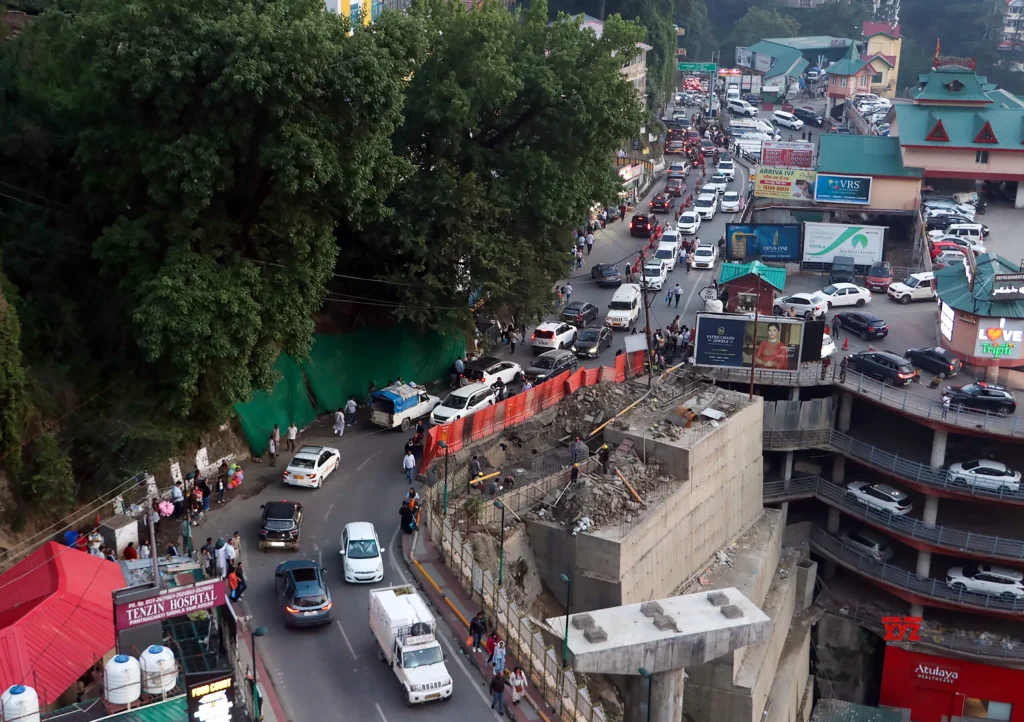
Shimla is facing a growing transport challenge. Increasing traffic, tourist movement and pressure on existing infrastructure have made travelling through several parts of the city increasingly difficult.
To improve traffic movement, the Government of Himachal Pradesh has proposed widening portions of the existing Cart Road and Circular Road.
The proposal appears reasonable from a transport perspective. Wider roads may accommodate more vehicles, reduce congestion at narrow stretches and improve accessibility.
However, Shimla is not a city built on level ground. Its roads pass through steep hillsides, densely developed neighbourhoods and environmentally sensitive mountain terrain.
Expanding these roads may require excavation, removal of trees, acquisition of private property, reconstruction of retaining walls and changes to existing drainage systems.
These interventions raise an important question: Can road widening provide lasting improvements in mobility without creating additional environmental and structural risks?
We believe this question deserves careful scientific assessment and informed public discussion before irreversible construction activities are undertaken.
The Scale of the Proposed Road Widening
According to a Hindustan Times report published on September 13, 2026, the proposed project involves important stretches of two major district roads:
- MDR-66: Connecting Tutikandi to Sanjauli through Chhota Shimla.
- MDR-67: Connecting Victory Tunnel towards Dhalli through Lakkar Bazar.
The report states that approximately 20,444.10 square metres of land would be acquired for the proposed improvements. It also reports that around 200 families could face displacement.
An official draft Social Impact Assessment for the project records a different land acquisition figure of approximately 20,882.53 square metres. These figures come from different published records and require reconciliation against the latest acquisition notifications and final land schedules.
The consequences of acquisition may extend beyond the land itself. Residential buildings, commercial establishments, pedestrian pathways, staircases and other structures could be affected.
For residents, these properties represent much more than entries in land records. They provide homes, livelihoods, access to essential services and financial security.
Any assessment of the project’s benefits must therefore consider the possible consequences for the people and neighbourhoods situated along the proposed widening corridors.
Will Wider Roads Actually Reduce Traffic Congestion?
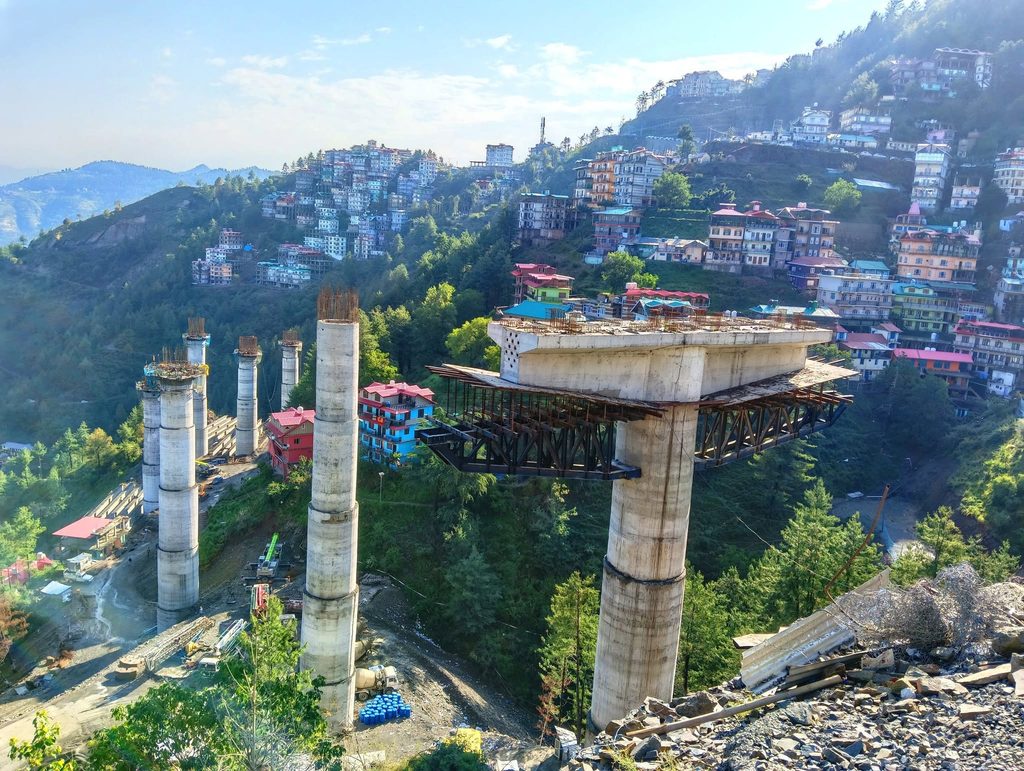
Road widening is commonly understood as a solution to traffic congestion. Increasing the available road space can improve traffic movement, particularly where narrow sections create recurring bottlenecks.
However, transport research shows that the relationship between road capacity and congestion is more complex.
Understanding Induced Traffic Demand
A recognised principle in transport economics is known as induced demand.
When additional road capacity makes driving easier, it may encourage people to make more vehicle journeys. Some motorists may change their routes, while others may begin travelling at times or to destinations they previously avoided.
As traffic increases, some of the initial benefits of road expansion can gradually disappear.
In their 2011 research paper, The Fundamental Law of Road Congestion: Evidence from US Cities, economists Gilles Duranton and Matthew Turner examined the relationship between highway capacity and vehicle travel.
Their findings showed that additional highway capacity was associated with substantial increases in vehicle travel, challenging the assumption that expanding roads necessarily produces lasting reductions in congestion.
The United Kingdom’s Department for Transport also examined induced travel demand in a 2018 evidence review and published further research in May 2026 on how additional road capacity influences travel demand, traffic forecasts and project appraisal.
These findings do not mean that every road widening project is ineffective. Targeted improvements can address specific traffic bottlenecks, improve road safety and provide better emergency access.
However, they demonstrate why increased road width should not automatically be treated as a permanent solution to congestion.
The Need for Shimla-Specific Traffic Studies
Shimla’s road network has distinctive limitations arising from its mountain terrain and established urban development.
Widening one section of a road may allow vehicles to move more freely, but congestion could simply shift to the next narrow junction or intersection.
Traffic movement may also continue to be affected by roadside parking, taxi stopping points, loading activities, pedestrian movement and poorly managed intersections.
Before undertaking extensive road widening, it is important to establish whether the proposed improvements will deliver measurable and lasting reductions in congestion.
A proper assessment should examine existing traffic volumes, projected vehicle growth, journey times, specific bottlenecks and the potential effects of induced demand.
The Geological Risks of Widening Mountain Roads
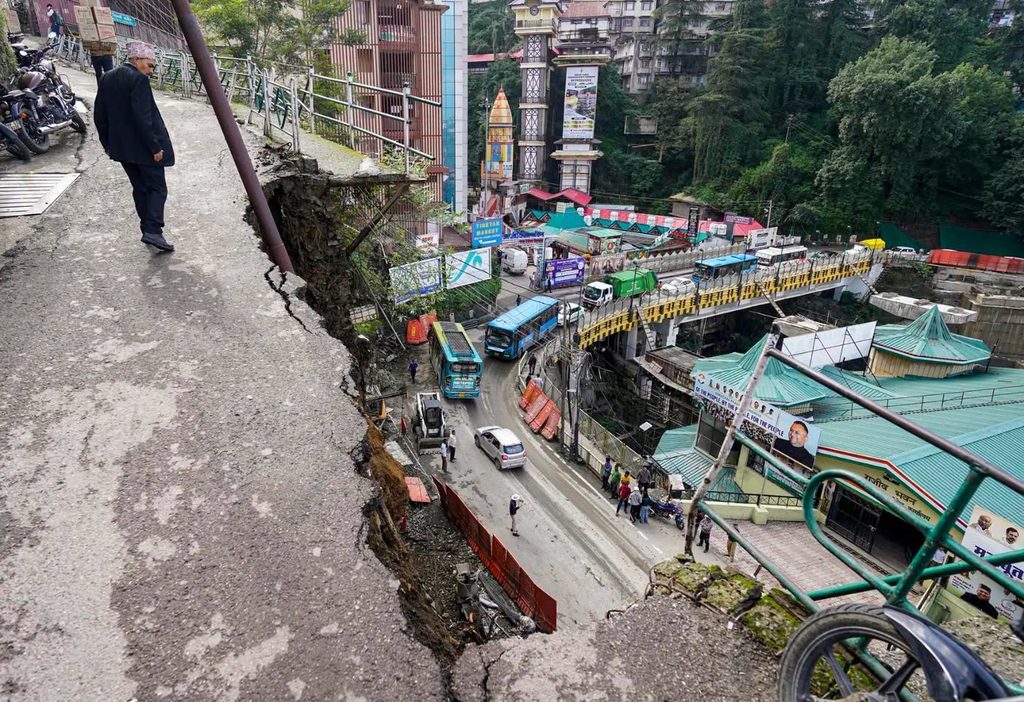
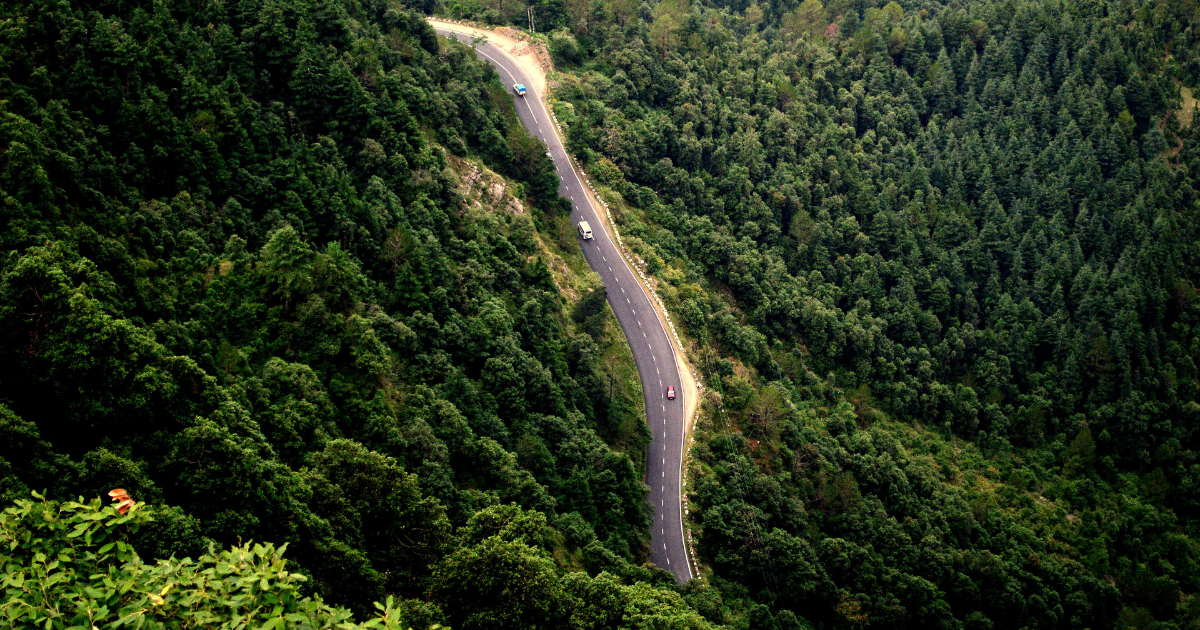
Shimla’s roads are part of a mountain landscape shaped by steep slopes, rock formations, soil conditions and natural drainage systems.
Unlike roads constructed across relatively flat terrain, hill roads depend on the stability of the surrounding land.
Existing roads may be supported by retaining walls, engineered drainage arrangements and other structures that have become part of the surrounding hillside.
Road widening can alter these conditions.
Excavation and Slope Stability
Widening a mountain road may involve cutting into the uphill slope, extending the downhill edge or modifying existing retaining structures.
Such interventions can create significant engineering challenges.
Excavation may disturb fractured rock formations or existing soil support. Changes to drainage patterns can increase water accumulation in vulnerable areas, particularly during heavy rainfall.
Removing vegetation may contribute to surface erosion, while reconstruction of retaining walls can affect the stability of adjoining land.
These risks become especially important where homes and commercial buildings stand immediately above or below the proposed widening area.
A building does not necessarily have to be demolished to experience structural damage. Excavation near its foundations, supporting slope or drainage arrangements can also affect its safety.
The combined effects of multiple excavation activities along the same hillside deserve particular attention.
The Importance of Independent Geological Assessment
Shimla has experienced slope failures and disruptions associated with heavy monsoon rainfall.
This makes geological investigation an essential part of infrastructure planning.
Before excavation begins, authorities should establish the stability of affected slopes, identify vulnerable structures and prepare suitable engineering safeguards.
These assessments should consider both immediate construction risks and the possible long-term consequences of changes to the hillside.
Engineering feasibility should be demonstrated before major excavation takes place, rather than relying solely on corrective measures after problems emerge.
Protecting Trees and the Mountain Environment
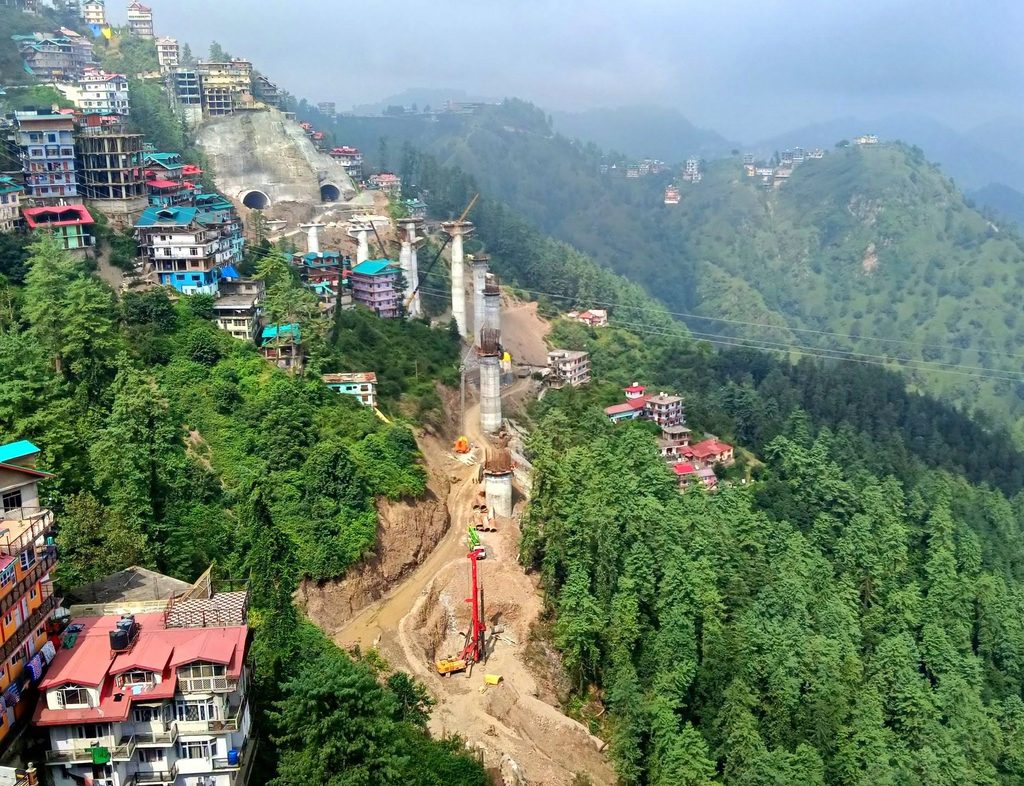
Trees play an important role in the ecological health of Himalayan settlements.
They intercept rainfall, contribute to soil structure through their root systems, provide habitat for biodiversity and help regulate local environmental conditions.
Their contribution to slope stability depends on several factors, including species, root depth, soil characteristics and underlying geology. Trees alone cannot prevent every type of landslide.
Nevertheless, unnecessary removal of vegetation or damage to established root systems can increase erosion risks and reduce valuable ecological protection.
Why Mature Trees Matter
Mature trees provide environmental benefits that cannot be immediately replaced by newly planted saplings.
Although compensatory plantation may be required under applicable regulations, young trees take time to develop established root systems and provide comparable ecological functions.
The assessment of tree removal should therefore extend beyond counting the number of trees proposed for felling.
It should examine:
- The number, species, size and locations of affected trees.
- The possibility of retaining existing trees through design modifications.
- Potential damage to root systems and surrounding vegetation.
- Changes to drainage patterns and soil conditions.
- Measures proposed to minimise ecological damage during construction.
Preserving established vegetation wherever reasonably possible should be an important consideration in the project’s design.
Important Questions Raised by the Social Impact Assessment
Official Social Impact Assessment documents relating to the proposed widening of MDR-66 and MDR-67 contain observations that deserve careful public examination.
The assessment discusses alternatives to the proposed acquisition and explains the dependence of road widening on land adjoining the existing alignments.
However, identifying the land required for a particular widening proposal is different from comparing road widening with other possible approaches to improving urban mobility.
A broader assessment should examine whether public transport improvements, traffic management measures or smaller infrastructure interventions could achieve similar transport benefits with fewer social and environmental consequences.
Another important observation appears in the section addressing environmental impact assessment and technical feasibility.
The assessment records that the concerned agency had not shared such a report with the assessment team.
This statement should not be interpreted as proof that no environmental or engineering investigations exist. It does, however, raise legitimate questions about the technical information available during the social assessment process.
The public deserves clarity on what investigations were available when the project was assessed, what further studies have been undertaken and how their findings have influenced the proposed design.
Transparent planning requires the relevant technical documents and findings to be available for meaningful public examination.
Displacement, Property Rights and Community Security
The possible displacement of approximately 200 families, as reported in September 2026, represents an important social concern.
Acquisition may affect different properties in different ways.
Some residents could lose portions of their homes or adjoining land. Others may experience changes to building access, boundary walls, supporting slopes or drainage arrangements.
Commercial establishments may also be affected. A shop could lose essential frontage or accessibility even where the entire structure is not acquired.
The consequences may extend to tenants, employees and others who depend on affected premises for their livelihoods.
Compensation Is Only One Part of the Solution
Fair compensation and appropriate rehabilitation are essential considerations when acquiring private property for public infrastructure.
However, financial compensation cannot by itself address every consequence of displacement or structural disturbance.
Residents need clear information about how proposed construction may affect their properties.
Where applicable, property-specific plans should identify acquisition boundaries, construction activities, proposed drainage modifications and measures intended to protect nearby structures.
Affected residents should also have meaningful opportunities to examine these details, raise concerns and participate in the decision-making process.
Protecting community security and livelihoods must remain an important part of responsible infrastructure development.
Addressing the Causes of Traffic Congestion
Traffic congestion is influenced by more than road width.
Vehicle demand, parking management, public transport availability, pedestrian movement, roadside commercial activities and junction design all affect how efficiently a road network functions.
For Shimla, a coordinated approach to urban mobility deserves careful consideration.
Transport Alternatives Worth Examining
Before committing to extensive road widening, the following measures should be assessed for their potential benefits:
- Improved public transport: More reliable and frequent services along major routes, supported by convenient interchange facilities.
- Peripheral parking facilities: Suitable park-and-ride arrangements that allow visitors and commuters to continue their journeys using public transport.
- Better parking management: Measures to reduce obstruction caused by roadside parking, loading activities and irregular taxi stopping.
- Junction improvements: Better intersection design, traffic signalling, pedestrian crossings and targeted removal of bottlenecks.
- Pedestrian accessibility: Safer and more accessible walking routes, including appropriate connections between hillside neighbourhoods.
- Tourist traffic management: Coordinated planning for peak tourist periods and high-demand travel hours, supported by reliable traffic information.
- Targeted road improvements: Carefully selected widening or engineering interventions where technical studies demonstrate genuine safety or mobility benefits.
No single intervention can resolve every transport problem.
The aim should be to develop a coordinated mobility strategy that considers traffic movement, public safety, environmental protection and the needs of local communities together.
The success of a transport system should be measured not merely by the number of vehicles a road can accommodate, but by how safely and efficiently people can reach their destinations.
Emergency Access and Public Safety
Improving access for ambulances, fire services and emergency response vehicles is an important consideration in Shimla.
Road widening may help emergency vehicles move through certain narrow sections. However, the benefits should be evaluated against actual emergency access requirements.
In some locations, illegally parked vehicles, blocked intersections or poorly managed traffic may be more significant obstacles than the width of the road itself.
The necessary response may therefore differ from one location to another.
Targeted improvements at identified emergency access bottlenecks could be evaluated alongside broader widening proposals.
At the same time, engineering assessments must consider whether excavation or changes to slope stability could introduce additional risks.
Public safety requires examination of both the expected transport benefits and the potential consequences of construction in vulnerable mountain terrain.
Information That Should Be Made Public
We believe that transparent access to project information is essential for informed public participation.
The Government of Himachal Pradesh, Himachal Pradesh Public Works Department, Shimla District Administration and relevant planning authorities should make the following information available for public examination:
- Project design and acquisition details: The complete Detailed Project Report, approved alignments, road cross-sections, updated land acquisition schedules and current project status.
- Traffic studies: Existing traffic surveys, congestion measurements, projected journey-time savings and assessments of possible increases in vehicle demand.
- Geological investigations: Site-specific slope stability assessments, geological findings and engineering measures proposed to protect vulnerable locations.
- Environmental documentation: Tree inventories, applicable forest permissions and plans to minimise ecological damage.
- Property and rehabilitation details: Information regarding affected properties, potential displacement, compensation provisions and rehabilitation arrangements.
- Comparison of alternatives: Environmental, economic and social assessments comparing road widening with public transport improvements and other less disruptive approaches.
- Independent safety monitoring: Arrangements for technical review, structural protection and monitoring of vulnerable stretches during and after construction.
Meaningful consultation should include affected residents, transport planners, engineers, geologists, environmental specialists and civil society representatives.
Where essential technical investigations remain incomplete or credible safety concerns have not been adequately addressed, irreversible excavation should await the necessary assessments and independent examination.
A Public Appeal to the Citizens of Shimla
Shimla needs improvements to its transport infrastructure. Residents deserve safer roads, dependable public transport, efficient emergency services and reduced travel difficulties.
At the same time, the city must protect the stability of its hillsides, established neighbourhoods, natural vegetation and drainage systems.
These objectives should be pursued together.
Residents whose properties may be affected should obtain the relevant acquisition documents, maintain records of existing structural conditions and seek clarification regarding proposed construction activities.
Public consultations provide an important opportunity to examine project information and raise questions about safety, compensation and environmental protection.
Where relevant information is not readily available, citizens may seek access to public records through established procedures, including the Right to Information Act.
We encourage residents, neighbourhood associations, engineers, geologists, environmental organisations and other concerned citizens to participate constructively in discussions about Shimla’s long-term development.
An informed community can contribute valuable local knowledge to the planning process.
Conclusion: Planning for Shimla’s Future
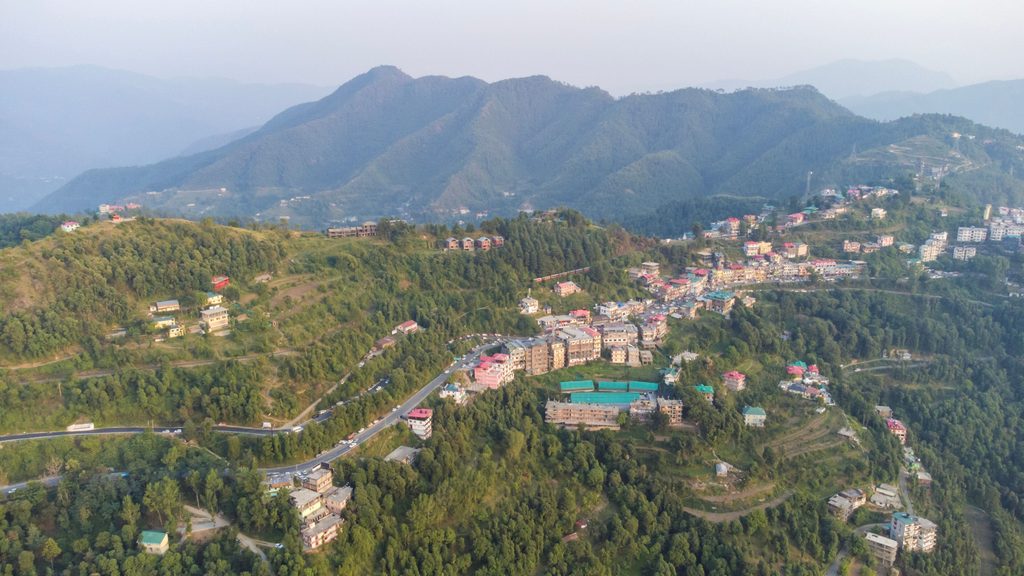
Shimla’s infrastructure must continue to evolve with the needs of its residents and visitors. Road maintenance, improved traffic management and carefully planned transport development are essential.
However, the city’s mountainous setting requires a development approach that recognises geological conditions, environmental limitations and the importance of established communities.
The question is not simply whether an existing road can be made wider. It is whether widening is demonstrably necessary, technically safe, environmentally responsible and more beneficial than the available alternatives.
A project that improves traffic movement but causes avoidable displacement, ecological loss or additional geological vulnerability may carry costs extending far beyond its construction budget.
Equally, carefully designed improvements supported by sound technical evidence can contribute to safer and more efficient transport.
Shimla needs better mobility without compromising the mountains and communities on which the city depends.
By placing scientific assessment, public consultation and environmental responsibility at the centre of infrastructure planning, it is possible to pursue development that respects both the needs of people and the natural systems supporting their city.
The objective should be a safer, more accessible and environmentally secure Shimla for present and future generations.
Related Articles
More stories and updates worth exploring from our journey.