Consciousness, Not Commodity

What Kashmir Shaivism says about the Nature We Are Destroying
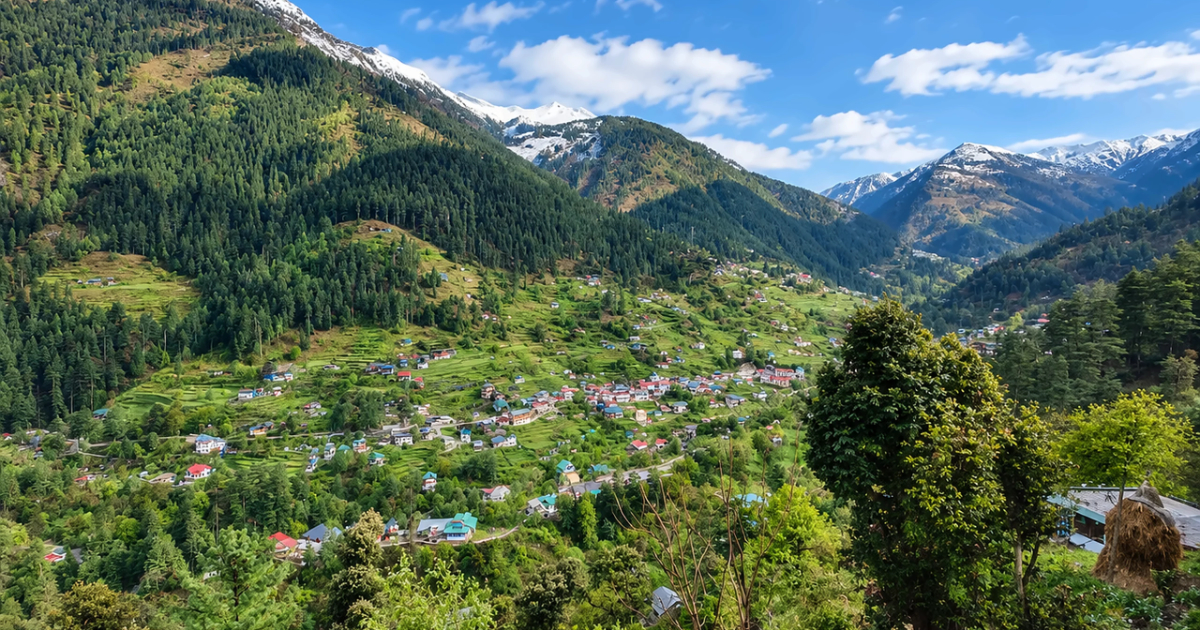
Across the Himalayas, sacred landscapes are being transformed in the name of pilgrimage and development. Roads are widened, forests are cut, slopes are excavated, parking areas are created, hotels are constructed, and growing numbers of visitors are encouraged to reach places that were once approached slowly and with difficulty.
This is often presented as a conflict between faith and environmental protection. Kashmir Shaivism, however, offers a very different way of understanding the issue. Within this philosophy, there is no necessary conflict between faith and nature because nature itself is an expression of the sacred.
The real conflict is between two ways of seeing the natural world: nature as a commodity and nature as consciousness.
Nature Is Not Inert
Modern development often treats a mountain, forest, river, spring, or meadow primarily as a resource. A slope becomes valuable when a road can cross it, a meadow becomes useful when it can be converted into a parking area, and a spring is considered productive when its water can be captured or commercialised. In the same way, a mountain is increasingly measured by the number of people, vehicles, hotels, and commercial activities it can accommodate.

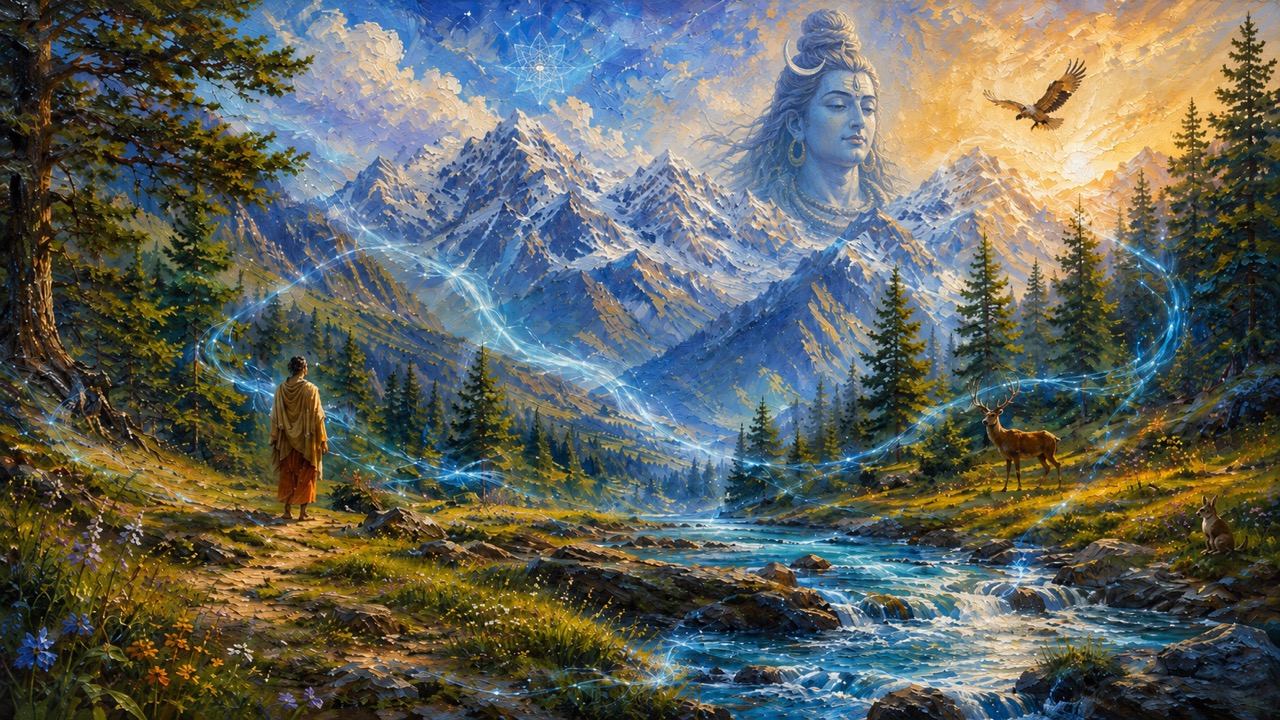
Kashmir Shaivism begins with an entirely different understanding of existence. Its concept of Spanda describes the universe as the living pulsation of consciousness, the dynamic creative energy through which Shiva manifests all reality. From this perspective, nature is not inert matter that merely surrounds a sacred place. Nature itself participates in the sacred.
The mountain is therefore more than the location of a shrine. The forest is more than the route leading towards it, and the spring is more than a source of water for pilgrims. Each is a manifestation of the same sacred reality that the pilgrim has travelled to recognise.
This understanding fundamentally changes the environmental question. When a mountain is treated only as scenery around a temple, sections of it can easily be sacrificed for roads, parking areas, construction, and greater footfall. But when the mountain itself is recognised as an expression of the sacred, destroying it in the name of pilgrimage becomes a profound contradiction.
Pilgrimage Is Recognition, Not Acquisition
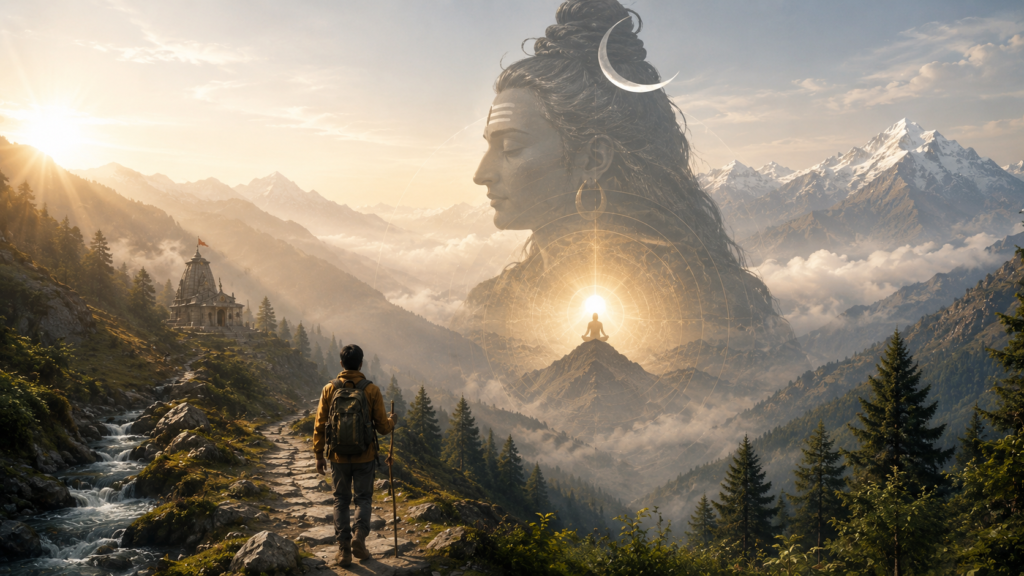
Another central idea of Kashmir Shaivism is Pratyabhijna, which means recognition.
Utpaladeva taught that liberation does not come from acquiring something that was previously absent. It comes through recognising the divine reality that is already present. This provides a meaningful way to understand pilgrimage.
A pilgrim does not necessarily travel into the mountains because God exists at one geographical point and nowhere else. The journey creates the conditions through which something already present may be recognised. The difficulty of the path, the silence of the forest, the cold of the mountain, the sound of flowing water, and the immensity of the landscape can all become part of that recognition.
Seen in this way, pilgrimage is different from tourism. Tourism naturally focuses on convenience and asks questions such as:
- How quickly can I reach the destination?
- Where can I park?
- Where can I stay?
- What facilities are available?
Pilgrimage traditionally asks something deeper:
What must I leave behind in order to encounter this place?
There is nothing inherently wrong with infrastructure. Pilgrims require safety, sanitation, emergency assistance, and reasonable accessibility. However, when every sacred landscape is redesigned around maximum convenience and maximum footfall, the nature of pilgrimage itself begins to change.
The physical destination may survive, but the deeper encounter may not.
Wonder Has Spiritual Value
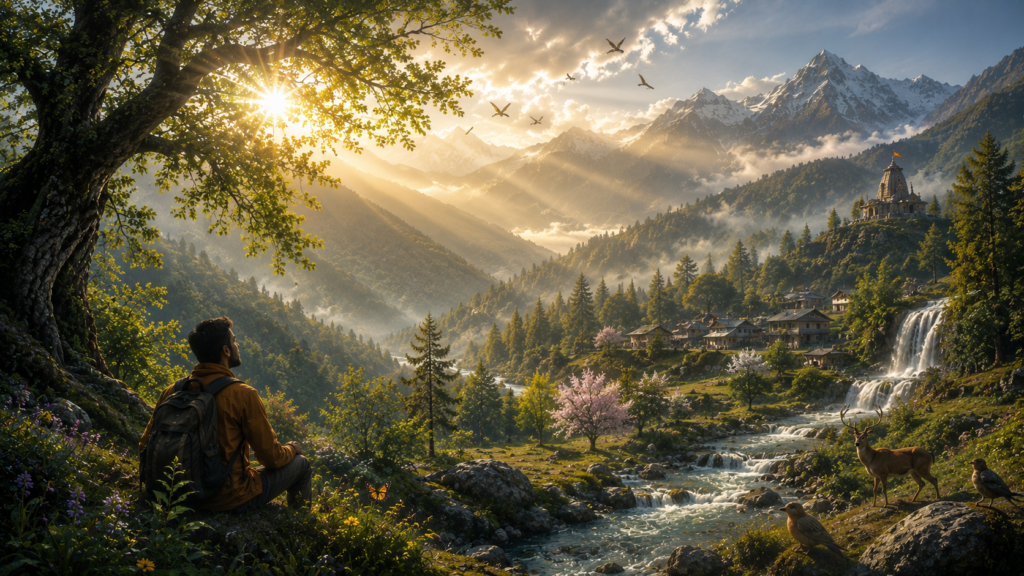
Abhinavagupta offers another important idea through Camatkara, or profound aesthetic wonder.
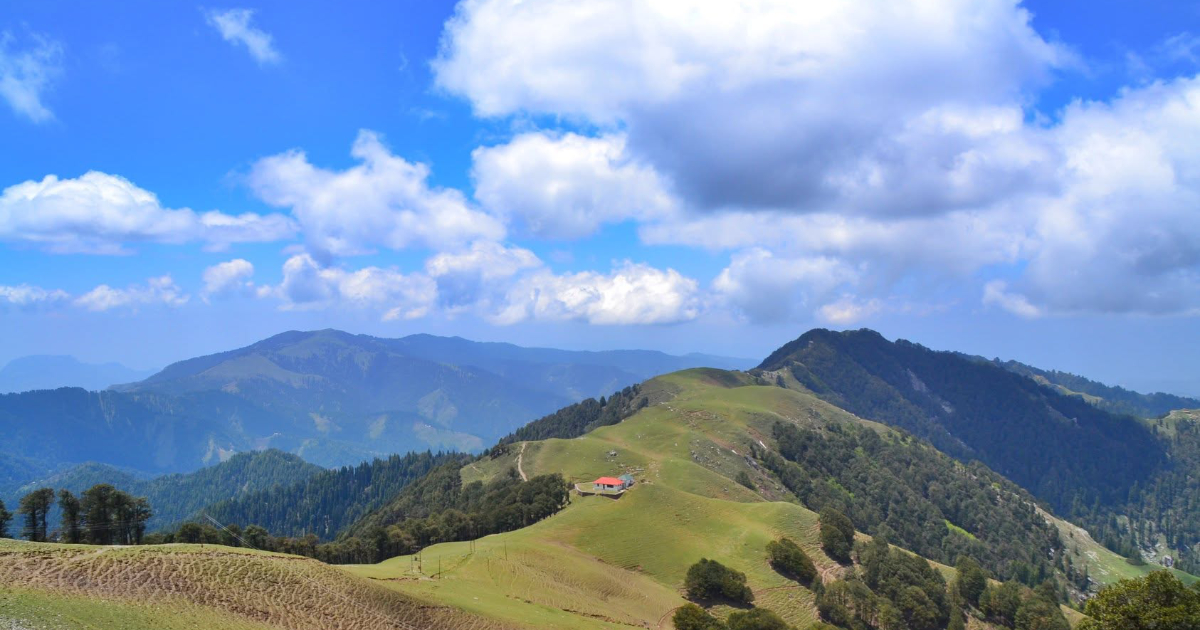
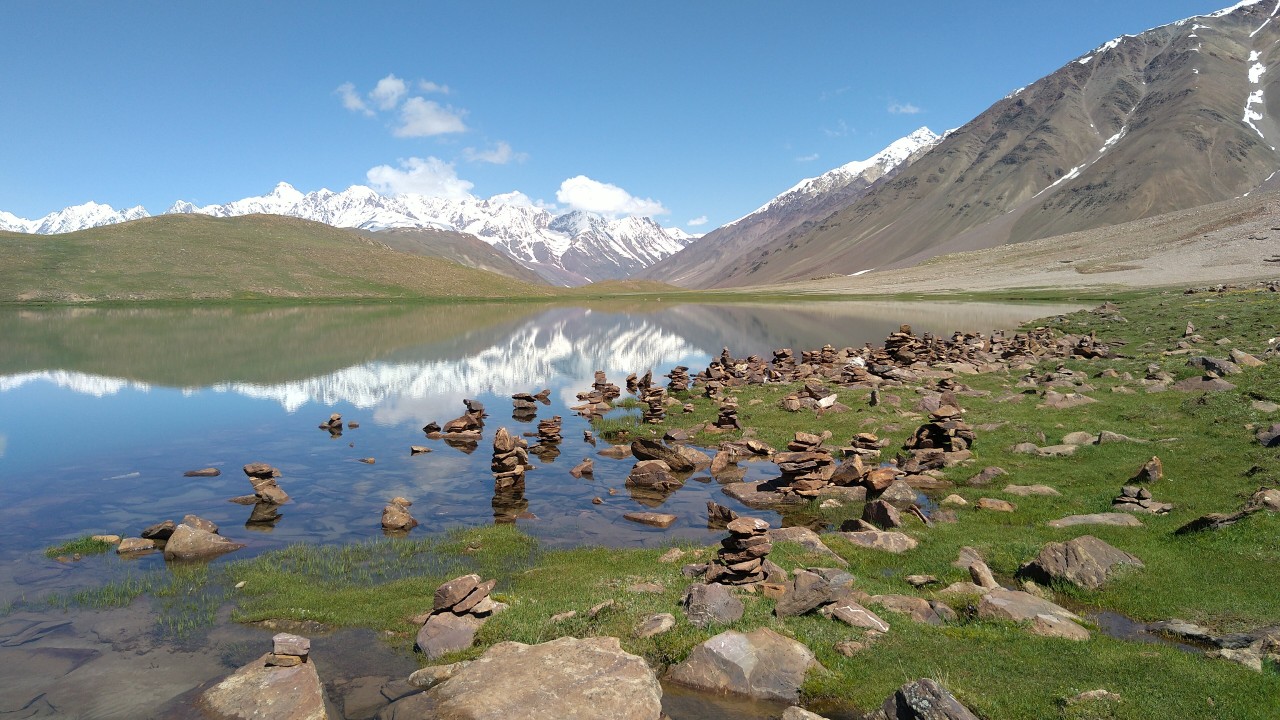
Anyone who has entered an old Himalayan forest, stood beside a glacial lake, or watched clouds move across an untouched mountain ridge may understand something of this experience.
For Abhinavagupta, such wonder is not merely entertainment or an appreciation of beautiful scenery. In a moment of profound wonder, the ordinary and self-centred ego temporarily recedes. This resembles the deeper spiritual movement towards recognition.
This understanding has important implications for nature conservation. Many features of a Himalayan landscape that are treated as obstacles or unused spaces may actually be essential to its spiritual character:
- The silence of a forest is not empty space waiting for development.
- The darkness of a mountain night is not an inconvenience waiting for floodlights.
- The difficulty of a trail is not automatically a defect waiting for a road.
- The solitude of a high altitude meadow is not unused capacity waiting for tourists.
These qualities may be part of what makes a place spiritually powerful.
Concrete construction, traffic, loudspeakers, litter, commercial stalls, and uncontrolled crowds therefore do more than damage the appearance of a landscape. They can destroy the conditions that made the sacred experience possible in the first place.
What Form of Pilgrimage Preserves the Sacred?
The debate over Himalayan pilgrimage should not be framed simply as development against the environment. Environmental protection should also not be portrayed as hostility towards religion.
A more meaningful question is:
What form of pilgrimage allows the sacred landscape to remain sacred?
This question naturally leads towards measures such as carrying capacity limits, regulated construction, protection of forests and water sources, effective waste controls, restrictions on vehicles, carefully designed walking routes, and strict protection of ecologically fragile areas.
Such measures need not diminish pilgrimage. They may preserve its meaning.
The Himalayas do not need to be made inaccessible. Communities living around sacred sites should not be denied dignified livelihoods, essential infrastructure, or reasonable opportunities. However, development must remain subordinate to the ecological and spiritual character of the place.
A shrine cannot be protected while the mountain that gives it meaning is destroyed. A sacred spring cannot be honoured while its watershed is contaminated. A forest deity cannot meaningfully be worshipped while the surrounding forest disappears.
From Commodity Back to Consciousness
The deepest contribution Kashmir Shaivism can make to the environmental crisis may be remarkably simple. It asks us to stop seeing nature merely as something outside ourselves that is available for use.
The mountain, forest, river, animal, and human being belong to the same unfolding reality.
- Spanda tells us that nature is alive with the sacred.
- Pratyabhijna asks us to recognise it.
- Camatkara allows us to experience it through wonder.
Together, these ideas offer an environmental ethic rooted in the philosophical traditions of the Himalayas themselves.
Perhaps the most important question facing Himalayan pilgrimage today is not, “How many more people can we take to the sacred?”
It is, “How much of the sacred will remain when we get them there?”
Protecting the landscape is not opposition to pilgrimage. It is the protection of what makes pilgrimage sacred.
Related Articles
More stories and updates worth exploring from our journey.