When the Sky and the Soil Are Both Being Engineered: Himachal’s Unregulated Experiment in Atmospheric Modification

Climate intervention is often discussed as a distant scientific possibility, but several forms of atmospheric, agricultural, and ecological modification are already influencing Himachal Pradesh. From anti-hail guns and orchard netting to growth-regulating chemicals and cross-border weather modification, natural systems are being altered without adequate scientific assessment, long-term monitoring, or clear regulation.
Understanding Geoengineering and Weather Modification
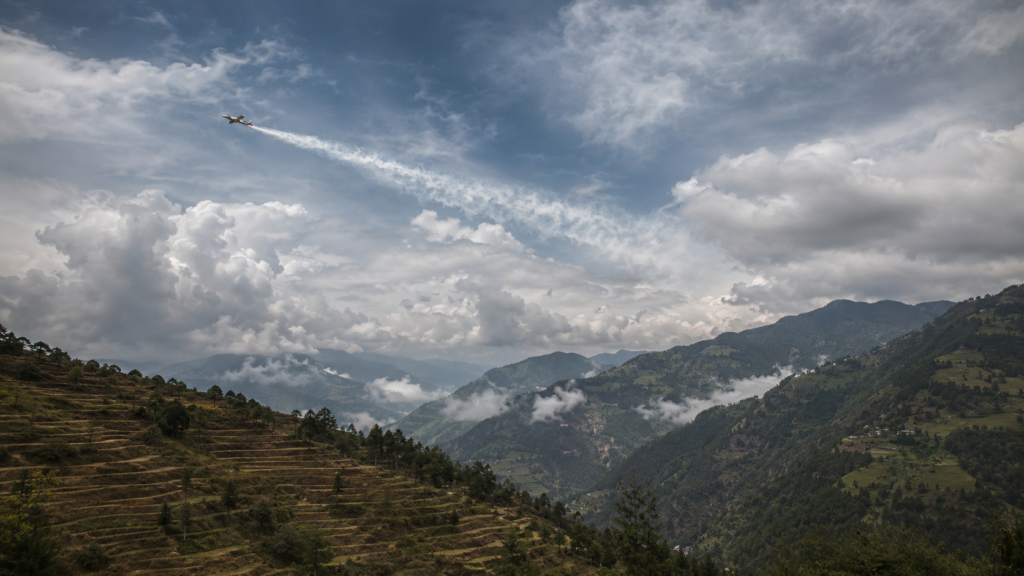
Geoengineering refers to the deliberate manipulation of the Earth’s climate system, usually with the stated objective of addressing global warming or changing weather conditions. Proposed methods include releasing reflective particles into the upper atmosphere to reduce incoming sunlight and dispersing substances such as silver iodide or salts into clouds to encourage precipitation.
These technologies remain experimental and contested because their long-term influence on regional weather systems is not fully understood. An intervention intended to increase rainfall or prevent hail in one area may influence precipitation, snowfall, wind movement, or water availability elsewhere.
For Himachal Pradesh, this is not merely an international debate about future technology. Weather modification is already being used in parts of the state’s agricultural landscape, while larger atmospheric interventions are reportedly taking place across the Himalayan watershed.
Anti-Hail Guns in Himachal’s Apple Belt
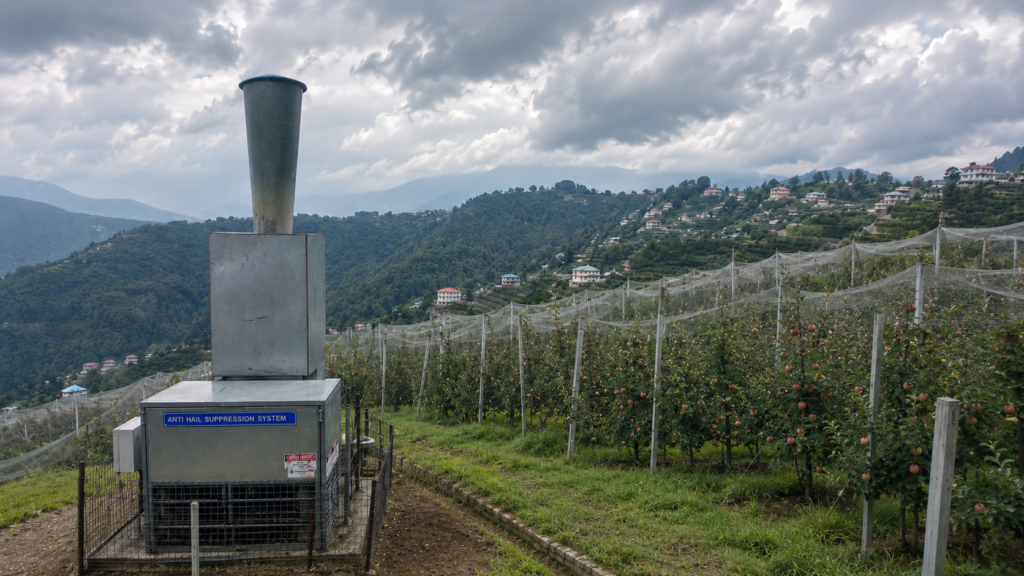
The Kotkhai and Jubbal apple-growing areas of Shimla district have hosted anti-hail guns for more than a decade. These devices ignite a mixture of acetylene gas and air, producing shock waves that are directed towards overhead clouds with the intention of disrupting hailstone formation before it damages standing crops.
Claims about the effectiveness of anti-hail guns have remained disputed among farmers, authorities, and observers. The central concern is not only whether the technology works, but whether it has been scientifically evaluated for its effects on precipitation patterns, surrounding catchments, public safety, and the wider mountain ecosystem.
The issue has now reached the Himachal Pradesh High Court. In 2026, notices were issued to the State Government and the Pollution Control Board seeking responses on the environmental, ecological, and public-safety implications of anti-hail gun operations, including whether official guidelines or standard operating procedures govern their use.
This judicial scrutiny highlights a wider regulatory gap. A technology intended to alter cloud behaviour should not be installed or expanded without independent assessment, defined operating conditions, environmental oversight, and transparent monitoring.
The Cross-Border Atmospheric Concern
A related concern lies across the Himalayan watershed on the Tibetan Plateau, where fuel-burning weather-modification chambers have reportedly been deployed to enhance rainfall over Tibetan and adjoining regions. The scale of these activities, combined with the movement of weather systems across national boundaries, raises questions for downstream and downwind Himalayan states.
Himachal Pradesh and Uttarakhand lie in terrain where changes in rainfall and snowfall can have serious consequences. Increased precipitation may intensify flash-flood and landslide risk, while reduced precipitation could affect snowpack, springs, rain-fed agriculture, and river systems.
The precise effects of such cross-border activity remain poorly quantified, which makes scientific monitoring especially important. The absence of complete evidence should not be treated as evidence that no risk exists, particularly in steep, monsoon-fed, glacier-linked landscapes where the margin for ecological error is already limited.
This concern also expands the governance challenge beyond state regulation. India requires the scientific and diplomatic capacity to detect, assess, and respond to atmospheric interventions that may originate outside its borders but influence Himalayan weather systems.
Anti-Hail Nets and Altered Orchard Microclimates
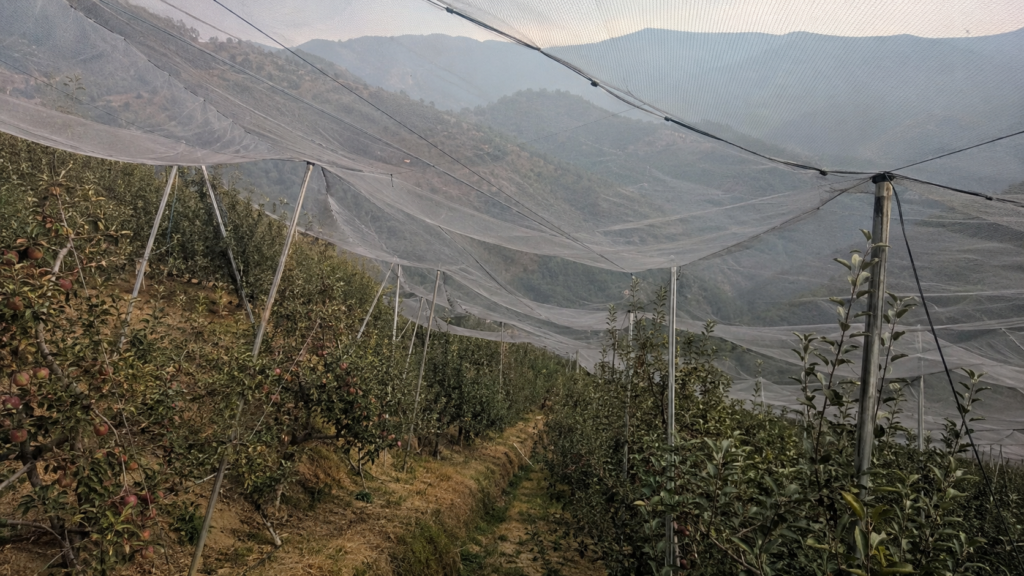
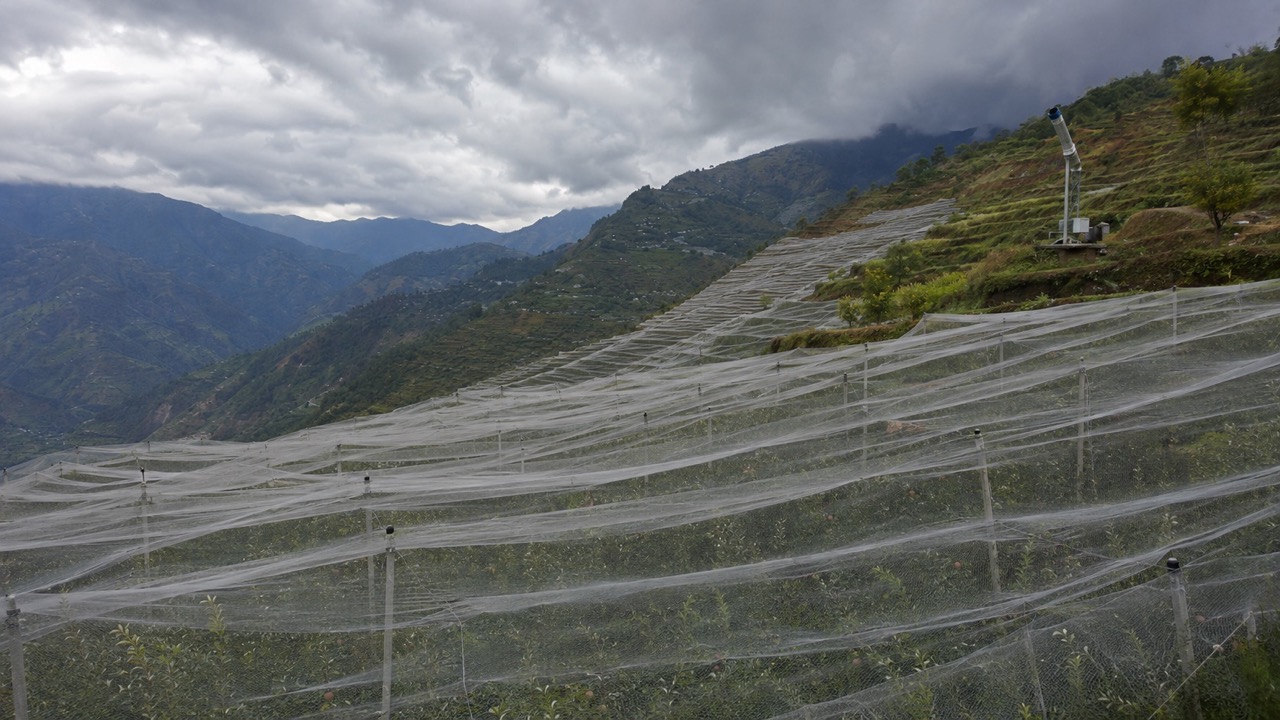
Weather modification is not limited to technologies directed towards the sky. A quieter form of environmental alteration is taking place within orchards through the widespread use of anti-hail nets, plastic sheeting, polyhouses, and other forms of protective infrastructure.
Anti-hail netting has become a comparatively accessible alternative for orchardists seeking protection from crop damage. However, the nets reduce the amount of direct sunlight reaching the tree canopy and may also restrict natural airflow around leaves and fruit.
The space beneath the netting can trap heat that would otherwise disperse into the surrounding atmosphere. This creates an altered microclimate in which trees may receive less sunlight while simultaneously experiencing elevated local temperatures.
Orchardists have described trees as effectively “suffocating” under such conditions. The cumulative influence of reduced light, restricted airflow, and trapped heat on photosynthesis, fruit quality, tree health, and long-term orchard viability requires independent scientific study.
The issue is separate from the physical degradation of the plastic itself. Both the microclimatic effects of netting and the chemical consequences of ageing agricultural plastic must be evaluated rather than treated as minor or isolated concerns.
Chemicals, Forced Ripening, and Soil Health
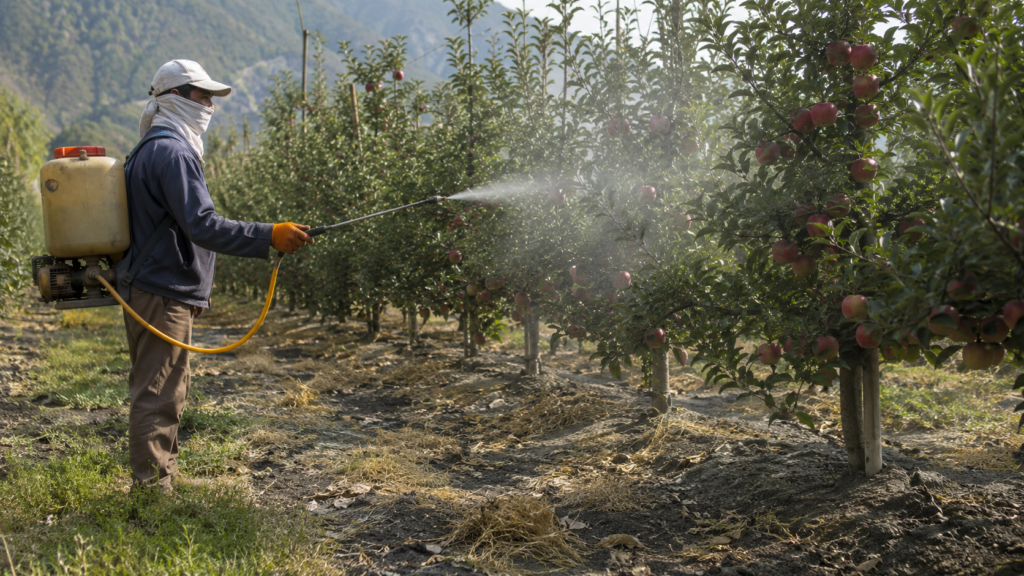
The use of Ethephon, commonly sold as Ethrel, and other plant growth regulators introduces another form of intervention into Himachal’s horticultural systems. These substances release ethylene within plant tissue, accelerating biological processes associated with ripening, maturity, and fruit separation.
Such chemicals may be used to bring produce to the market earlier or to influence crop output. However, their cumulative effects on soil chemistry, fruit quality, tree health, and the wider biological environment of an orchard belt remain insufficiently studied.
The concern is not limited to whether an individual application produces an immediate visible effect. Repeated chemical use across a large agricultural region may gradually alter soil organisms, nutrient cycles, plant resilience, water quality, and the natural timing of horticultural processes.
Clear permissible limits, residue testing, usage guidelines, and long-term soil monitoring are therefore necessary. Regulation should consider the cumulative regional impact of these substances rather than examining each orchard or application in isolation.
Plastic Infrastructure and Environmental Accumulation
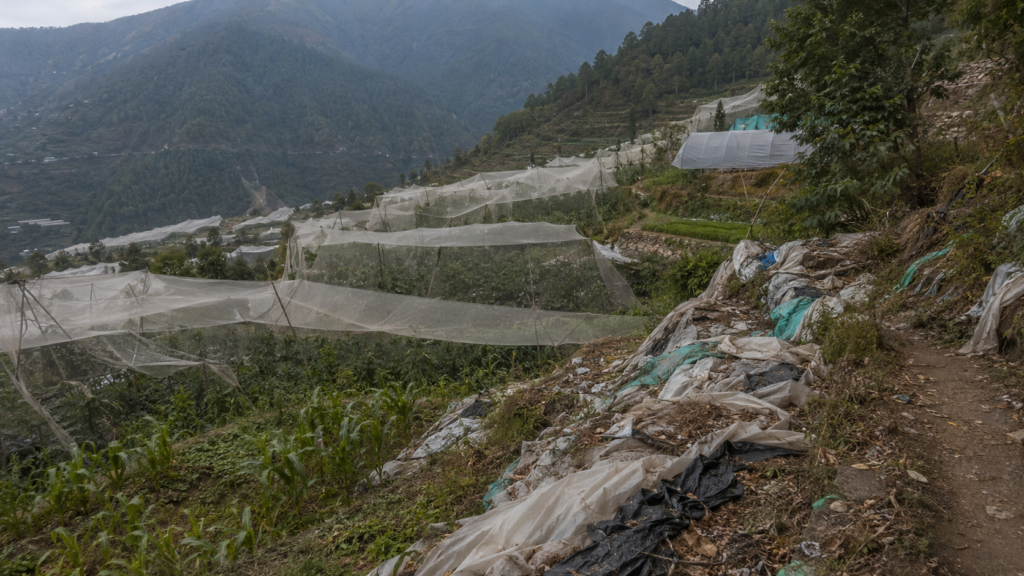
Polyhouse sheets, anti-hail nets, and construction tarpaulins may appear insignificant when viewed individually. Across thousands of hectares, however, they can collectively alter sunlight, humidity, temperature, rainfall interception, and the movement of water into the soil.
These changes may influence evapotranspiration and the recharge of springs and shallow groundwater systems. In a mountain environment where communities depend heavily on forest-fed springs and seasonal precipitation, even gradual alterations deserve careful attention.
Degrading agricultural plastics can also release microplastics and chemical additives into soil and water. These materials may include plasticisers, ultraviolet stabilisers, and other compounds that persist beyond the useful life of the original sheet or net.
The resulting contamination exists alongside the use of ripening chemicals, fertilisers, pesticides, and other agricultural inputs. Without baseline data and coordinated monitoring, their combined ecological effect cannot be properly measured.
Pollution as Unintentional Atmospheric Modification
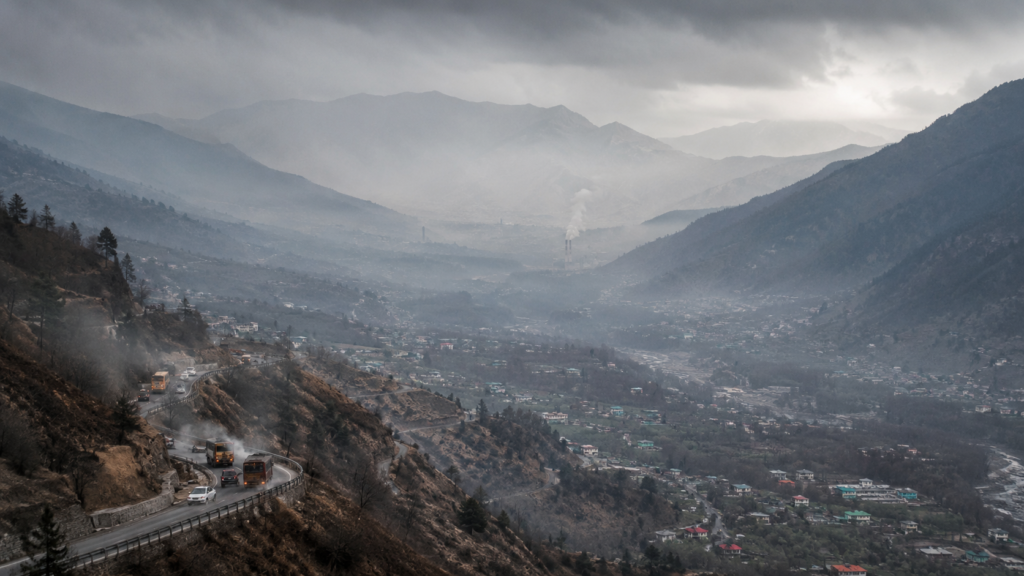
Industrial emissions, thermal power discharges, vehicular pollution, and widespread chemical use create another layer of atmospheric interference. These sources release sulphur compounds, nitrogen oxides, heavy metals, and particulate matter into the air.
Such pollutants can influence cloud formation, atmospheric chemistry, and rainfall distribution at a regional scale. Unlike anti-hail guns or cloud seeding, this form of modification may not be deliberate, but its environmental consequences can still be significant.
The distinction between intentional and unintentional modification does not reduce the need for accountability. Both forms require measurable emission limits, transparent monitoring, scientific evaluation, and effective enforcement.
The Shared Problem: Intervention Without Science
Anti-hail guns, weather-modification chambers, orchard nets, plastic sheets, growth regulators, and industrial emissions appear to be separate issues. They are connected by a common governance failure: natural systems are being altered faster than the consequences are being studied.
There is no widely available, independent, and published cumulative assessment of hail-suppression activity over Himachal’s watersheds. Similar gaps exist in relation to the thermal influence of anti-hail nets, the degradation of agricultural plastics, the long-term use of growth-regulating chemicals, and atmospheric activity originating across the border.
There is also no adequate baseline against which future changes can be confidently measured. Without baseline information on precipitation, soil chemistry, spring discharge, tree health, fruit quality, and atmospheric conditions, it becomes difficult to establish whether an intervention has caused damage.
This evidentiary gap reflects a broader pattern in Himalayan environmental governance. In our thirteen-site study of Himachal’s high-altitude pilgrimage and trekking destinations, only one location was found to enforce a numeric visitor limit based on ecological carrying-capacity considerations.
Although tourism pressure and weather modification are different issues, the underlying weakness is similar. Intervention and expansion are permitted before scientific limits, monitoring systems, and regulatory safeguards are established.
Why Himachal Is Especially Vulnerable
Himachal Pradesh depends on predictable monsoons, seasonal snowfall, glaciers, forest-fed springs, fertile soil, and stable mountain slopes. Atmospheric, thermal, chemical, or biological interference therefore affects more than the immediate location where a technology is deployed.
Changes in rainfall can influence floods, landslides, agriculture, drinking-water availability, and river flows. Changes in snowfall can affect glacier recharge, winter water storage, and the seasonal release of water into downstream systems.
Altered orchard conditions can affect rural livelihoods, fruit quality, soil health, and the long-term survival of trees. Pollution and chemical accumulation can also move through air, water, soil, crops, livestock, and human communities.
The concern is not that every intervention will necessarily produce catastrophic damage. The concern is that interventions are being introduced without sufficient knowledge to identify their combined effects, determine safe limits, or respond before damage becomes irreversible.
What Needs to Happen
A precautionary approach should be applied to all technologies and practices that alter Himalayan weather, soil, water, or biological systems. Scientific assessment must come before large-scale deployment rather than after environmental concerns have already emerged.
- Independent assessment of anti-hail guns: Published scientific studies should examine their effectiveness and their possible influence on precipitation distribution, catchments, downstream flood risk, surrounding ecosystems, and public safety.
- Clear operating procedures and licensing: Hail-suppression and weather-modification technologies should require environmental review, licensing, defined operating limits, safety protocols, and transparent reporting.
- Cross-border atmospheric monitoring: India should develop the technical capacity to track large-scale weather-modification activities across the Tibetan Plateau and assess possible effects on Himachal Pradesh and Uttarakhand.
- Scientific study of anti-hail nets: Research should examine changes in temperature, airflow, sunlight, photosynthesis, fruit quality, tree health, and orchard viability beneath agricultural netting.
- Regulation of growth and ripening chemicals: Ethephon and similar substances should be governed through permissible limits, residue testing, application guidelines, and long-term monitoring of soil and tree health.
- Monitoring of agricultural plastics: The use, ageing, removal, recycling, and disposal of nets, sheets, and tarpaulins should be regulated to reduce microplastic and chemical contamination.
- Control of industrial and vehicular pollution: Emissions and effluents capable of influencing atmospheric chemistry, water systems, and soil health should be measured and brought within an accountable regulatory framework.
- Transparent publication of research: Studies involving weather modification, agricultural technologies, and environmental interventions should be publicly available and evaluated through evidence rather than assumptions.
- Protection of forests and Himalayan ecosystems: Forests, springs, soils, glaciers, and natural drainage systems must be recognised as essential ecological infrastructure supporting water security and climate stability.
- Support for lower-risk alternatives: Traditional hail-resistant orchard practices, natural ripening cycles, soil restoration, afforestation, and ecologically appropriate farming methods should receive greater institutional support.
A Precautionary Responsibility
Himachal Pradesh did not choose to become a testing ground for unregulated atmospheric, chemical, and agricultural modification. Yet parts of its landscape are being influenced by shock waves above orchards, plastic sheets across slopes, chemicals applied to fruit and soil, industrial pollution, and weather systems potentially altered beyond the state’s boundaries.
The objective should not be to reject every technology without examination. It should be to ensure that no intervention is accepted merely because it promises immediate protection, increased production, or short-term convenience.
The Himalayas support rivers, forests, agriculture, biodiversity, and communities far beyond their visible boundaries. Any attempt to manage their weather, crops, or natural systems must therefore be guided by independent science, transparent regulation, ecological caution, and responsibility towards future generations.
Our position is clear: natural systems should not be modified first and studied later. The mountains that support North India’s water security deserve precaution, evidence, and protection before intervention becomes the default.
Related Articles
More stories and updates worth exploring from our journey.