Four Lanes, More Traffic: Are We Solving Congestion or Accelerating Mountain Pressure?

Wider roads were expected to ease movement across the Himalayas. But the growing traffic queues on mountain highways are raising a deeper question: are we reducing congestion, or inviting more vehicles, more construction and more pressure into fragile hill landscapes? What appears to be a transportation solution may, in fact, be accelerating a cycle of ecological and infrastructural stress. Every new lane attracts more traffic, every new highway fuels fresh development, and every increase in visitor numbers pushes mountain ecosystems closer to their limits. The real challenge is no longer how quickly people can reach the hills, but how much growth these fragile landscapes can sustainably absorb without losing the very qualities that draw people to them.
The Himalayan Traffic Paradox
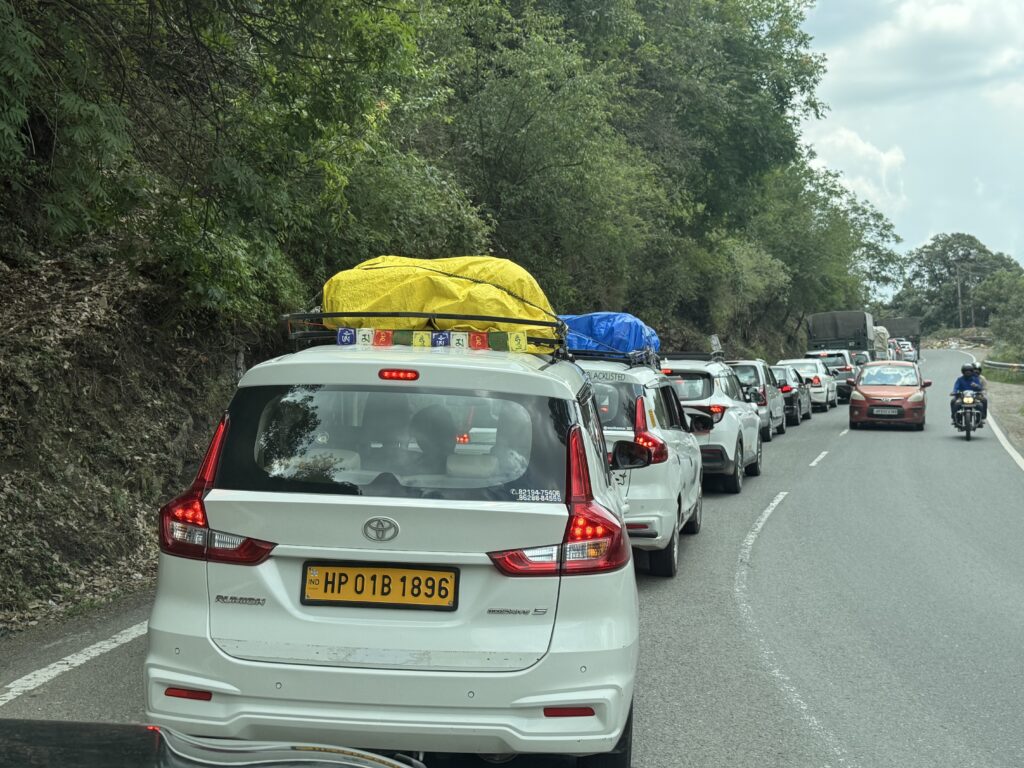
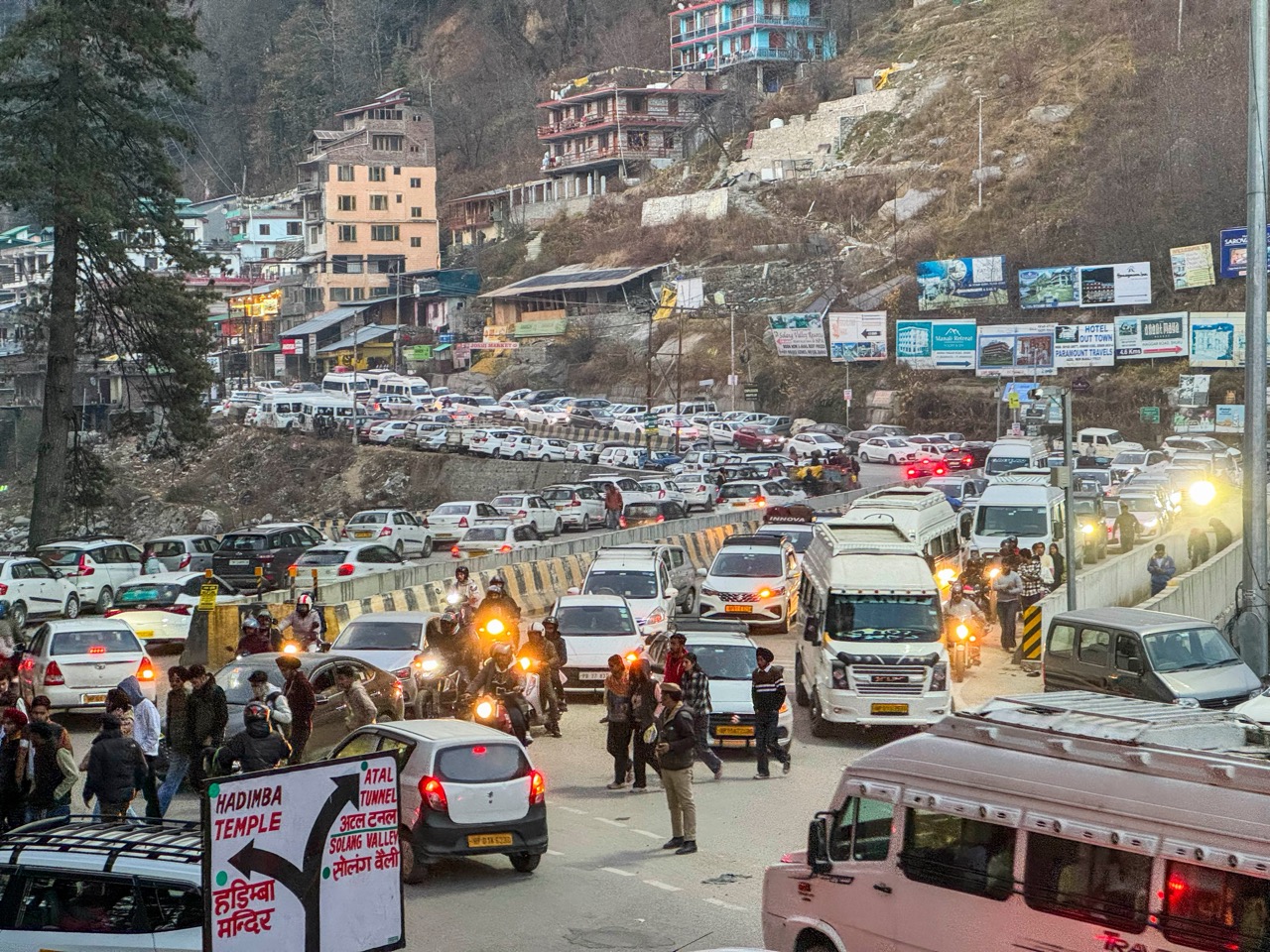
The image is telling.
A long line of vehicles moves slowly along a mountain road. Cars occupy the carriageway, the shoulder and every available space. Around them stand green hillsides, forests and fragile slopes, reminding us what these mountain landscapes are meant to protect.
Yet today, even as wider roads and four-lane highways are being developed across large stretches of the Himalayas, traffic jams appear longer, more frequent and more intense.
The promise was simple. Wider roads would reduce congestion, improve connectivity and make travel faster, safer and more efficient.
But a different reality is now visible on many mountain routes.
Instead of ending congestion, road expansion often creates conditions for even more traffic. As roads become wider and faster, more people choose to travel. Tourist movement increases. Weekend traffic multiplies. More vehicles enter towns, forests and valleys that were never designed to absorb such pressure.
This is the Himalayan traffic paradox. Every new road creates demand for another road.
When Road Expansion Becomes Land-Use Change
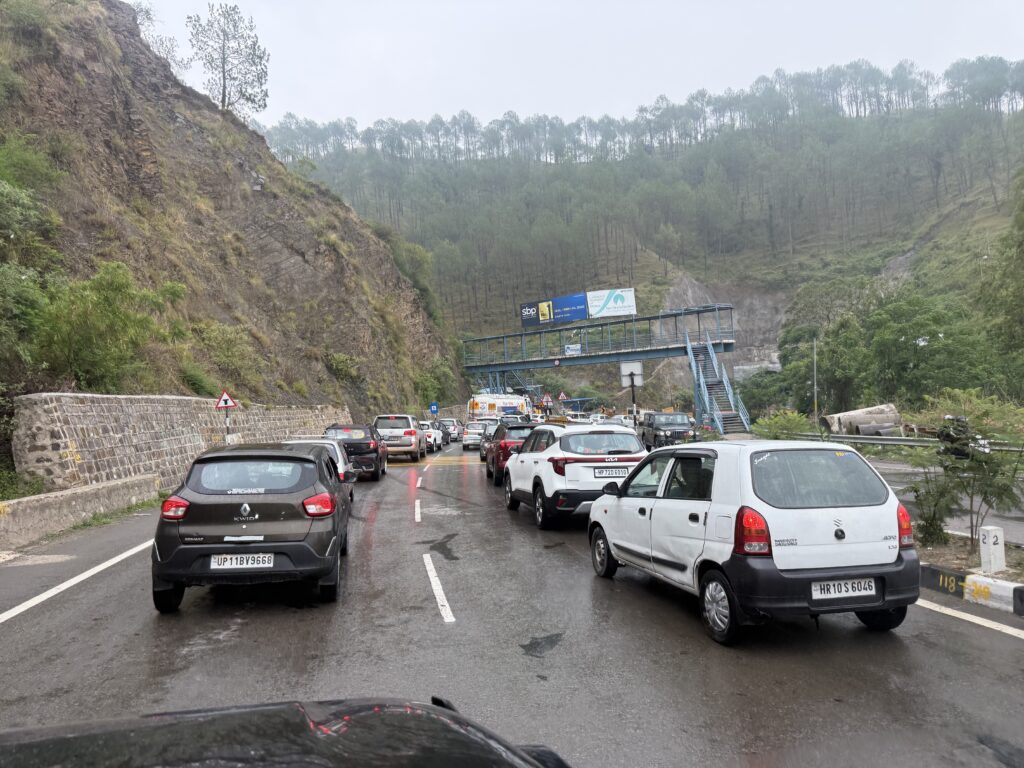
The question before the Himalayas is no longer only whether a road can be built.
The deeper question is what follows after the road arrives.
Every new highway brings new demands. Parking spaces are needed. Fuel stations appear. Hotels, homestays, shops, commercial buildings and feeder roads begin to grow around the transport corridor.
Gradually, forest edges become parking zones. Hillsides are cut for widening. Slopes become more vulnerable to erosion. Wildlife habitats face disturbance and fragmentation.
What begins as a transportation project slowly becomes a land-use transformation.
Forests are no longer seen only as ecosystems. They start being viewed as future parking areas, future commercial zones, future resorts and future road corridors.
The cumulative impact goes far beyond the road itself. More vehicles bring more emissions, more noise, more waste, more light pollution and greater pressure on fragile mountain ecosystems.
The Mountain Invasion Phenomenon
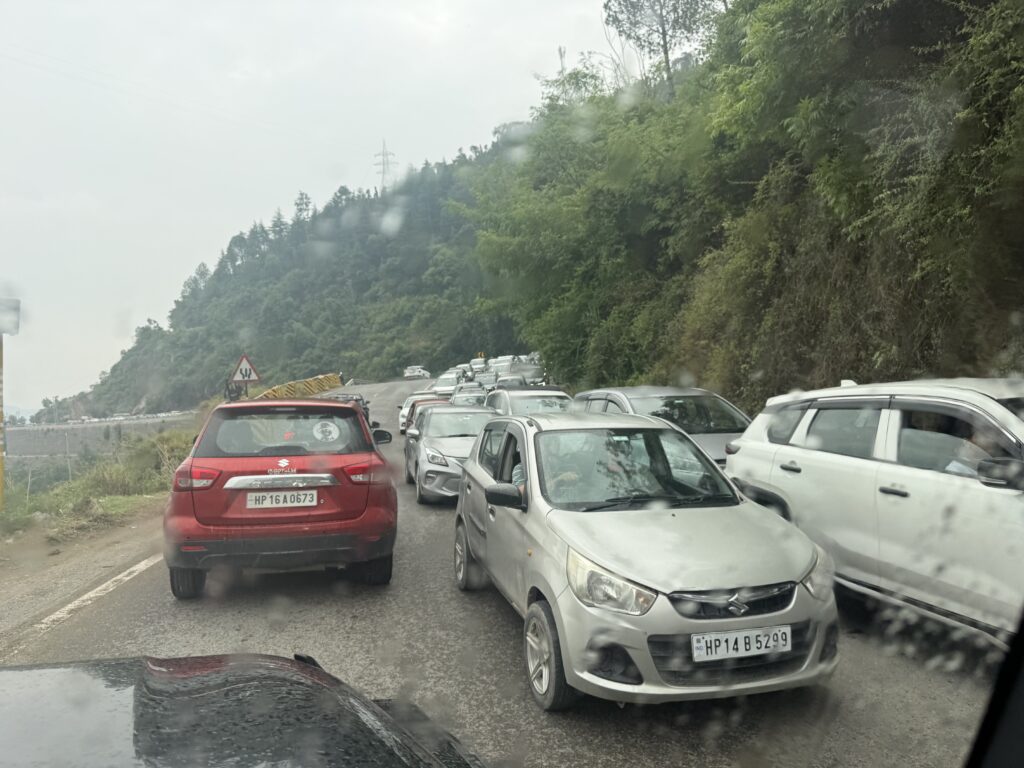
Many residents now describe what they witness not as development alone, but as an invasion of the mountains.
This is not an invasion by armies. It is an invasion by numbers.
Every weekend, thousands of vehicles enter landscapes that evolved to support small settlements, narrow roads and limited infrastructure. Highways designed to increase mobility end up bringing large volumes of traffic into destinations that cannot absorb them sustainably.
A four-lane road can carry many vehicles.
But can mountain towns accommodate them? Can forest watersheds sustain them? Can fragile slopes support the construction that follows? Can wildlife coexist with the noise, lights and constant movement?
These questions need serious attention.
The Himalayas are not empty spaces waiting to be filled with more vehicles, more buildings and more commercial activity. They are living ecological systems that support forests, rivers, biodiversity, local communities and climate stability.
Rethinking Development in the Himalayas
The answer to mountain congestion cannot be endless road widening.
No mountain ecosystem can keep absorbing a constant rise in vehicle numbers without ecological and social consequences.
A sustainable approach requires a wider understanding of development. Roads may improve access, but access alone cannot become the only measure of progress.
Public transport, shuttle systems, carrying capacity assessments, parking regulation, ecological zoning and strict protection of forests and watersheds must become central to mountain planning.
Otherwise, each new road will create pressure for another road, and then another.
The image before us offers a warning. The forest still stands in the background. The traffic already dominates the foreground. The future of the Himalayas may depend on which of the two ultimately prevails.
Because the most important question before mountain states today is not:
How many roads can we build?
It is:
How many vehicles can the mountains sustainably absorb?
Related Articles
More stories and updates worth exploring from our journey.