Himalayan Skies Under Siege: Why Migratory Birds Need Darker Mountain Nights

The Himalayas are not only mountains, forests, valleys, rivers, and ridges. For migratory birds, they are part of a living ecological corridor that connects distant regions across continents.
A presentation by Dr Taej Mundkur of Good Earth Environmental, The Netherlands, conducted on 15 May during the National Symposium on Avian Biology at Sher-e-Kashmir University, Srinagar, highlighted the importance of the Central Asian Flyway. The presentation showed how migratory birds move across vast regions including Siberia, Mongolia, Central Asia, Tibet, the Himalayas, and the Indian subcontinent.
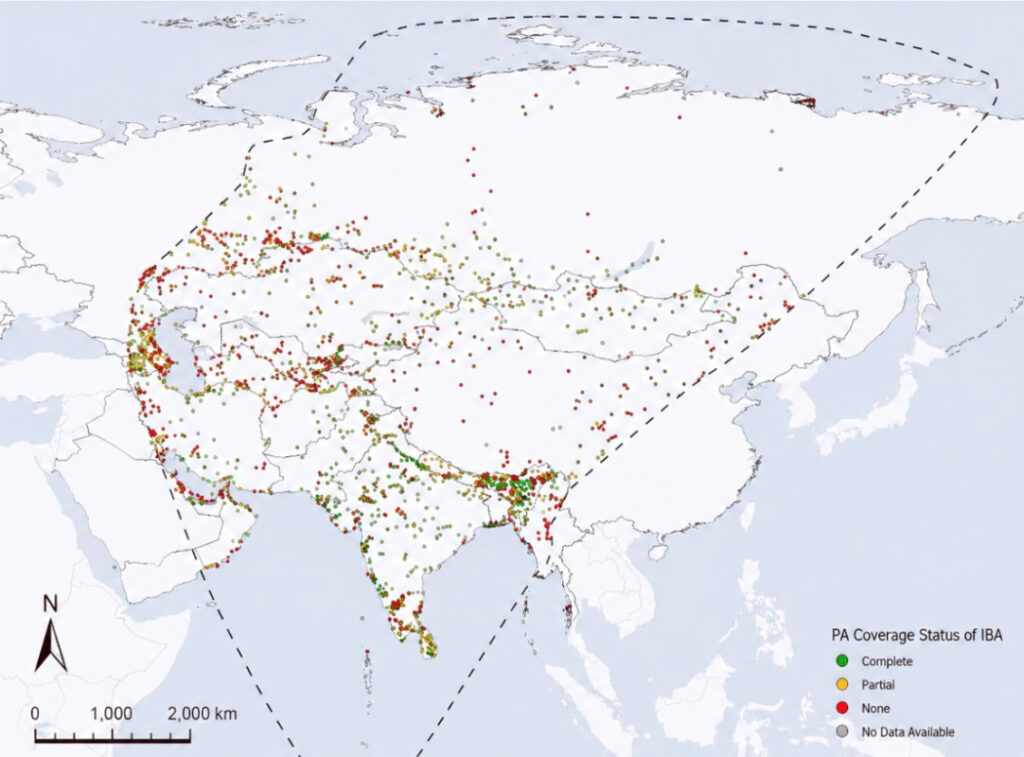
For Himachal Pradesh, this has serious ecological importance. The state is not separate from this movement. Its valleys, forests, wetlands, catchments, and night skies form part of the natural systems that help birds rest, navigate, and survive during long migration journeys.
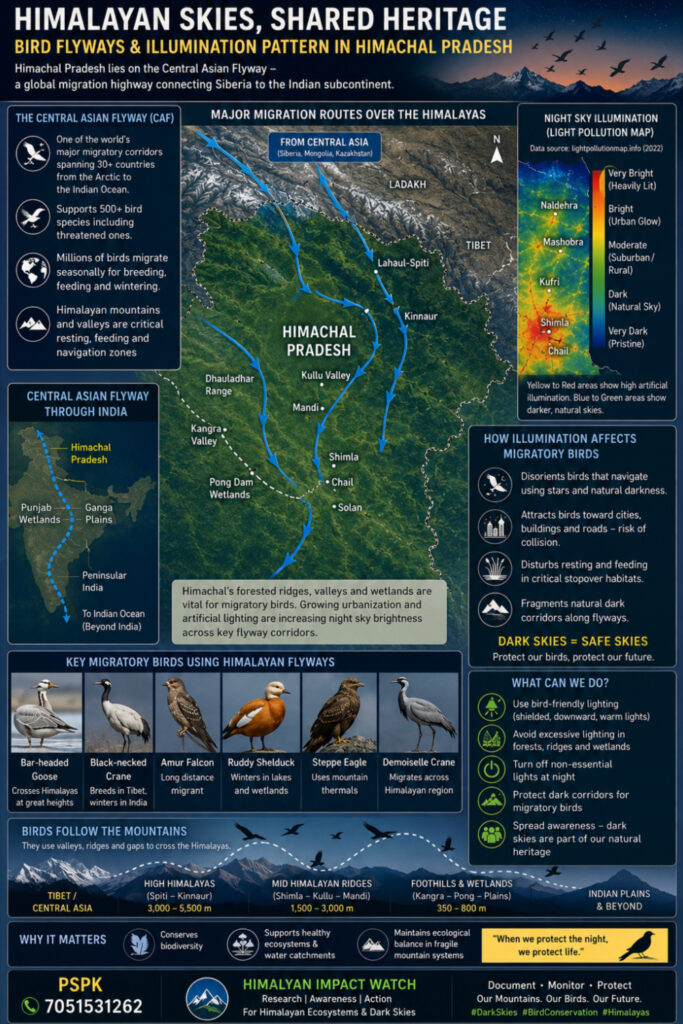
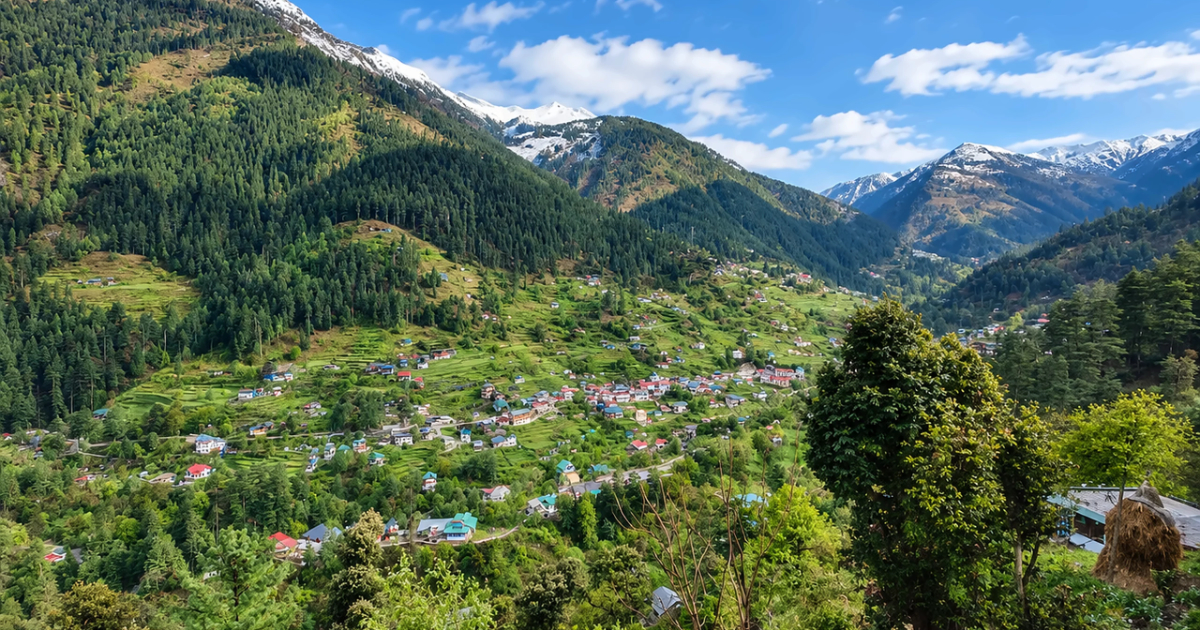
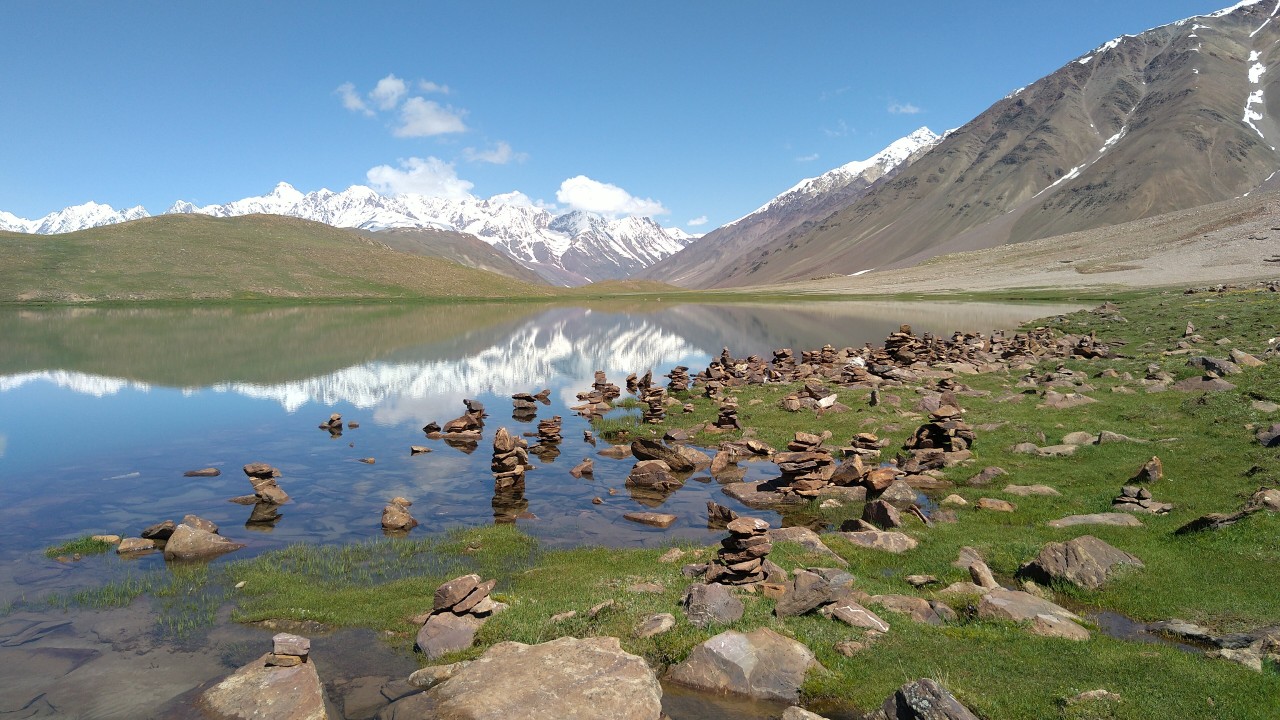
The document highlights several important Himalayan landscapes, including Lahaul-Spiti, Kinnaur, Baspa, Sutlej, Kangra wetlands, Shimla ridge forests, and mid-Himalayan catchments. These areas support birds moving across some of the harshest terrain on Earth.
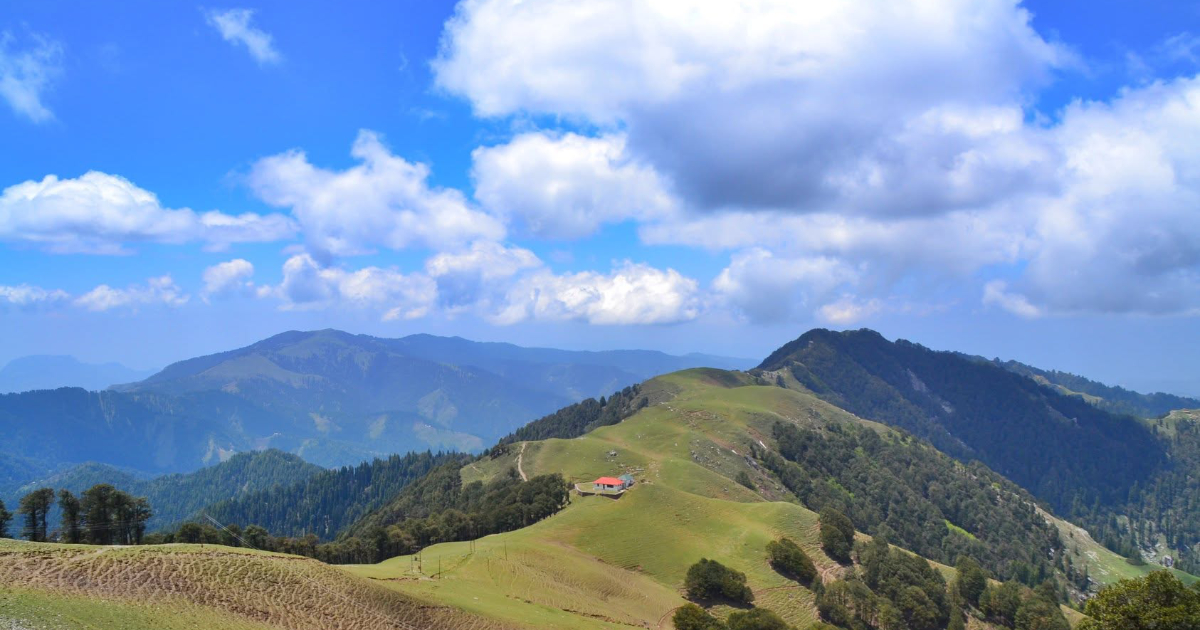
For migratory birds, what appears to us as wilderness is actually living infrastructure. Forests, wetlands, river corridors, ridge thermals, ecological connectivity, and dark skies all play an important role in their movement and survival.
The Growing Concern of Light Pollution
One of the important concerns raised in the material is the spread of artificial night illumination.
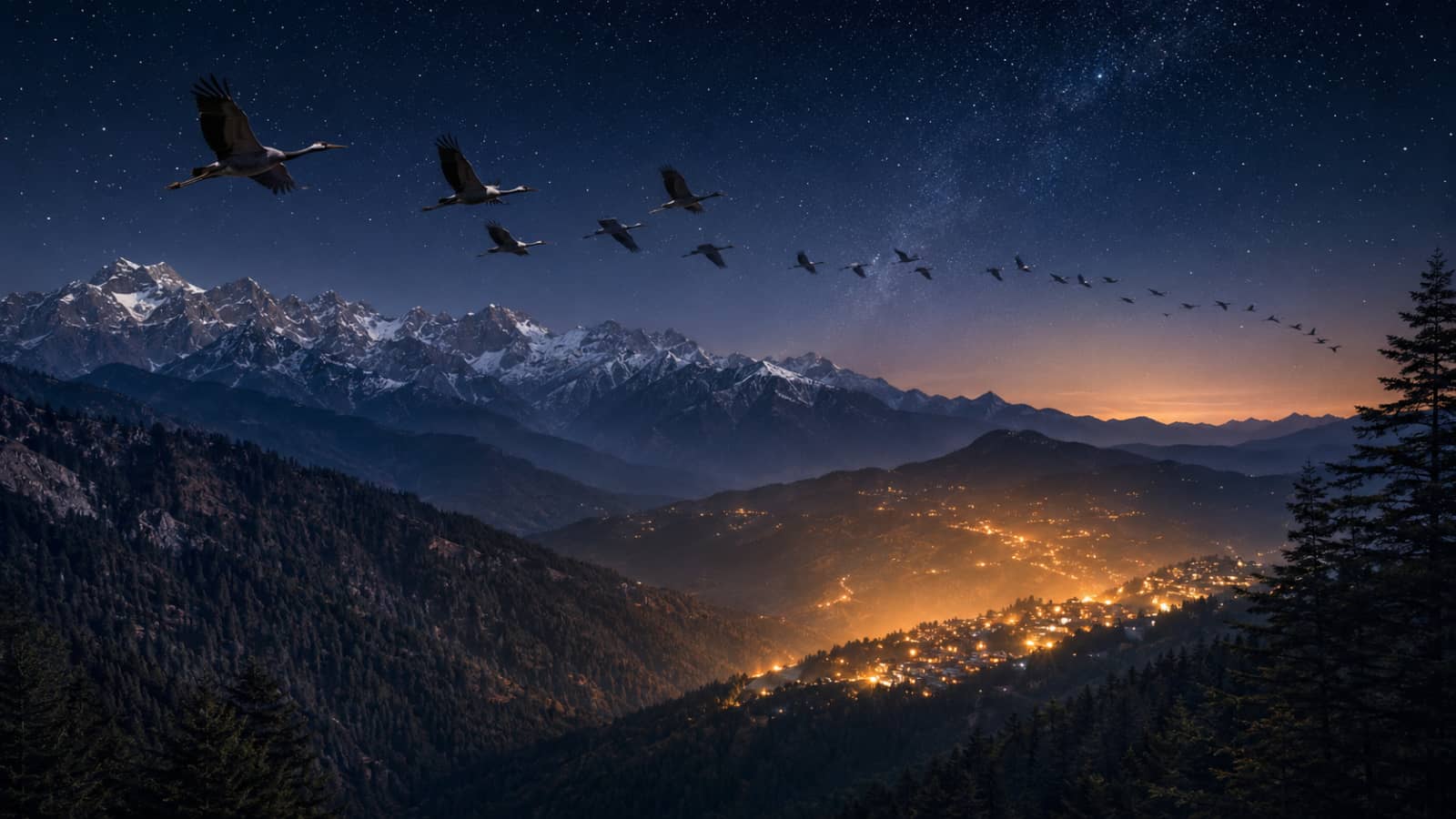
Across mountain regions, light from towns, roads, hotels, tourism corridors, settlements, and other development activities is changing the natural darkness of the Himalayas. Areas around Shimla, Chail, Kufri, Mashobra, Solan, Baddi, highways, hotels, and ridge-top settlements are mentioned as examples where night glow is expanding.
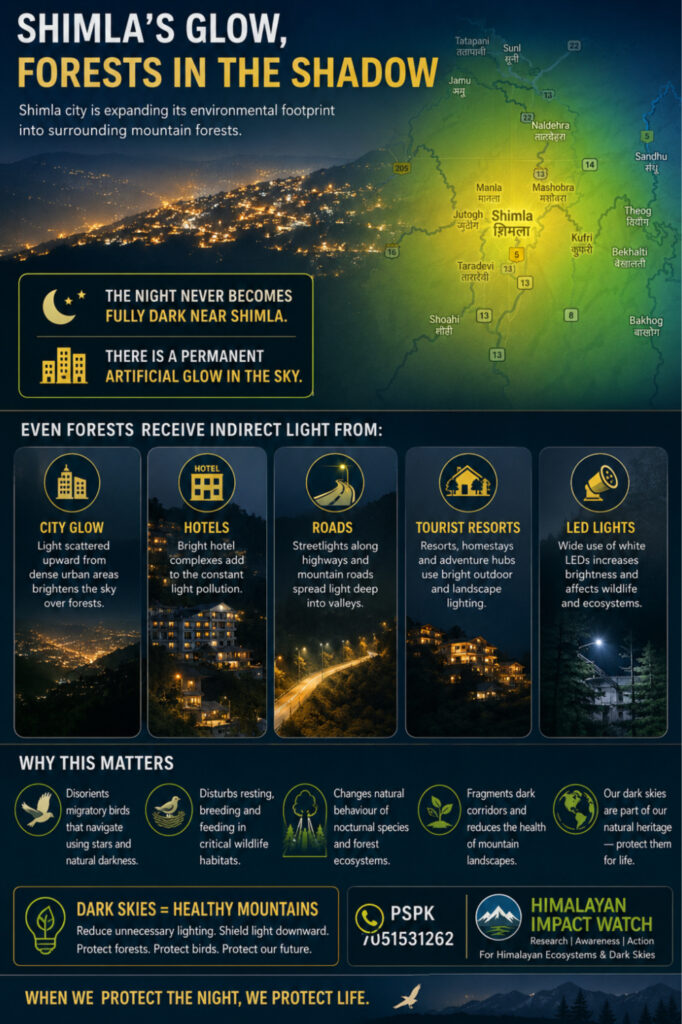
This change is not only visual. It is ecological.
Migratory birds depend on natural signals such as stars, moonlight, polarized light, geomagnetic orientation, and darkness for navigation. When mountain ridges and valleys become permanently illuminated, birds can become disoriented. Their migration routes may be disturbed. Their feeding and resting behaviour may change. Collision risks may also increase.
In Himalayan conditions, fog and clouds can reflect artificial light back into valleys. This can create wider zones of night glow and increase the risk for birds moving through mountain passages.
Why This Matters for Himachal Pradesh
Himachal Pradesh is a sensitive mountain region. It is a biodiversity zone, a water catchment area, and part of a larger migratory bird corridor.
The ecological impact of disturbance in such a region does not remain limited to one town or one road. A wetland degraded in Kangra may remove an important resting place. A ridge illuminated in Shimla may affect night navigation. A tourism corridor developed without ecological care may disturb dark pathways used by birds over long periods of time.
The material refers to sensitive areas and development pressures around Chail, Koti, Kufri, Karol ka Tibba, Churdhar, Shalli Tibba, and Jakhu. These examples show why mountain planning must consider ecological connectivity, dark skies, forests, wetlands, and bird movement together.
The Night Sky Is Also Habitat
Conservation is often understood through forests, rivers, wetlands, and protected areas. But for migratory birds, the sky is also habitat.
Darkness is not empty space. It is part of the natural system that helps birds move safely across long distances.
Artificial light at night can affect bird behaviour, insects, nocturnal pollinators, predator and prey balance, and ecological rhythms. In mountain ecosystems, where terrain, altitude, moisture, and reflection can spread light over a wider area, the impact can become more serious.
This means conservation efforts must now include dark sky protection, responsible lighting, wetland protection, ecological monitoring, and public awareness.
A More Responsible Way Forward
The question is not whether development should happen in the Himalayas. The question is whether development can remain ecologically responsible.
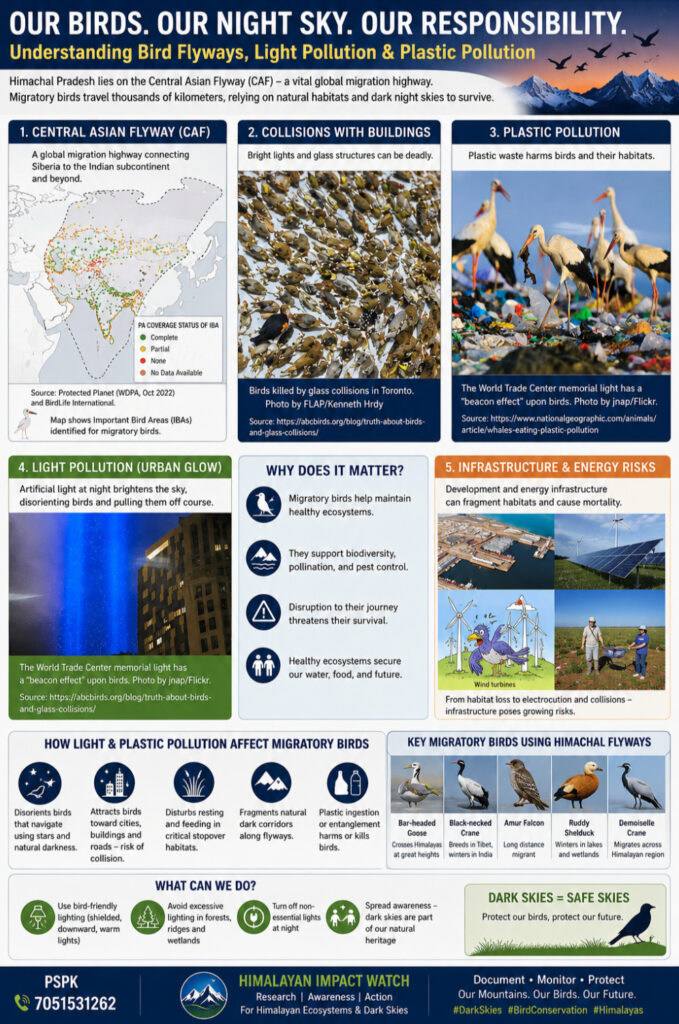
The provided material raises important questions for Himachal Pradesh:
- Can tourism infrastructure be designed without destroying dark skies?
- Can ridge lighting be regulated?
- Can wetlands and catchment forests be protected as living ecological assets?
- Can Himalayan towns adopt bird sensitive lighting practices?
- Can environmental assessments include illumination and migratory disruption?
These questions are important for the future of nature conservation in Himachal Pradesh.
Our Responsibility
At PSPK, we believe that nature is an interconnected living system. Protecting the Himalayas means protecting forests, rivers, wetlands, wildlife, mountain communities, and the natural darkness that supports life.
The future of migratory birds in the Himalayas may depend not only on protected forests and clean wetlands, but also on whether we learn to protect the night sky.
The Himalayan night is part of the ecosystem. When we protect darkness, we protect life.
Related Articles
More stories and updates worth exploring from our journey.