Sangrah Rises for Its Mountains: Community Rally Against Alleged Illegal and Unscientific Mining

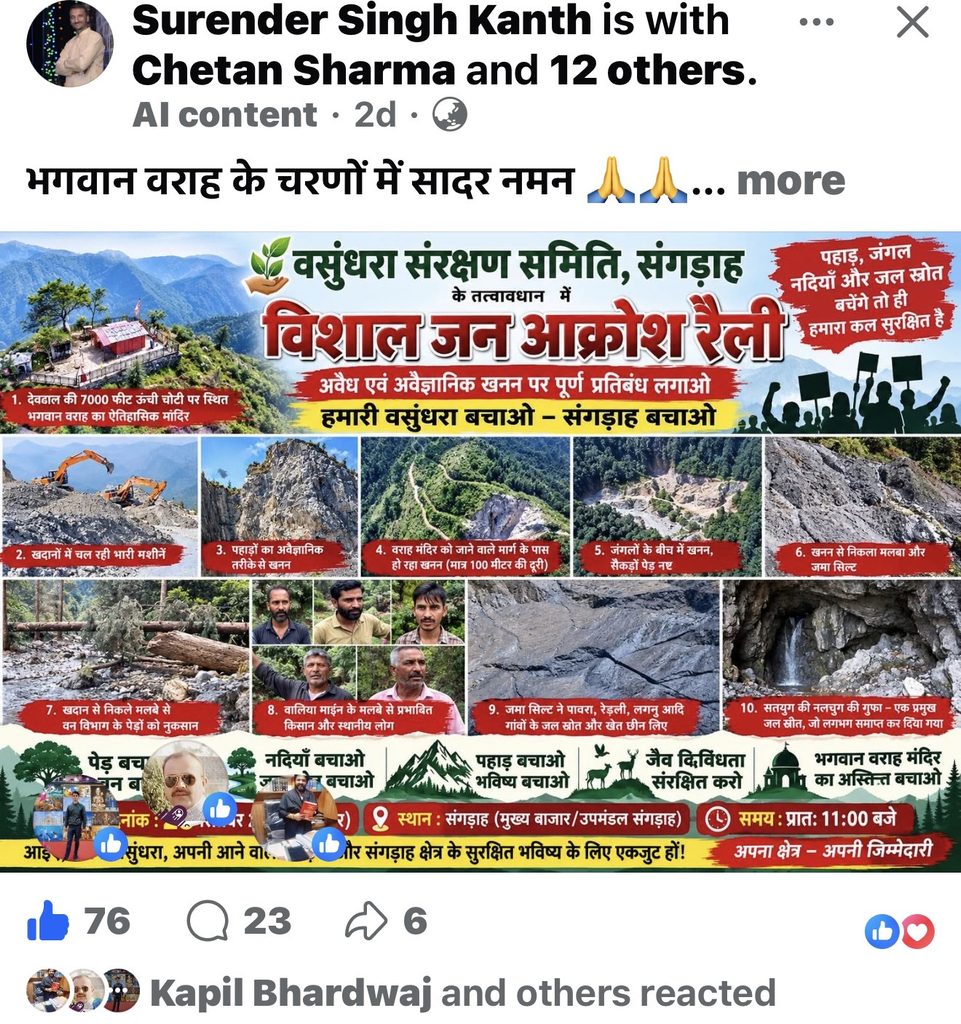
On 28 September 2026, residents of Sangrah and adjoining areas of Sirmaur district came together in a significant public environmental mobilisation concerning the impact of mining on their mountains, forests, water resources and communities. The gathering brought attention to concerns over alleged illegal and unscientific mining while also raising a larger question about how development, environmental protection, community welfare and scientific accountability can coexist in the fragile Himalayan landscape.
A Community Mobilisation for the Mountains
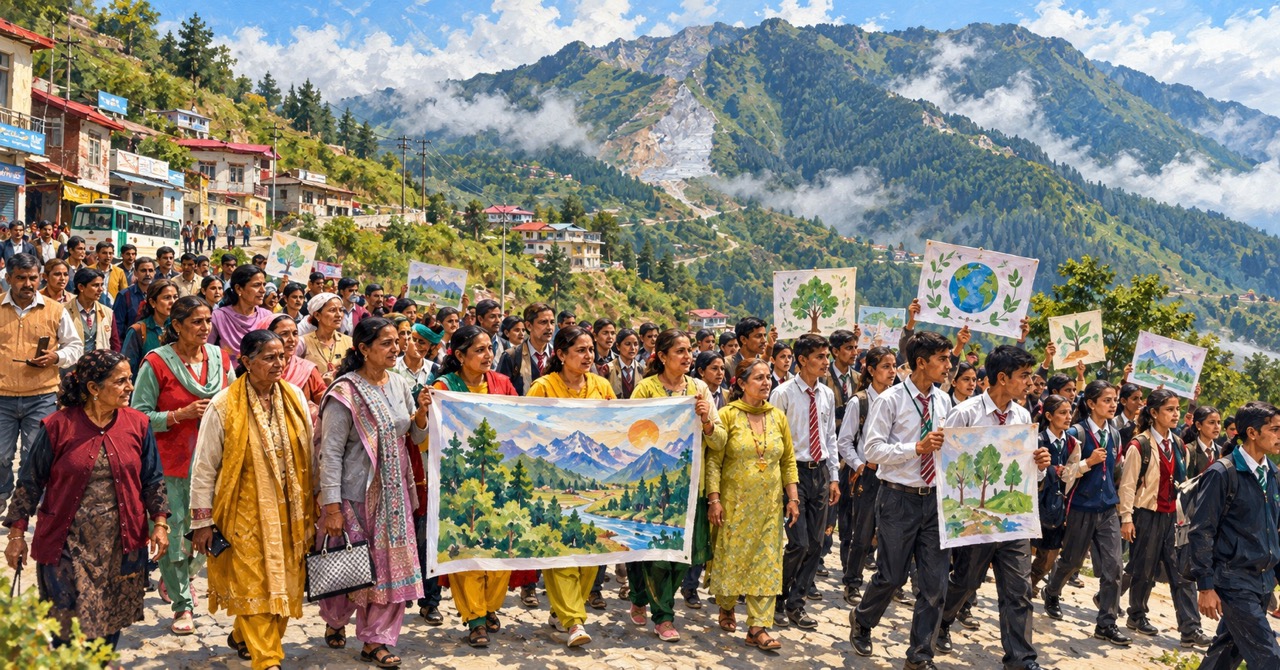
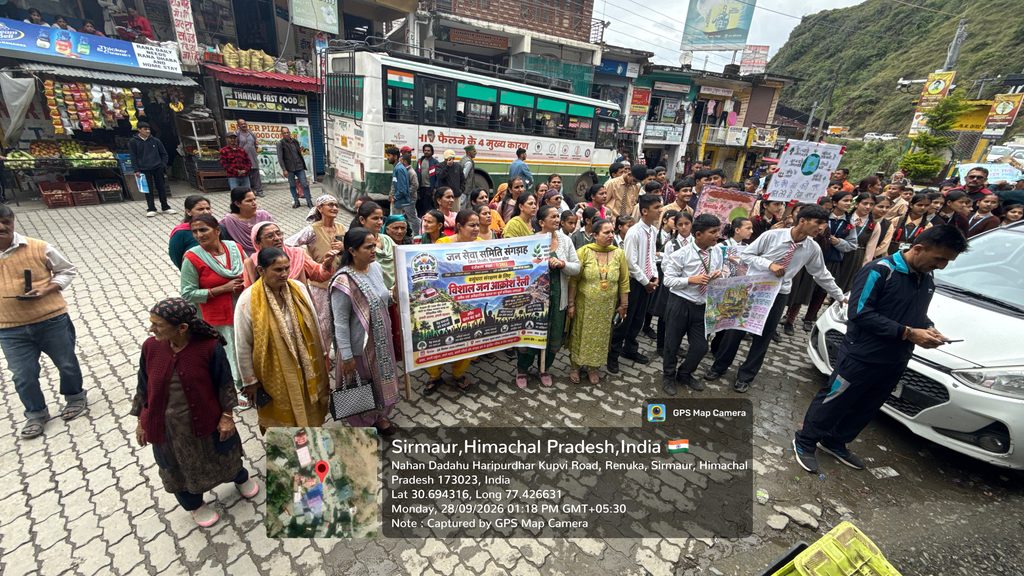
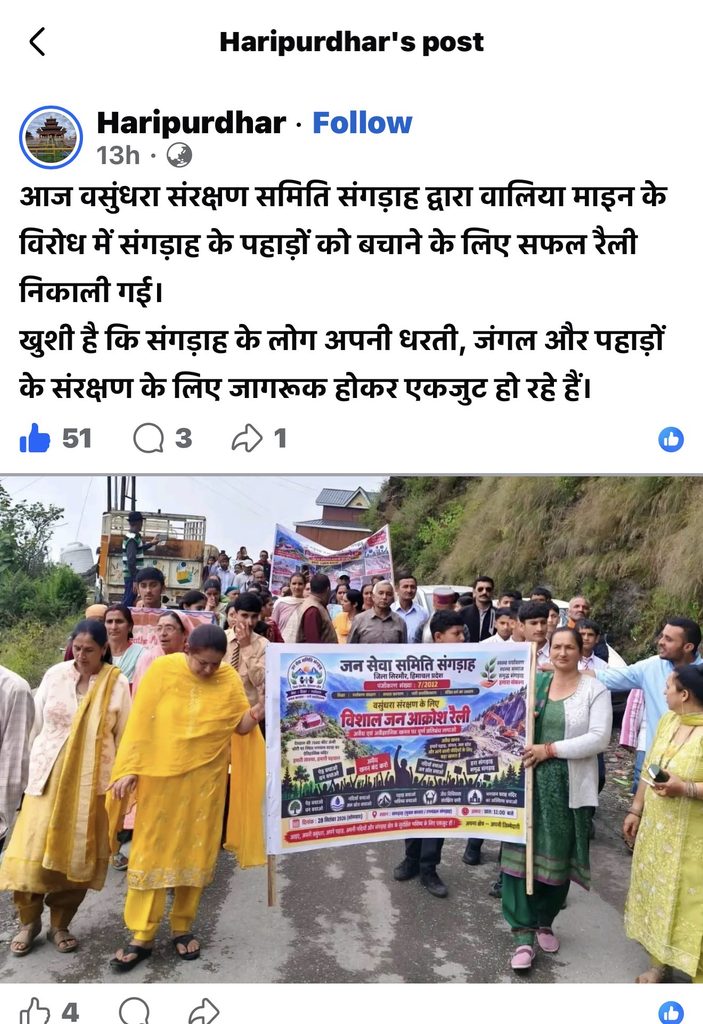
The Vasundhara Sanrakshan Samiti, Sangrah, organised a Jan Jagran and Jan Akrosh Rally along with a public meeting to raise concerns regarding alleged illegal and unscientific mining practices in the region. Women, students, local residents, representatives of community organisations and concerned citizens participated in the programme, bringing together different generations of the local population around issues affecting the surrounding environment.
Women participated in significant numbers, while school students walked with handmade environmental posters carrying messages about protecting forests and water, reducing pollution and plastic waste, planting trees and caring for the environment. Their participation widened the focus of the mobilisation beyond mining alone and highlighted the interconnected nature of environmental concerns in the mountains.
The involvement of young people was especially significant because environmental degradation in the Himalayas is an intergenerational issue. Decisions taken today can influence the availability of water, forests, stable slopes and productive land many years into the future. The condition of the mountain landscape inherited by today’s children will depend substantially on how natural resources are managed in the present.
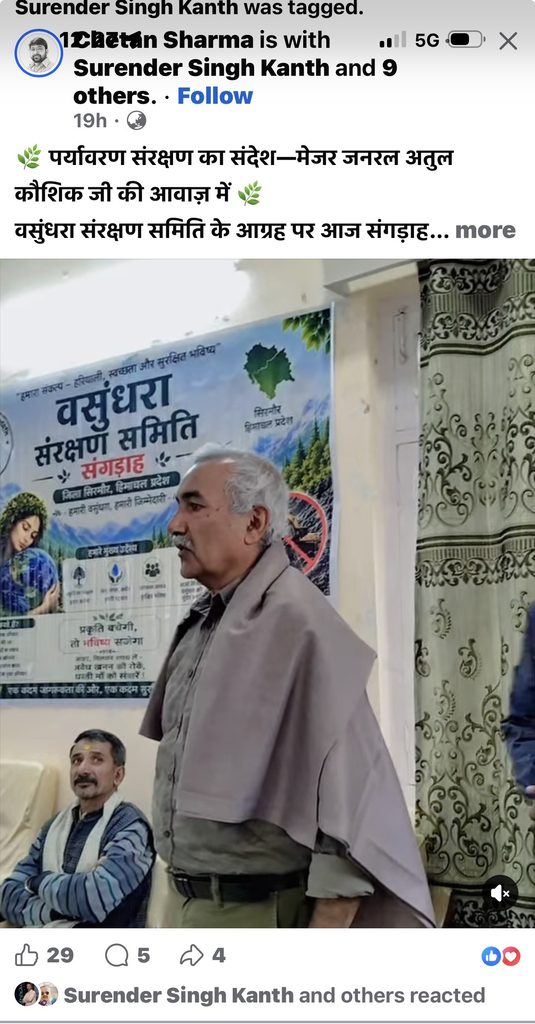
Major General Atul Kaushik, SM, VSM, Wound Medal (Retd.), participated in the programme as a special guest and addressed the gathering. A central message during the interaction was the need to move beyond protest alone and towards evidence based environmental governance supported by scientific monitoring, social compliance and institutional accountability.
Local reporting before the event stated that the organisers intended to draw attention to concerns regarding alleged unscientific extraction, the use of heavy machinery, disposal of mining debris and possible impacts on agricultural land and water sources. These concerns require careful examination through records, field assessment and scientific evidence rather than assumptions from either side.
Sangrah’s Environmental Legacy
The mobilisation carries particular significance because Sangrah already occupies an important place in the environmental history of Himachal Pradesh. Environmental activist Kinkri Devi had approached the Himachal Pradesh High Court against uncontrolled limestone quarrying in this region. During proceedings in the 1980s, concerns were considered regarding the effects of quarrying on adjoining land, water resources, pastures, forests, wildlife, ecology and local inhabitants.
More than three decades later, many of these interconnected concerns continue to resonate. The most meaningful way to recognise that environmental legacy is not merely to remember an earlier struggle, but to build a modern system in which environmental impacts can be scientifically measured, properly disclosed and independently examined.
What the Landscape Shows and What It Cannot Prove
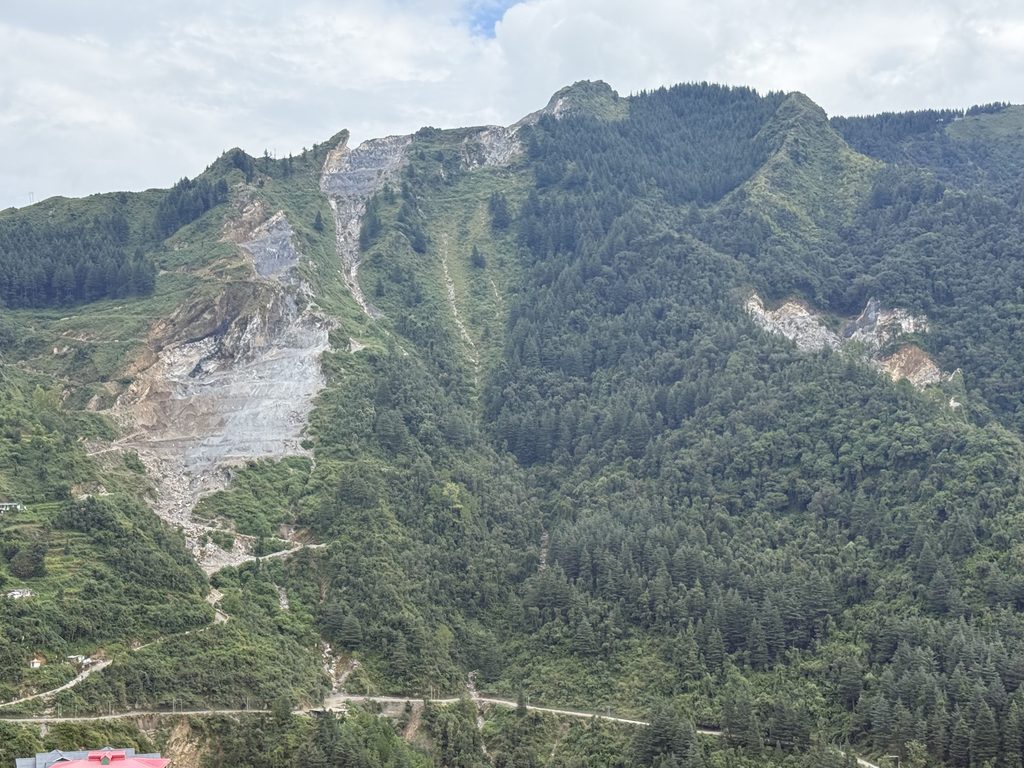
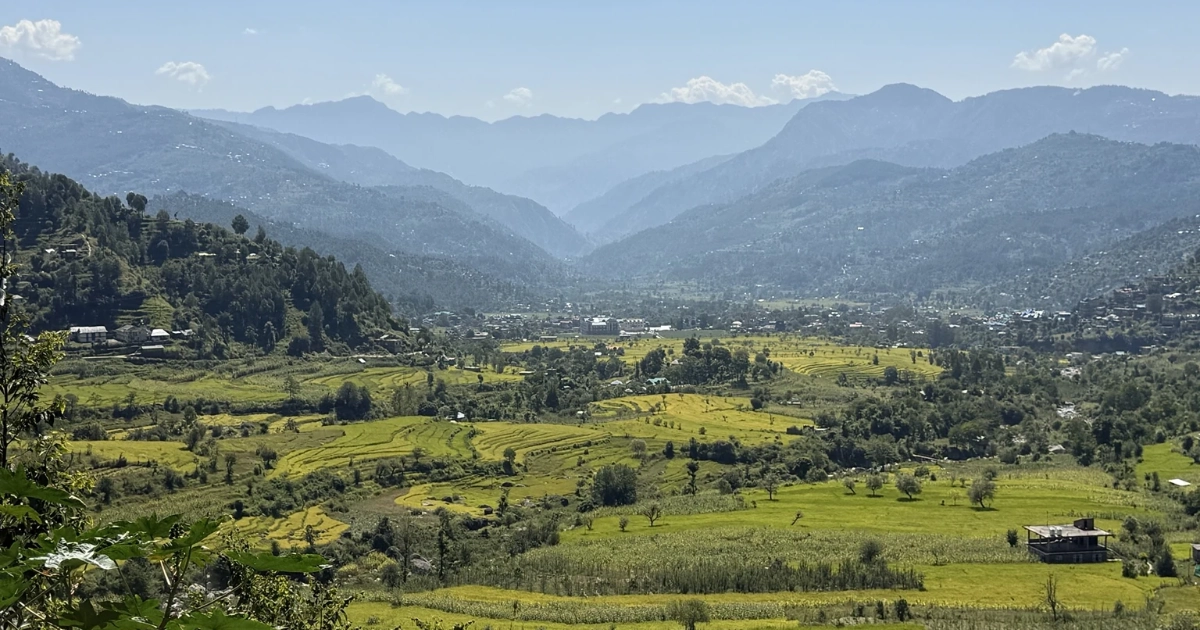
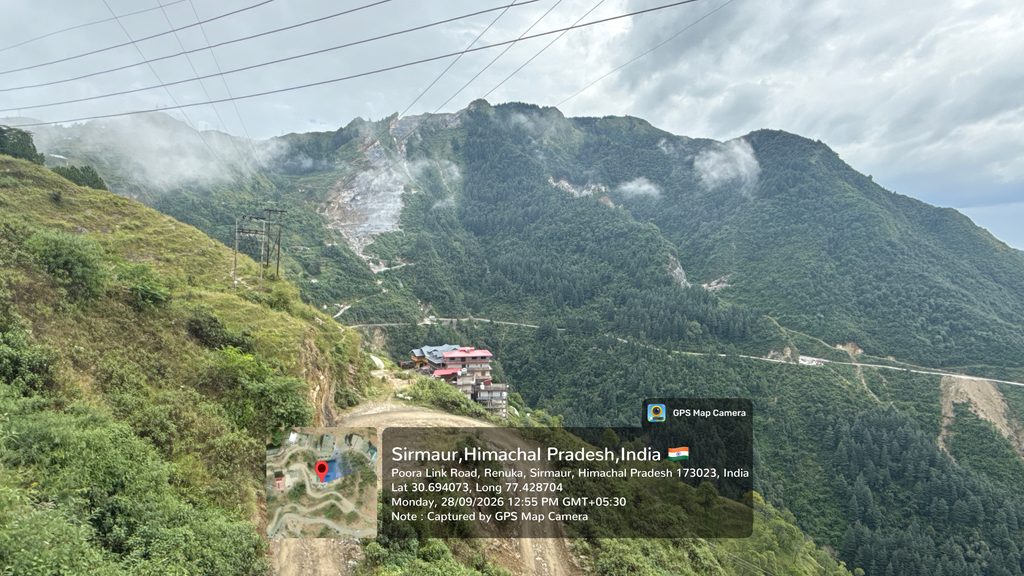
During the visit, large exposed sections of mountain slopes could be seen around parts of the Sangrah landscape. Photographs taken during the programme show areas where natural vegetation and mountain surfaces appear disturbed or exposed. These observations provide a clear reason for closer scientific examination of the landscape.
At the same time, photographs by themselves cannot establish whether a particular excavation is legal or illegal. A photograph alone also cannot determine whether an exposed slope has resulted from mining, road construction, natural instability or a combination of different factors. Visual documentation should therefore be treated as evidence of conditions requiring investigation, not as a substitute for scientific or legal determination.
The more important questions are measurable. Authorities and communities need to know how much material has been permitted for extraction, how much has actually been removed, whether extraction has remained within approved lease boundaries, whether approved mine plans and bench dimensions are being followed, where overburden is being deposited, whether natural drainage channels are being disturbed, what changes are occurring in slope stability and springs, whether progressive reclamation is taking place, and what ecological condition will remain after mining eventually ceases.
These questions require reliable records, surveys, environmental monitoring and field verification. Transparent comparison between approved conditions and actual conditions on the ground is essential if environmental concerns are to be addressed objectively.
National Green Tribunal Proceedings Add Important Context
The Sangrah mobilisation took place only days after an important development before the National Green Tribunal. On 17 September 2026, while considering an application concerning alleged illegal, unregulated and unscientific mining of limestone and riverbed material in Sirmaur district, the Tribunal issued notices to the concerned authorities.
Reports of the proceedings state that the application referred to mining activity in areas including Kafota, Sataun, Rajban, Paonta Sahib, Sangrah and Shillai. Pending further proceedings, the Tribunal directed the authorities to ensure that no illegal mining takes place in Sirmaur district. The matter was listed for further hearing on 9 December 2026.
This intervention is important context, but it should not be represented as a final determination that every mine or operator in Sangrah is functioning illegally. The status of individual operations must depend upon evidence, inspection and the applicable statutory process.
Regulatory Compliance Requires Mine Specific Examination
The need for detailed compliance monitoring is also reflected in publicly available regulatory records referred to in the source material. An Indian Bureau of Mines violation notice dated 2 February 2026 concerning the Barwana Limestone Mine in the Sangrah area records violations of provisions of the Mineral Conservation and Development Rules, 2017 identified during an inspection conducted on 17 December 2025.
A notice concerning one mining operation cannot establish the compliance status of every mine in the region. It does, however, demonstrate why mine specific disclosure, inspection and monitoring are necessary. Environmental accountability cannot be based only on general statements made either by industry or by those raising concerns about mining.
Development Cannot Be Separated From Ecology
Our position is that the Sangrah issue should not be reduced to a simple choice between mining and no mining. Minerals are required for infrastructure and economic development, while industry can generate revenue and employment. At the same time, the Himalayan landscape has physical and ecological limits that cannot be separated from economic activity.
The more important question is how much extraction a fragile mountain system can withstand, under what conditions extraction can take place, and what responsibilities must be fulfilled towards the people and ecosystems surrounding it. Development that leaves behind unstable slopes, damaged roads, polluted water, declining springs, degraded forests or livelihood losses risks transferring present economic benefits into long term environmental liabilities.
Sangrah therefore requires a model of development in which economic activity remains within ecological limits and in which environmental and social costs are recognised as part of development itself rather than treated as unrelated consequences.
Three Tests for Responsible Mining
Social Compliance and Community Responsibility
Responsible mining cannot be judged solely by the possession of a mining lease or other statutory approvals. Its impact on workers, surrounding communities, traditional livelihoods and public infrastructure also requires examination.
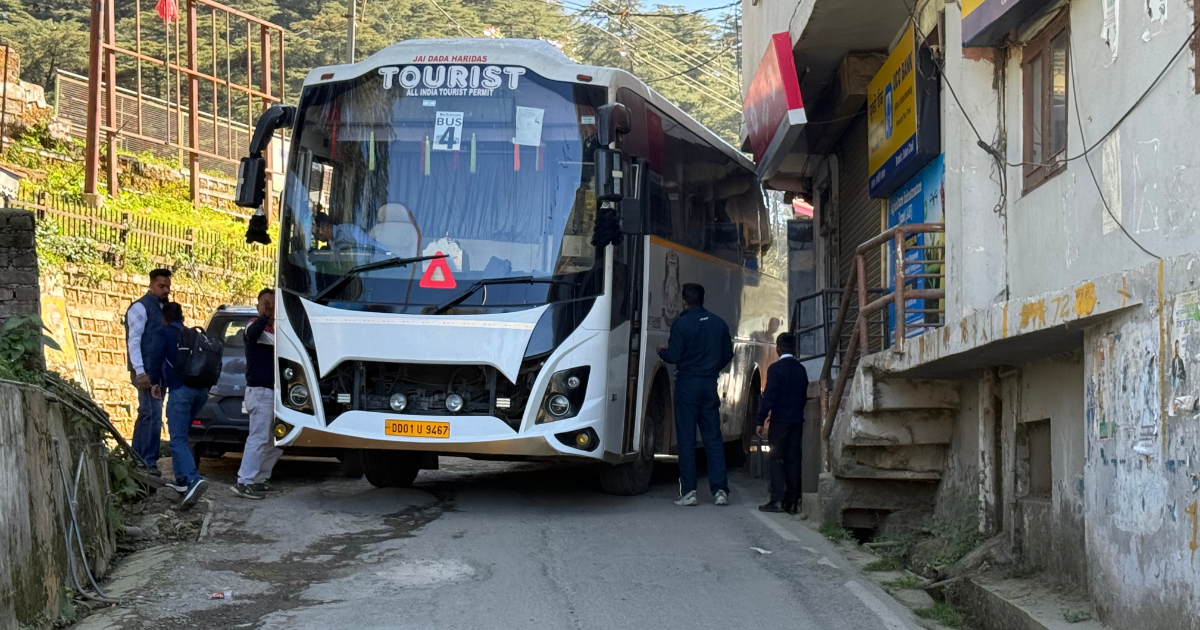
Heavy mineral transport can place additional pressure on village roads, bridges, retaining structures and drainage systems. Authorities should be able to establish permissible bridge loads, actual laden weights of mineral vehicles, road design capacities, damage associated with industrial transport, and responsibility for maintenance and restoration. Where public infrastructure is repeatedly subjected to loads beyond its engineering capacity, the concern becomes one of public safety as well as road maintenance.
Communities from whose surrounding landscape substantial mineral wealth is extracted should also be able to see measurable development in local educational infrastructure. School laboratories, libraries, digital education facilities, sanitation, scholarships, vocational education and technical training are among the areas that can contribute to meaningful local development.
Health responsibilities are equally important. Mining, crushing, blasting and mineral transport may expose workers and nearby communities to dust, noise and accident risks. Regular occupational and community health monitoring should therefore form part of responsible operations, while emergency medical arrangements are particularly important along routes experiencing intensive mineral transport.
Compensation should also be considered in relation to actual loss and not only the acquisition of land. Where impacts can be demonstrated, assessment may need to consider changes in agricultural productivity, livelihood, water availability, property, access to common resources and longer term economic consequences.
Employment generation is frequently presented as one of the benefits of mining, but the distribution and quality of that employment are also important. Young residents should have opportunities to develop skills for machine operation, surveying, environmental monitoring, road safety, mine safety and technical services instead of being limited mainly to casual labour. Potential effects on agriculture, horticulture, grazing, forest produce and other traditional livelihoods should similarly be identified and quantified rather than remaining invisible within broader economic assessments.
Environmental Compliance on the Ground
Environmental compliance in the Himalayas must be visible and measurable on the ground. Land degradation requires particular attention because mining can alter hillslope morphology in ways that may continue long after active extraction has stopped.
Assessment should examine extraction boundaries, slope geometry, bench development, topsoil conservation, overburden management, slope stabilisation, progressive reclamation and mine closure obligations. A mine closure plan should not function merely as a document prepared for regulatory approval. It should represent a funded ecological responsibility that continues beyond the productive life of the mine.
Air pollution also requires systematic monitoring because blasting, crushing, loading and mineral transport can generate particulate pollution. Monitoring should be undertaken near settlements, schools, mine boundaries, crusher locations and transport corridors. Where applicable, measurements such as PM10 and PM2.5 should be periodically collected and made accessible so that actual environmental conditions can be assessed against applicable standards.
Water may be the most critical environmental concern for mountain communities. Springs, bawris, streams, irrigation channels and drinking water sources around mining areas should be systematically mapped. Their quality and, where relevant, their discharge should be monitored periodically.
Establishing a scientific environmental baseline is particularly important. Without reliable measurements of present conditions, it becomes much more difficult to establish future deterioration objectively. A declining Himalayan spring is not simply an environmental statistic because the loss of a dependable local water source can directly affect agriculture, everyday life and even the long term habitability of a mountain settlement.
Corporate Social Responsibility Beyond Statutory Compliance
An important distinction raised during the discussions concerns the difference between statutory compliance and Corporate Social Responsibility. Providing mandatory safety equipment, meeting required pollution standards, paying legally required compensation and complying with environmental clearance conditions are obligations. They should not be treated as voluntary CSR activities.
Meaningful CSR begins beyond those minimum responsibilities. In a mining region, it should contribute to visible and measurable improvement in the quality of life of workers, their families and surrounding communities through initiatives selected according to genuine local needs.
Public understanding would improve if mine operators disclosed how much they have spent on CSR during recent years, which villages received that expenditure, which projects were supported, how those projects were selected and what measurable outcomes were achieved. The more meaningful question is not how many activities were conducted, but whether water security improved, educational facilities became stronger, healthcare capacity increased, young people received useful training or

Related Articles
More stories and updates worth exploring from our journey.