Shikari Devi Wildlife Sanctuary: What Government Records Reveal About Roads, Carrying Capacity and Environmental Protection

Government records obtained through the Right to Information Act, 2005 have raised important questions about forest protection, road development, visitor management and ecological regulation at Shikari Devi Wildlife Sanctuary in District Mandi, Himachal Pradesh. Over several months, we assembled records from multiple government departments and local bodies. This material has now been placed before the Himachal Pradesh High Court as part of our intervention in proceedings concerning environmental degradation at high-altitude sites.
A Sanctuary Reduced Over Time
The area originally contemplated for Shikari Devi Wildlife Sanctuary was around 213.51 square kilometres.
A subsequent rationalisation reduced this to 112.94 square kilometres, excluding approximately 83 square kilometres covering 113 villages.
When the Sanctuary was finally notified in June 2013, the notified area stood at 29.94 square kilometres.
This represents a reduction of about 86 percent from the area originally contemplated and approximately 73 percent from the already rationalised figure.
An Eco-Sensitive Zone was later notified around the surviving Sanctuary in January 2022. It covers 38 villages, within which identified forest compartments total 19.2045 square kilometres.
The records also indicate that forest diversion continued after notification, including diversions recorded during 2016-17 and 2018-19.
Road Widening Inside the Sanctuary
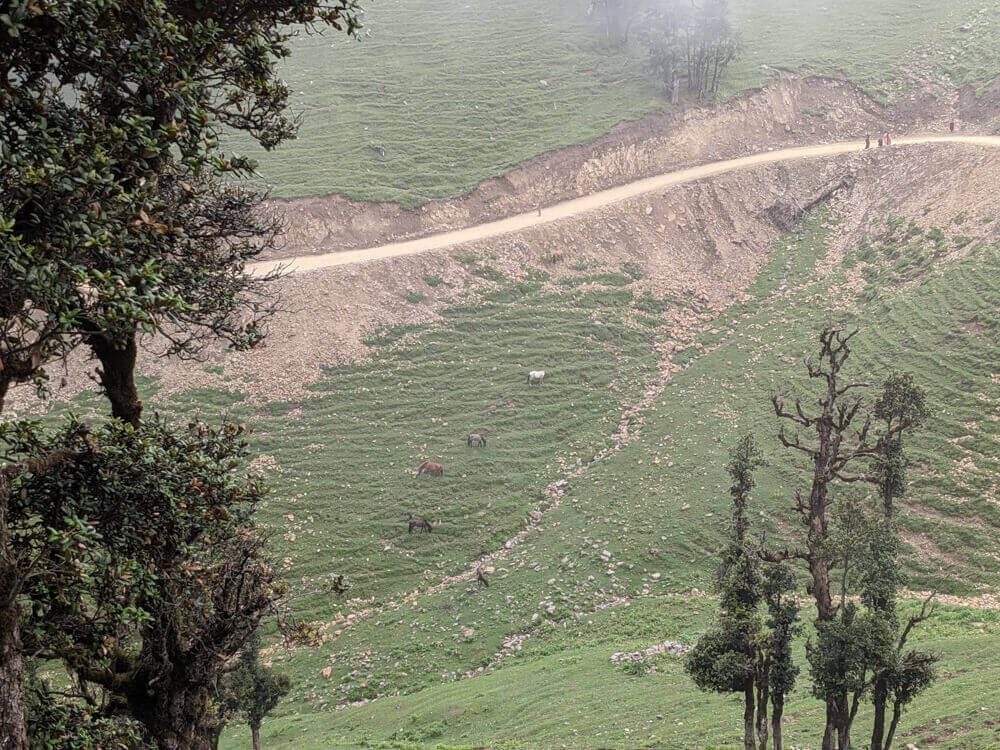
The approved Management Plan for Shikari Devi Wildlife Sanctuary states that “the only way to safeguard the area is through footpaths and local paths.”
Despite this, road widening was carried out inside the Sanctuary.
In response to an RTI application, the Wildlife Department confirmed that the road widening had been undertaken in violation of the Wild Life (Protection) Act, 1972 and the Forest (Conservation) Act, 1980. A departmental inquiry followed.
By the time approvals were sought, approximately Rs 12.82 crore had already been spent.
The records also show that the area initially proposed for diversion was 1.128 hectares. During a meeting of the State Board for Wildlife in June 2020, this figure was increased to 1.59 hectares on an oral suggestion, without a fresh scientific or ecological assessment being recorded.
Later scrutiny indicated that the area affected on the ground may have been closer to 5 hectares.
When the proposal reached the Standing Committee of the National Board for Wildlife in June 2025, the violation was noted and the proposal was approved after the work had already been carried out. The recorded consequence was a warning to senior and supervisory officers.
Carrying Capacity Exists on Paper

One of the most significant issues revealed by the records concerns visitor and vehicle limits.
The approved Management Plan fixes a carrying limit of 132 visitors on foot per day and 70 vehicles per day. It states that this limit “needs to be strictly adhered to.”
However, in August 2026, the Wildlife Division, Kullu confirmed in writing that no departmental register of visitors or vehicles had been maintained during the peak season from 15 April to 15 July 2025.
This was the same period identified in the Management Plan as requiring careful management of vehicular movement.
During this period, the ticket window at the Sanctuary entrance was operated by a private contractor under a contract valued at Rs 15,20,000.
Partial ticket records obtained through RTI indicate vehicle entries during the peak season that appear to exceed the 70-vehicle daily limit. The complete register has been sought for further examination.
The larger issue is straightforward: a scientifically assessed limit exists, but the official records indicate that the Department itself was not maintaining the visitor and vehicle records required to determine whether that limit was being followed.
Gaps in Research and Tourism Regulation
The Wildlife Division has also confirmed several other points in response to direct questions raised through RTI.
According to the Department:
- No scientific research has been carried out by the Department on its own in Shikari Devi Wildlife Sanctuary.
- No detailed eco-tourism guidelines exist for the area, although it is officially promoted as a tourist destination.
- No formal permission has been granted for tents, kiosks or commercial tourism activity, although annual charges are collected for tents.
- No violations relating to illegal tourism activity, littering or encroachment have been recorded as detected.
Fund records covering the period from 2001 to 2026 also show allocations under “environment protection”, while the “cleanliness and waste management” column records zero for almost the entire period.
These records raise questions about how tourism, waste, commercial activity and ecological pressure are being monitored within and around the Sanctuary.
Thunag and the Wider Access Corridor
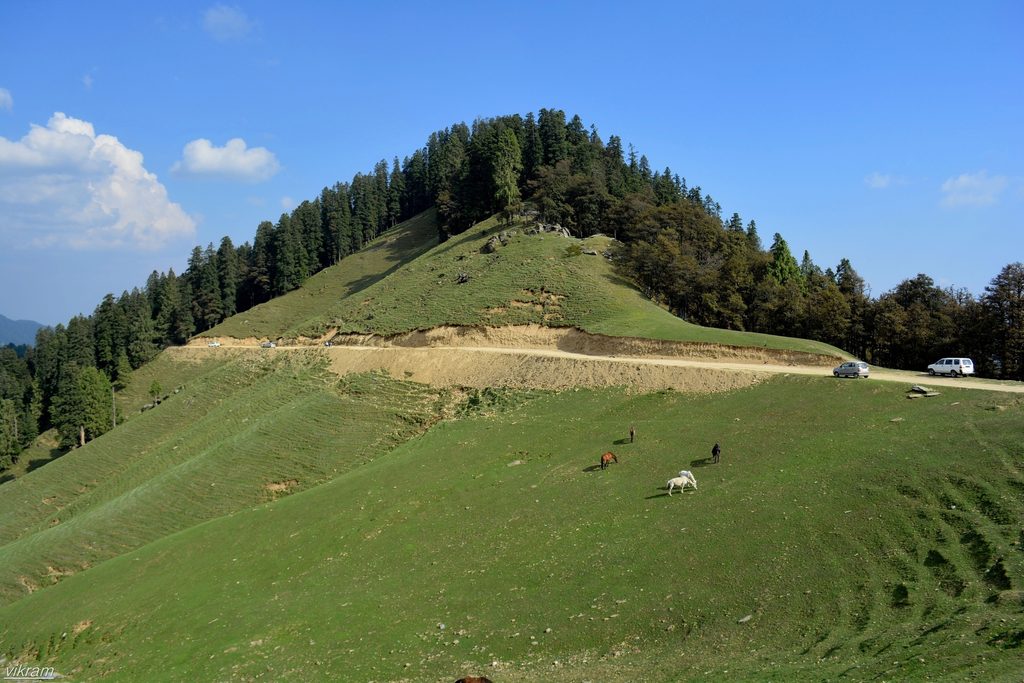
Shikari Devi can be approached by two roads. One of these routes passes through Thunag Bazaar.
During the night of 30 June to 1 July 2025, cloudbursts triggered flash floods and landslides across the Seraj valley.
At least 15 people were killed and dozens were reported missing. Across the valley, an estimated 622 houses and 350 cattle sheds were destroyed. In Thunag Bazaar, around 150 shops were damaged and approximately 60 were washed away.
A study published in August 2026 by the Centre for Disaster Risk Reduction and Resilience at Himachal Pradesh University examined the event using field surveys and satellite imagery.
The study found that widespread encroachment and unregulated construction on the active floodplain, including houses, retaining walls, road embankments and shops, was a major factor influencing the severity of the damage. It also found that proximity to the constrained river channel predicted building damage better than rainfall alone.
Government records reveal another important regulatory gap.
When information was sought from the Town and Country Planning Department regarding building permissions, floodplain maps and violation notices for Thunag Bazaar, the response was “Nil” in every category.
The reason was that Thunag Bazaar has never been notified as a Planning Area under the Himachal Pradesh Town and Country Planning Act, 1977.
As a result, this flood-prone settlement on an important approach road to the Sanctuary remains outside the building control framework administered by the Department.
An earlier flood had also affected Thunag market in July 2023. Contemporary reports at the time recorded streams obstructed by illegally felled timber and debris from road construction.
We are not making any claim about the cause of any individual death or loss. What the records show is that development along these corridors has taken place in circumstances where significant regulatory and ecological concerns remain unresolved.
What We Have Asked the Court to Examine
Our intervention does not seek to stop pilgrimage or prevent people from visiting Shikari Devi.
The central request is much narrower: ecological limits and safeguards that already exist on paper should be properly measured, monitored and enforced.
The intervention seeks, among other things:
- Production of the relevant official records.
- An independent survey of the forest area actually affected by road construction.
- A proper carrying-capacity study.
- Visitor and vehicle entry registers maintained directly by the Department rather than solely through a contractor.
- Examination of how approximately Rs 12.82 crore came to be spent before the required clearance was obtained.
The objective is to ensure that decisions affecting a protected landscape are based on measurable ecological limits, reliable records and effective oversight.
The Matter Before the Himachal Pradesh High Court

In August 2026, the Himachal Pradesh High Court took suo motu cognizance of environmental degradation at high-altitude sites in the State, including Shikari Devi, Churdhar and Chandratal.
The Court directed that forest clearance proposals for new roads to these sites, as well as proposals for tarring existing roads, be kept in abeyance.
As the Court has taken up the wider issue on its own motion, we are seeking permission to intervene so that the RTI-based material concerning Shikari Devi Wildlife Sanctuary can be placed before it for consideration.
The intervention application and its annexures have been placed with our counsel, and the matter is now before the Court.
Protecting High-Altitude Landscapes Through Evidence
Shikari Devi is one of 14 high-altitude pilgrimage and tourism sites across Himachal Pradesh for which we have been building an RTI-based record on carrying capacity.
The questions emerging from Shikari Devi are not about preventing access to sacred or natural places. They concern how access is managed when roads, tourism, pilgrimage and commercial activity begin to place increasing pressure on fragile mountain ecosystems.
Protected areas require more than notifications, plans and limits on paper. Their protection depends on whether those safeguards are measured, monitored and enforced on the ground.
For Shikari Devi Wildlife Sanctuary, the Government’s own records provide an important basis for asking whether that is happening.
Related Articles
More stories and updates worth exploring from our journey.