The Illuminated Wound: Forest Fire, Highway Excavation, and the Fragile Future of the Himalaya

A forest fire burning above a freshly excavated highway corridor is more than a disturbing visual. It is a quiet warning from the Himalaya, where development, disturbance, artificial expansion, and ecological fragility are increasingly appearing in the same frame.
A Mountain Landscape Under Multiple Pressures
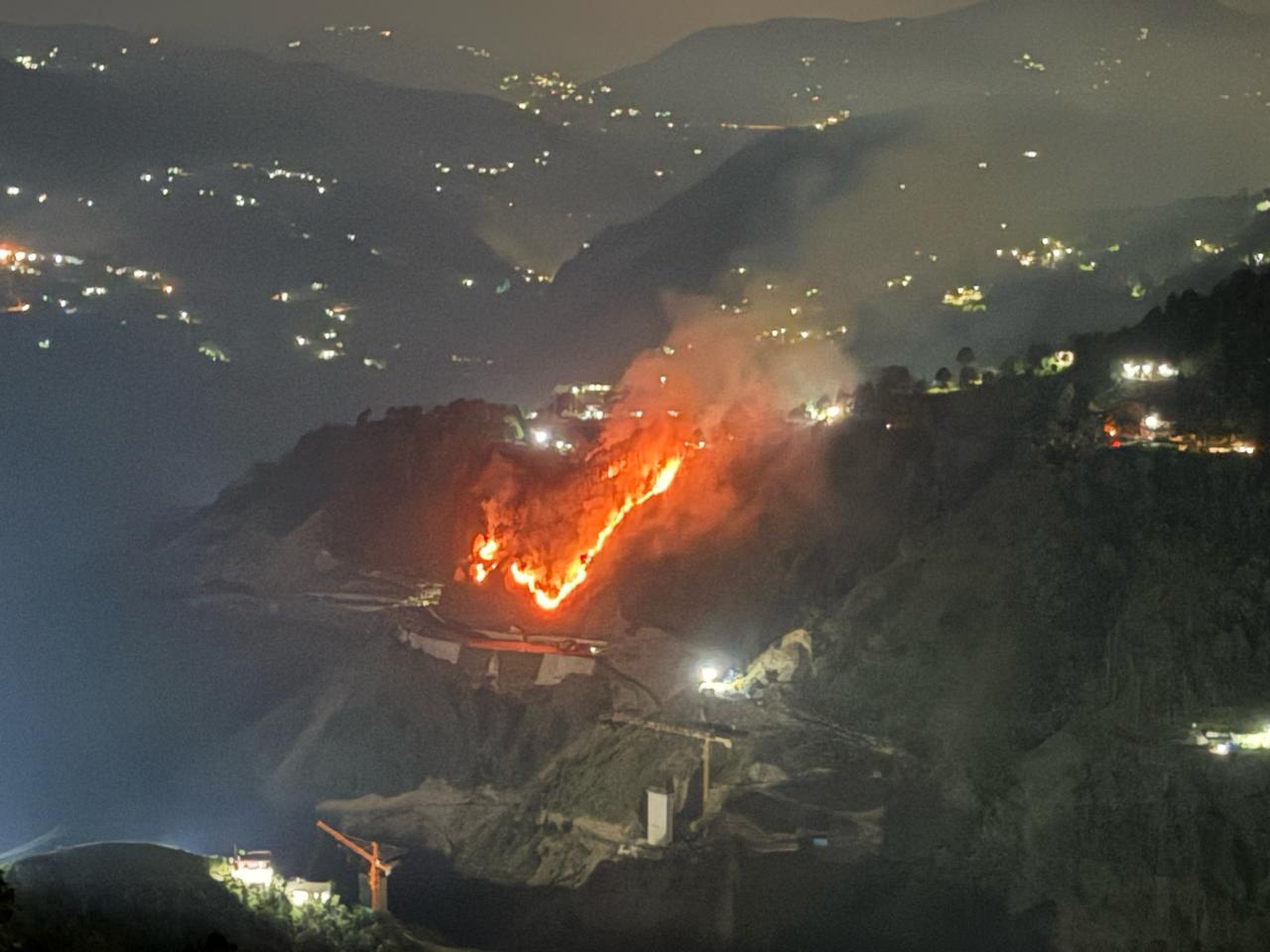
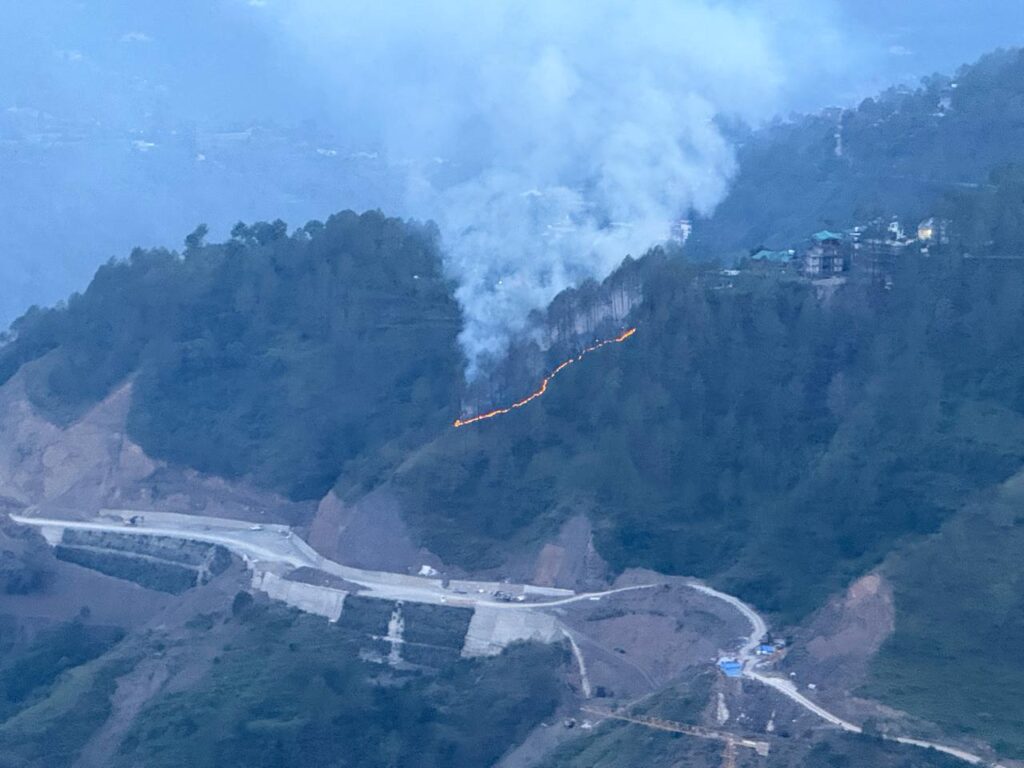
The image presents a stark Himalayan scene. A line of fire moves across a forested slope. Smoke rises above the ridge. Below it, a newly cut highway section cuts through the mountain. In the distance, scattered lights spread across the ridges, marking the growing human presence in the hills.
Nothing in this frame exists in isolation.
The fire is not only a fire. The road is not only a road. The lights are not only signs of settlement. Together, they show how the mountain landscape is being reshaped by several pressures at once.
Development Beside Disturbance
Roads are often presented as symbols of access, safety, and progress. In mountain regions, they can connect people, reduce isolation, and support local movement. But when large scale excavation enters a fragile Himalayan slope, the impact is not limited to the visible road surface.
Cut slopes, exposed soil, disturbed vegetation, loosened rock, and changed drainage patterns all become part of the new landscape. The mountain does not simply adjust overnight. It absorbs stress slowly, and sometimes visibly.
In the shared frame, the excavated highway corridor sits below a burning slope. The contrast is difficult to ignore. One part of the mountain is being opened for movement. Another part is burning above it.
Fire in a Fragile Mountain System
Forest fires in the hills are especially concerning because mountain ecosystems are sensitive to disturbance. Fire affects vegetation, soil, wildlife habitat, moisture retention, and the natural recovery cycle of slopes.
A fire line may appear small from a distance, but its ecological effect can extend beyond what is visible. Smoke, heat, burned ground cover, and loss of vegetation can weaken an already stressed slope. When this occurs near disturbed terrain, the concern becomes even deeper.
It is important not to assume the cause of the fire without verified information. The image does not prove how the fire started. But it clearly shows a mountain landscape where ecological risk and human disturbance are present together.
Artificial Lights and the Changing Himalayan Night
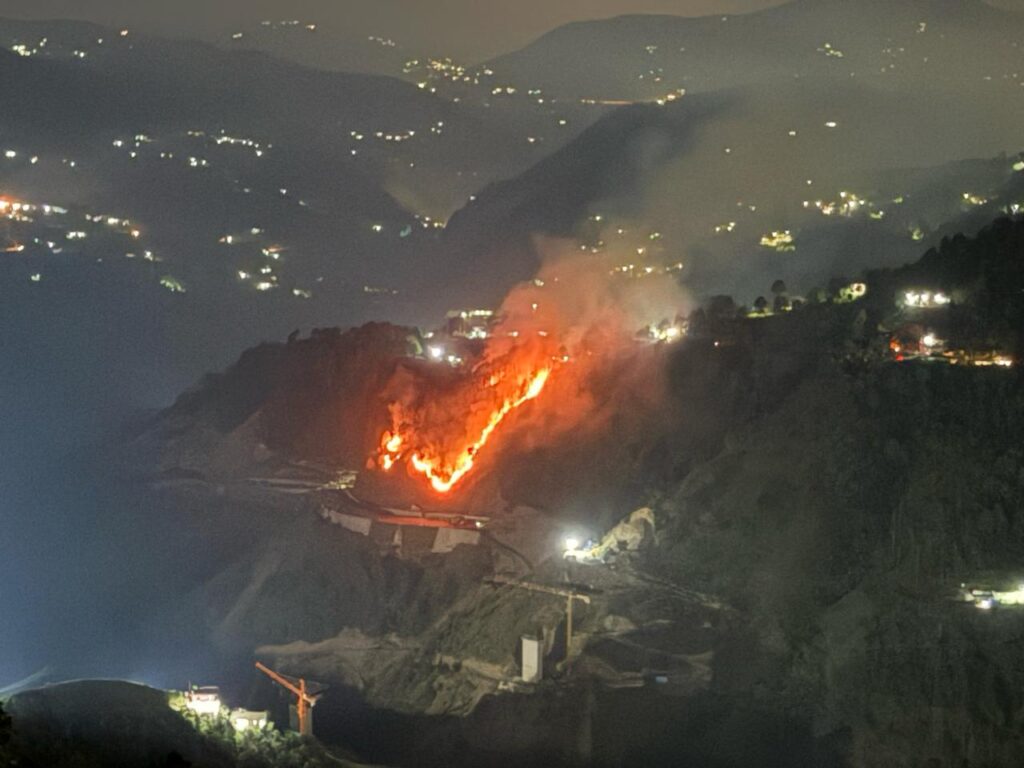
The lights spread across the ridges add another layer to the image. They show human expansion into the mountain night. Homes, roads, vehicles, work sites, and infrastructure create a new visual pattern across the hills.
Light itself may seem harmless, but it often represents deeper change. It points to settlement growth, increased access, longer activity hours, and expanding pressure on land and resources.
The illuminated ridge in the background and the burning slope in the foreground together create a powerful contrast. One is the light of human presence. The other is the light of ecological distress.
The Question of Carrying Capacity
The central question raised by this image is not whether development should exist in the mountains. The question is how much change a mountain system can carry at one time.
A Himalayan slope is not an empty surface. It holds forests, soil, water channels, roots, rocks, wildlife, village life, and natural drainage. When too many pressures arrive together, the system can lose its ability to recover.
Excavation, fire, slope exposure, expanding settlements, and artificial lighting may each seem separate. But the mountain experiences them together.
This is where resilience begins to weaken.
Seeing the Warning Before It Becomes Normal
Images like this should not be treated as dramatic scenery. They should make us pause.
A burning slope above a freshly cut highway is not just a visual contradiction. It is a reminder that the Himalaya is being asked to carry more disturbance than before. The danger lies not only in one road, one fire, or one settlement. The danger lies in the combined pressure of many changes arriving at the same time.
The Himalaya needs development that respects terrain, ecology, drainage, forests, and long term safety. It needs planning that sees the mountain as a living system, not as a surface to be cut, lit, widened, and consumed.
A Wound That Must Not Be Ignored
“The Illuminated Wound” is not only about fire. It is about the visible injury of a mountain landscape under pressure.
The lights may suggest progress. The highway may suggest movement. But the smoke and flame ask a harder question.
How much can the Himalaya absorb before its resilience begins to fail?
The answer depends on whether we continue to see such images as isolated incidents, or whether we begin to read them as warnings from a fragile living landscape.
Related Articles
More stories and updates worth exploring from our journey.