When the Road Is Already Built: Can Environmental Violations Be Regularised in the Himalaya?
Across the Himalaya, a difficult policy question is repeatedly placed before communities, courts, and governments: when ecological damage has already been done in the name of connectivity or development, should the violation be regularised, demolished, or handled through a more responsible path? The answer cannot ignore either the needs of people or the rights of the mountain.
The Question No One Wants to Answer
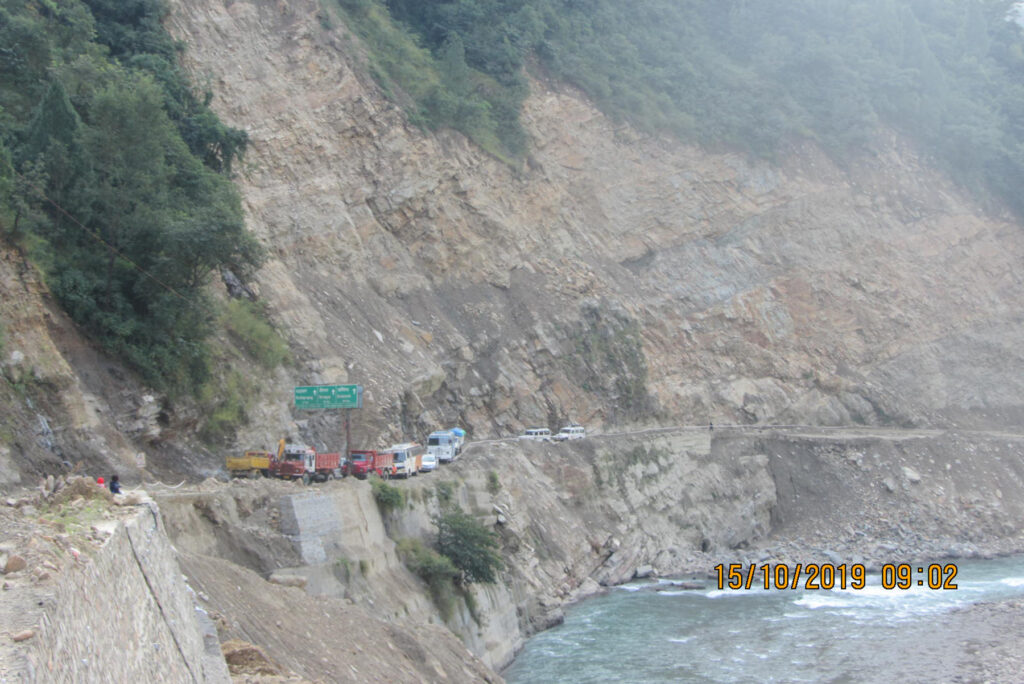
Across Uttarakhand, Himachal Pradesh, and Ladakh, a familiar pattern repeats.
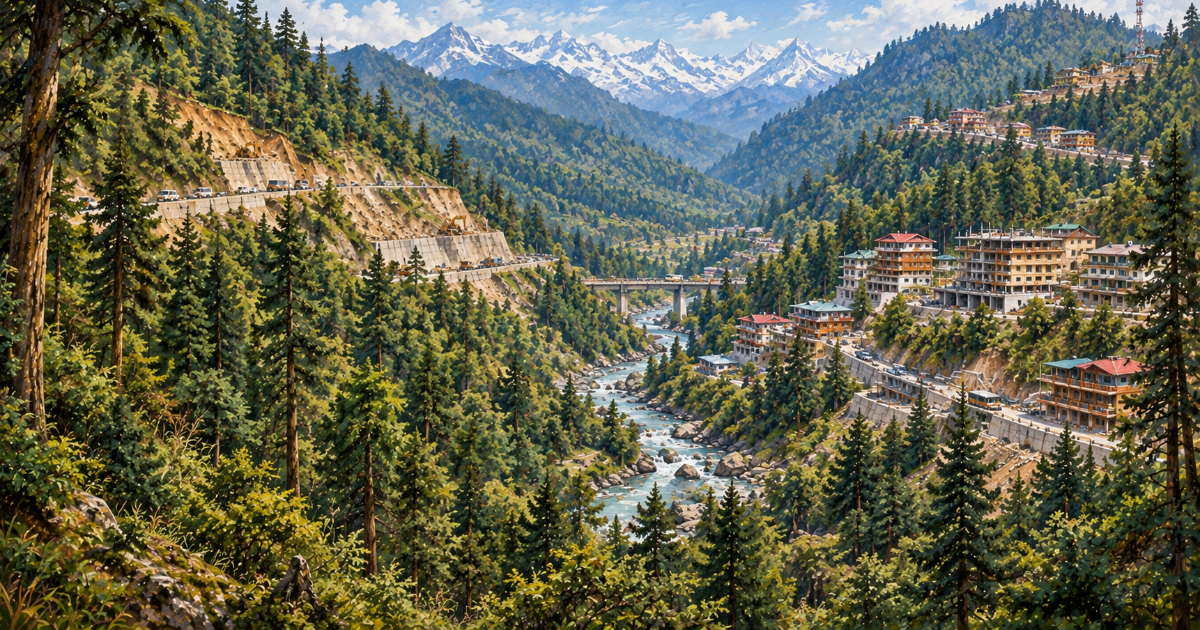
A road is cut through a pristine slope without forest clearance. A hydropower channel is deepened without environmental impact assessment. Years later, when the violation is discovered, the demand is simple: regularise it. The road is already built, the argument goes, so why not approve it now?
This creates a painful policy dilemma.
Do we demolish the road and punish the violator, even if it causes immediate hardship to villagers? Or do we regularise the violation through post facto clearance, thereby rewarding illegality and inviting the next cut?
Our field work shows that neither extreme works. Demolition can be ecologically damaging and socially unjust. Blanket regularisation destroys the rule of law. What is needed is a third way that protects people, restores the slope, and does not legalise the violation.
Why Post Facto Clearance Is Not a Technicality
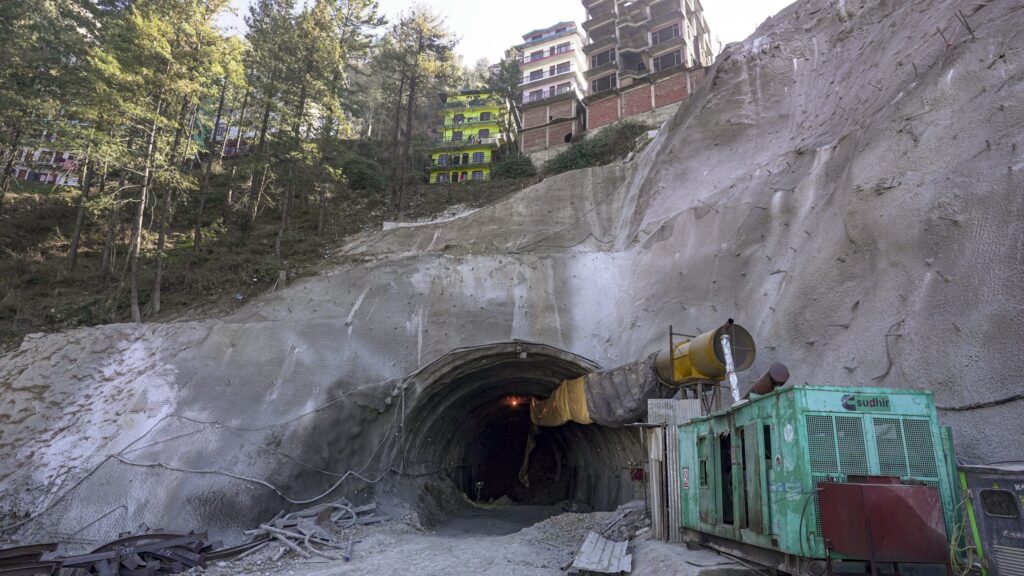
Post facto environmental clearance is not a minor procedural issue. It strikes at the heart of the precautionary principle. The EIA Notification, 2006 requires prior appraisal because environmental damage in Himalayan ecosystems cannot be treated as an afterthought. Once a slope is cut vertically in fragile mountain geology, no amount of later paperwork can undo the instability created on the ground.
In the Himalaya, environmental clearance is not red tape. It is a safety protocol.
Yet, state agencies often face pressure to regularise violations in the name of public interest. Connectivity, disaster relief, livelihood, and local access are important concerns. But public interest cannot be reduced to short term convenience when the ecological cost is permanent and is ultimately borne by the same mountain communities.
What the Law Actually Says
Indian environmental law has consistently recognised the importance of prior environmental clearance.
The requirement for prior approval is mandatory, not optional. The Supreme Court and the National Green Tribunal have repeatedly held that ex post facto clearance defeats the purpose of environmental assessment. Environmental assessment exists to prevent damage before it happens, not to account for damage after it has already taken place.
In Common Cause v Union of India, the Supreme Court observed that “ex post facto EC is completely alien”.
In Alembic Pharmaceuticals v Rohit Prajapati, the Supreme Court stated that the law “does not recognise any concept of ex post facto clearances”. In Vanashakti v Union of India, the 2017 notification that attempted to create a one time amnesty for violations was struck down.
These decisions reinforce a basic principle: development must follow the law before the damage is done.
Why the Himalaya Cannot Afford Regularisation
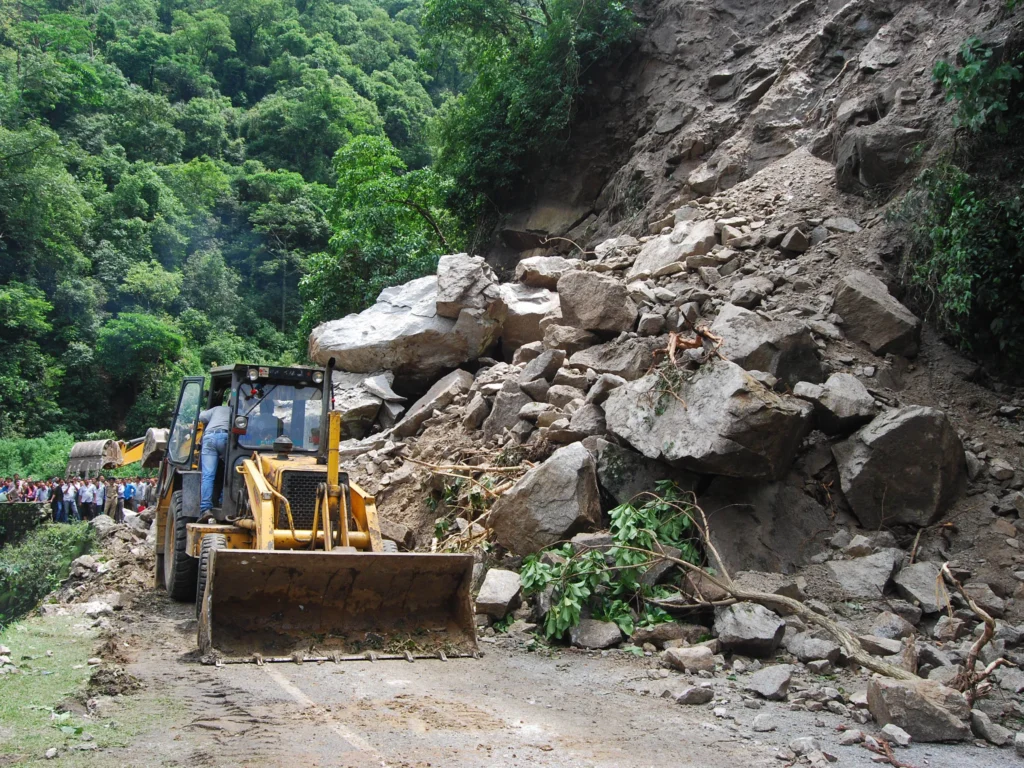
The Himalaya cannot be treated like a stable plain or plateau. Its slopes, forests, springs, soils, and settlements are deeply interdependent. Regularising violations in such a region carries serious long term consequences.
Irreversible Ecological Damage
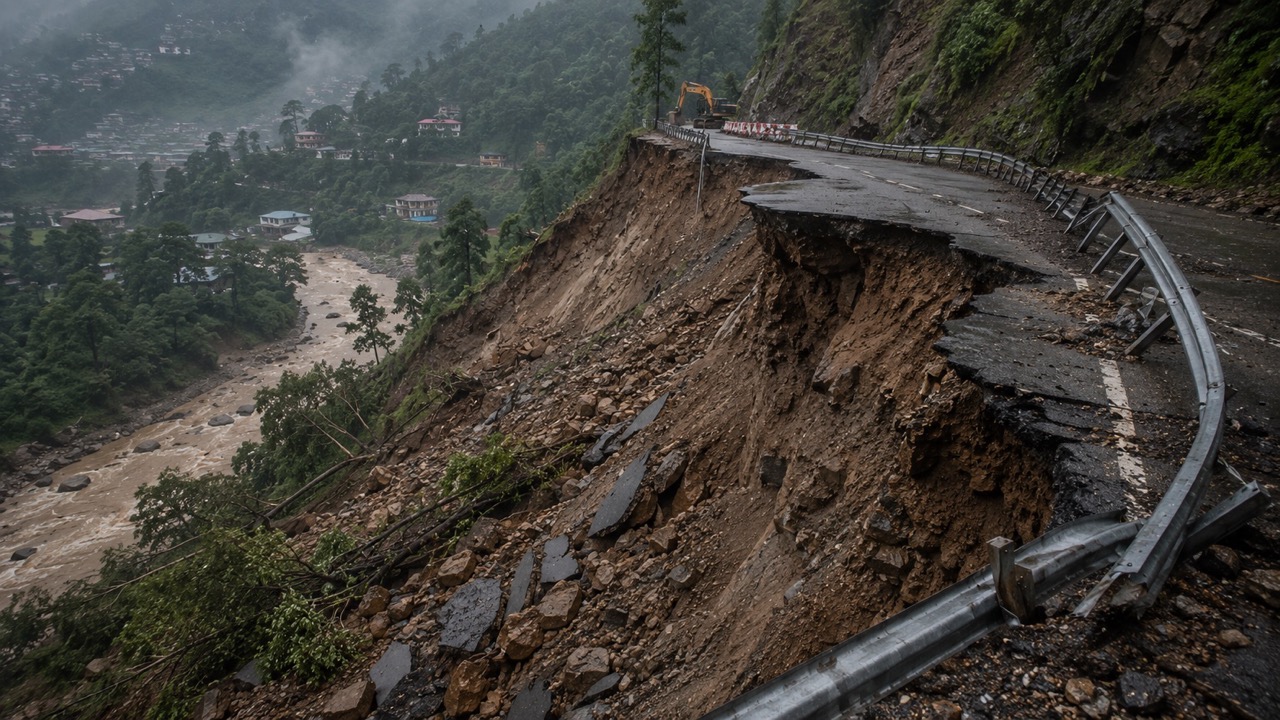
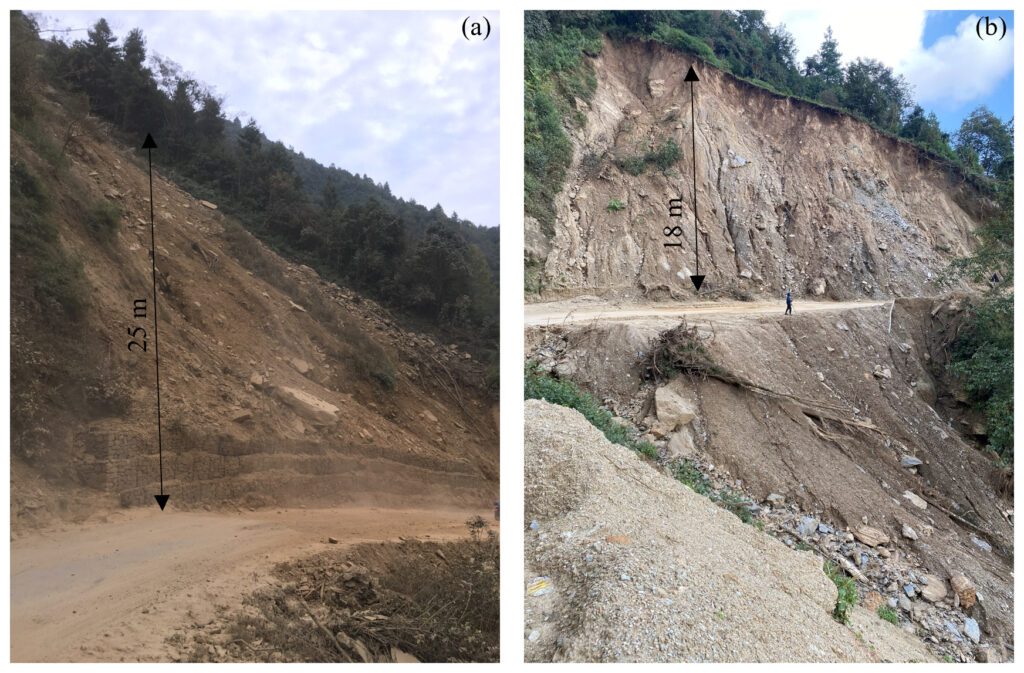
In high mountain slopes, soil formation takes thousands of years. Once a slope is cut without proper drainage, retaining support, and muck disposal, it can trigger chronic landslides that routine maintenance cannot fix.
A road may appear useful today, but if it destabilises the slope, it creates a recurring risk for villages, forests, streams, and travellers.
Cumulative Impact
One regularised road becomes the justification for more violations.
When illegal work is later approved, it sends a message that compliance can be avoided. Over time, this turns exception into practice. Every new cut adds to the cumulative burden on the mountain.
Climate Risk
The Himalaya is already facing glacial melt, landslides, and extreme weather. Structures built without proper geological and environmental study can become death traps during intense rainfall events.
Prior clearance is not a bureaucratic delay. It is a method of preventing avoidable harm.
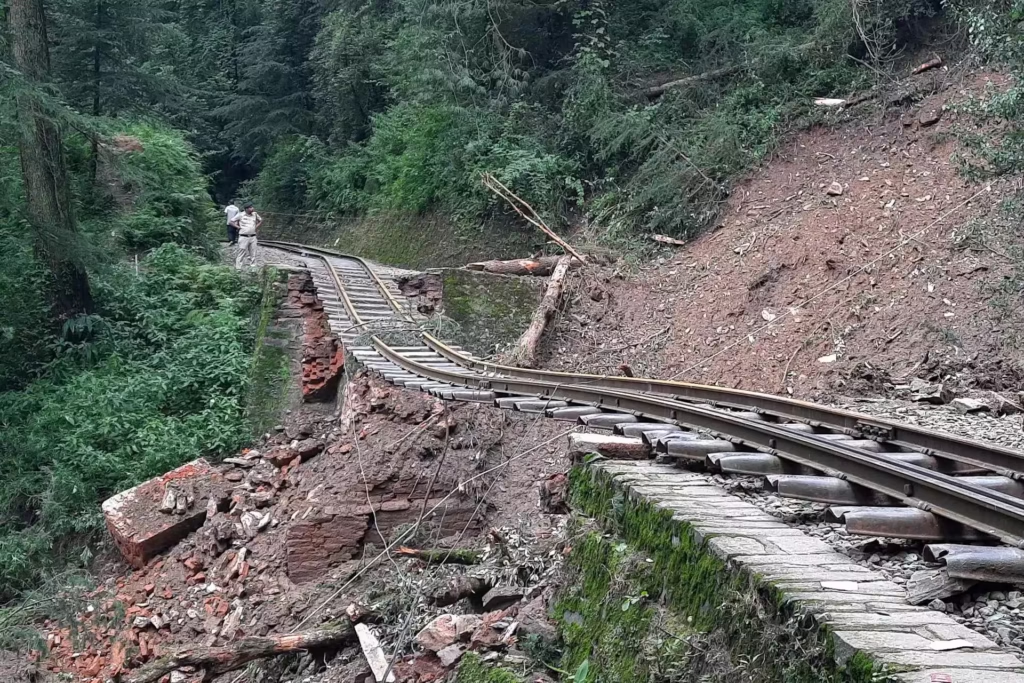
The Core Policy Problem
Regularisation creates a dangerous incentive.
If violation costs less than compliance, contractors and project agencies may choose to violate first and seek forgiveness later. This weakens environmental governance and places mountain communities at greater risk.
The issue, therefore, is not only about one road or one project. It is about whether the Himalaya will be governed by law, science, and ecological responsibility, or by afterthoughts and pressure.
The Six Step Framework: A Middle Path That Protects Ecology
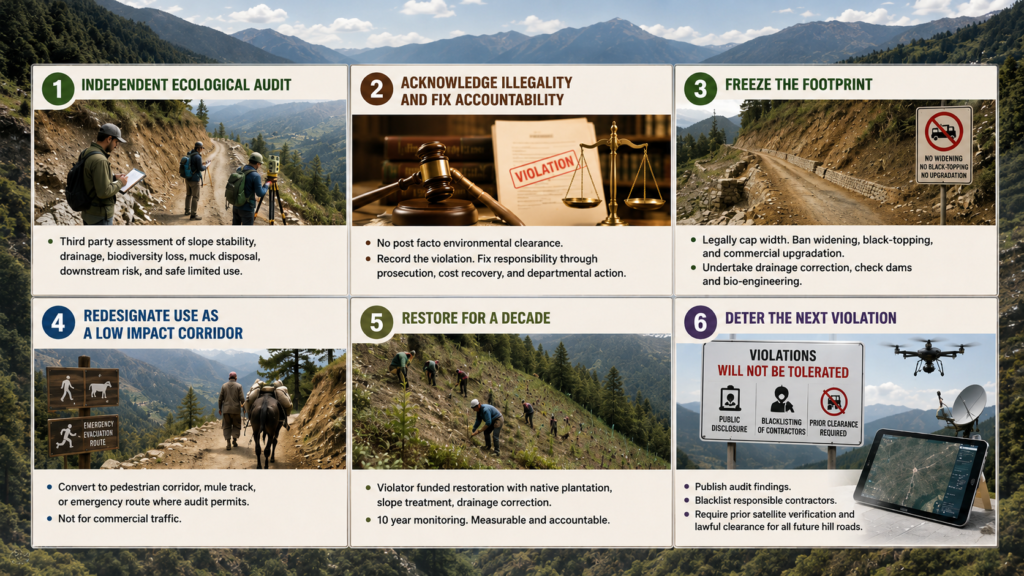
Instead of choosing between demolition and blanket regularisation, we propose a framework of ecological remediation without legal validation.
This means accepting that the road exists physically, but refusing to accept the violation as lawful. The goal is to protect genuine village users while holding violators accountable and restoring the damaged slope.
Step 1: Independent Ecological Audit
Every such road or project must undergo an independent third party ecological audit.
The audit should assess slope stability, drainage, biodiversity loss, muck disposal, downstream risk, and the possibility of safe limited use.
Step 2: Acknowledge Illegality and Fix Accountability
There should be no post facto environmental clearance.
The violation must be formally recorded. Responsibility must be fixed through prosecution under applicable environmental law, cost recovery, and departmental action where required.
Step 3: Freeze the Footprint
The existing damage must not be allowed to expand.
The road width should be legally capped. Widening, black topping, and commercial upgradation should be prohibited unless lawful clearance is obtained through proper prior process. Required slope treatment, check dams, drainage correction, and bio-engineering should be undertaken.
Step 4: Redesignate Use as a Low Impact Corridor
Where the ecological audit permits, the road may be redesignated for limited and low impact use.
It may function as a pedestrian corridor, mule track, or emergency evacuation route. It should not become a commercial traffic corridor by default.
Step 5: Restore for a Decade
The violator must fund long term restoration.
This should include native plantation, slope treatment, drainage correction, and monitoring for ten years. Restoration must not be symbolic. It must be measurable and accountable.
Step 6: Deter the Next Violation
The audit findings should be made public.
Contractors and agencies responsible for violations should face blacklisting where applicable. Future hill roads should require prior satellite based verification and lawful clearance before work begins.
The Doctrine We Propose
The doctrine is simple:
Accept the physical reality, but not the continuing violation.
This means no post facto environmental clearance and no retrospective forest diversion approval. The physical road may remain only for limited public use if the ecological audit permits. It must not be widened, black topped, commercialised, or converted into a full vehicle road without lawful prior approval.
The violator must pay for restoration under the polluter pays principle. Criminal and departmental proceedings must continue independently.
This approach protects genuine local needs without rewarding illegality.
Building Lawfulness, Not Just Roads
The Himalaya needs connectivity, but it needs lawful connectivity more.
Every regularised violation teaches the next contractor that clearance is optional. In a region facing landslides, glacial melt, changing rainfall patterns, and fragile slopes, such a policy cannot be accepted as normal.
The Supreme Court has provided the legal compass. The Environment Protection Act provides the tools. What is now needed is administrative courage.
We must serve the village. We must restore the slope. But we must not legalise the illegality.
That is the only way to keep both our roads and our mountains standing.
Related Articles
More stories and updates worth exploring from our journey.