Who Speaks for Nature?

The Colonisation of the Natural World, the Crisis of Representation and the Illusion of Ecological Compensation
A river cannot cast a vote, a forest cannot appear before Parliament, and a mountain cannot object to a highway alignment. Yet decisions affecting their existence are routinely made in the name of development, prosperity and public interest. This raises a fundamental question about environmental governance: Who represents nature when its future is being decided, and can financial compensation ever truly replace what has been lost?
The Silent Constituency
A river, forest, mountain or spring may not possess a human voice, but each has a history, an ecological function and an intricate relationship with countless forms of life.
When a mountain is excavated, a forest fragmented or a river diverted, decisions are made through established human institutions. Engineers assess feasibility, economists calculate benefits, administrators grant approvals, courts examine legality and developers propose compensatory measures. These processes may evaluate many dimensions of development, yet they do not always establish who has independently represented the interests of the affected natural system.
Human civilisation has created elaborate institutions to represent human interests. The natural world, upon which every civilisation ultimately depends, remains largely outside the democratic structures through which decisions affecting its survival are taken.
This is more than an administrative deficiency. It reveals a philosophical contradiction at the centre of modern civilisation. Humanity has acquired unprecedented power to transform the Earth without developing institutions equally capable of representing the Earth’s ecological interests.
From the Colonisation of People to the Colonisation of Nature

In his influential work The Colonizer and the Colonized, published in 1957, Albert Memmi examined the relationship between those who exercise domination and those who must live under it.
Colonialism, in Memmi’s analysis, was not simply territorial occupation. It involved privilege, economic extraction, dependency and the creation of narratives that justified domination. The coloniser established the rules, defined legitimacy and frequently claimed that domination served the interests of those being dominated. Meanwhile, the colonised were denied meaningful power to determine their own future.
Memmi was writing about the historical experience of human colonialism. His argument should not be reduced to an ecological metaphor that diminishes the suffering of colonised peoples. Nevertheless, his framework raises an important contemporary question: Can the logic of colonisation survive even after formal political colonialism has ended?
Consider how industrial civilisation frequently classifies the natural world:
- Forests become timber, land, carbon stock or economic resources.
- Rivers become sources of water supply, hydropower potential or transportation infrastructure.
- Mountains become mineral reserves, tourist destinations, road corridors or real estate opportunities.
Their value is often determined primarily by what human institutions can extract from them.
Nature is not literally a colonised human population. However, the analogy exposes a similar concentration of power, where those who benefit from environmental transformation may also control the language through which that transformation is justified.
Political independence does not automatically produce ecological freedom. A society may reject external domination while continuing to treat its forests, rivers, mountains and Indigenous ecological relationships as territories available for conquest.
Does Nature Truly Have No Voice?
Nature is often described as silent because it cannot express objections through human language. Yet a retreating glacier, a drying spring, a declining bird population, a destabilising slope or a river carrying increasing sediment can reveal important changes in environmental conditions.
These phenomena are not speeches, and natural processes should not be anthropomorphised. They are observable manifestations of changing physical and biological systems that can be studied through scientific methods.
Contemporary environmental science provides several means of interpreting these changes, including:
- Satellite imagery and remote sensing to observe landscape transformation.
- Hydrological monitoring to assess changes in rivers, springs and groundwater.
- Biodiversity surveys to examine changes in species and habitats.
- Ecological modelling to understand interactions within natural systems.
- Long term climatic records to identify environmental trends.
These methods allow ecological changes to be measured even when their precise causes remain uncertain.
A landslide, for example, may result from complex interactions among geology, rainfall, weathering, vegetation loss and human disturbance. It should not automatically be described as nature’s punishment or as proof of a particular development failure.
However, when evidence of ecological degradation exists and institutions fail to recognise or respond to it, the problem is not that nature has remained silent. It is that human decision making has failed to respond adequately to observable environmental conditions.
An ecosystem’s inability to speak in human language does not mean it lacks interests worthy of consideration. Environmental governance must distinguish between the absence of a human voice and the absence of ecological value.
Who Represents Nature?
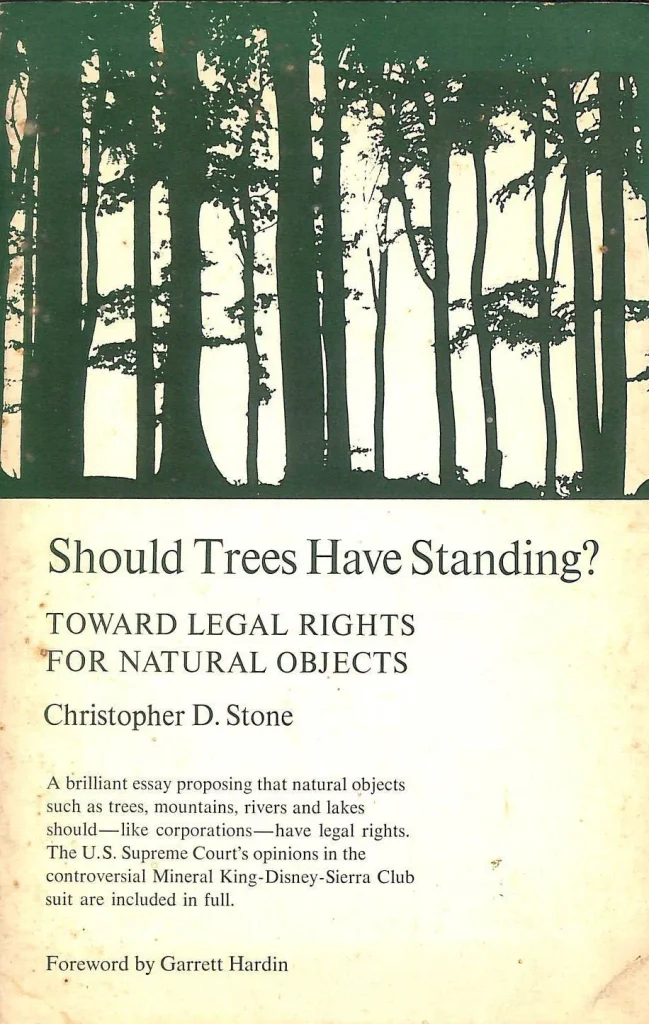
American legal scholar Christopher D. Stone addressed this question in his 1972 essay, Should Trees Have Standing?
Stone challenged the assumption that natural objects must remain outside the community of entities recognised by law. Corporations, trusts and other legal entities can hold rights and act through representatives despite not being biological human beings. This raises the question of whether natural systems could also receive legally recognised representation.
The debate has moved beyond legal theory into actual legislation.
In New Zealand, the Te Awa Tupua (Whanganui River Claims Settlement) Act 2017 recognised the Whanganui River as a legal person. It established Te Pou Tupua to act and speak on behalf of the river, reflecting a longstanding Māori understanding of the river as an indivisible living whole.
This represents an important development in environmental law. Rather than considering only humanity’s right to use a river, the legal framework recognises the river’s own identity and interests.
However, legal personhood alone cannot guarantee ecological protection. Meaningful representation requires independent guardians, scientific evidence, community participation, access to legal remedies, adequate resources and accountability.
Without these safeguards, the representative of a natural system could become another administrative institution influenced by the same interests that threaten its ecological integrity.
A river’s legal representative must therefore remain accountable to its ecological well being, rather than simply to the convenience of the government or institution responsible for the appointment.
The Canadian Experiment: Recognising a River’s Rights
In February 2021, an important development took place in Quebec, Canada.
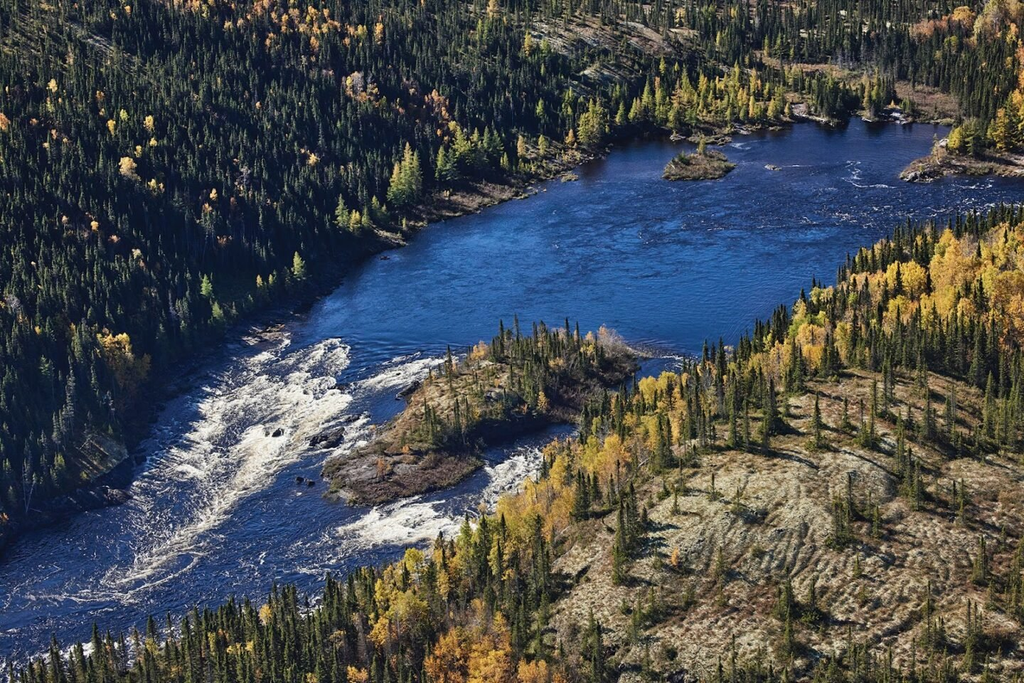
The Magpie River, known to the Innu people as Muteshekau-shipu, received recognition of legal personhood through resolutions adopted by the Innu Council of Ekuanitshit and the regional municipality of Minganie.
The resolutions recognised nine rights relating to the river’s natural functioning and protection. These included rights concerning its continued flow, biodiversity, freedom from pollution, regeneration and access to legal remedies through representation.
This was not a nationwide Canadian declaration granting every tree an individual right to life. It was a pioneering local and Indigenous initiative recognising an entire river ecosystem as possessing legally articulable interests. The legal effect and enforceability of those rights remain questions for the relevant legal system.
The significance of this initiative lies in its approach to environmental governance. Traditional environmental regulation has generally focused on determining how humanity may use natural resources. The Canadian initiative asks whether a natural system can itself become a holder of rights.
This raises wider questions about other ecosystems. If a river can possess legally recognised interests in its continued flow and ecological integrity, an ancient forest might similarly have interests in its continued existence, biological diversity and regeneration. A mountain ecosystem might also require independent consideration before its slopes, forests and drainage systems are permanently altered.
These developments suggest that modern law is beginning to explore what many traditional societies have long understood through their spiritual and cultural relationships with nature: the natural world is not merely property awaiting human use.
India: A Civilisation Rooted in Ecological Reverence

Long before contemporary environmental law began debating the rights of rivers, forests and other natural systems, the Indian subcontinent had developed philosophical and spiritual traditions in which nature formed part of a larger sacred order.
In many Hindu traditions, the Earth is revered as Bhumi Devi, rivers are personified as divine mothers, mountains are regarded as sacred, and trees such as the Peepal, Banyan, Neem and Bilva possess religious significance.
The Vedic tradition invokes the forces and elements of nature. The Prithvi Sukta of the Atharva Veda presents the Earth through the relationship of mother and offspring, while the Pancha Mahabhuta, comprising earth, water, fire, air and space, expresses a philosophical understanding of existence through elemental relationships.
These ideas were not environmental legislation in the modern sense. Nor should all ancient Indian traditions be presented as identical or uniformly conservation oriented. Nevertheless, they established an enduring cultural vocabulary of respect, restraint, interdependence and reverence.
Similar principles appear across India’s diverse traditions:
- Buddhist teachings emphasise interdependence and the interconnected nature of existence.
- Jain philosophy places importance on ahimsa and reverence for life.
- Sikh teachings recognise the significance of air, water and earth.
- Adivasi traditions include reciprocal relationships with forests, rivers, mountains and ancestral landscapes.
Across India, sacred groves illustrate how spiritual beliefs have sometimes translated into practical environmental conservation.
Known by names such as Dev Van in Himachal Pradesh, Devarakadu in Karnataka and Kavu in Kerala, these traditionally protected areas have preserved native vegetation, habitats and ecological relationships through customary restrictions and community stewardship.
In the Himalayas, sacred forests associated with local deities demonstrate that communities have long maintained mechanisms of ecological restraint outside modern statutory regulation.
The Bishnoi tradition of Rajasthan offers another important example. Its historical commitment to protecting trees and wildlife, including the sacrifice associated with Khejarli in 1730, demonstrates how ethical beliefs can acquire profound practical significance.
The Gap Between Reverence and Responsibility

India’s spiritual heritage offers a philosophical foundation for treating the natural world as a community of relationships deserving respect. Yet a contradiction exists between these professed values and many contemporary human activities.
Rivers may be worshipped while pollution continues. Trees may be revered while forests are destroyed. Mountains may be regarded as sacred while facing increasingly intensive commercial and infrastructural pressures.
Pilgrimage can also become ecologically damaging when spiritual devotion is disconnected from responsibility for waste management, water availability, habitats and environmental carrying capacity.
The contradiction is not necessarily between religion and environmental protection. It is between cultural reverence and conduct that fails to reflect that reverence.
Modern India need not derive its ecological conscience entirely from foreign jurisprudence. Its own spiritual, Indigenous and philosophical traditions offer substantial principles of interdependence and restraint.
The challenge is to translate those principles into scientifically informed, constitutionally legitimate and enforceable environmental governance.
The rights of nature movement and India’s traditions of ecological reverence can complement one another. Emerging legal frameworks offer possibilities for institutional recognition, while longstanding cultural traditions provide moral and philosophical foundations.
Together, they suggest that symbolic reverence must be accompanied by meaningful institutional protection.
From Ownership to Membership: The Land Ethic
Environmental philosopher Aldo Leopold offered another important perspective on humanity’s relationship with the natural world.
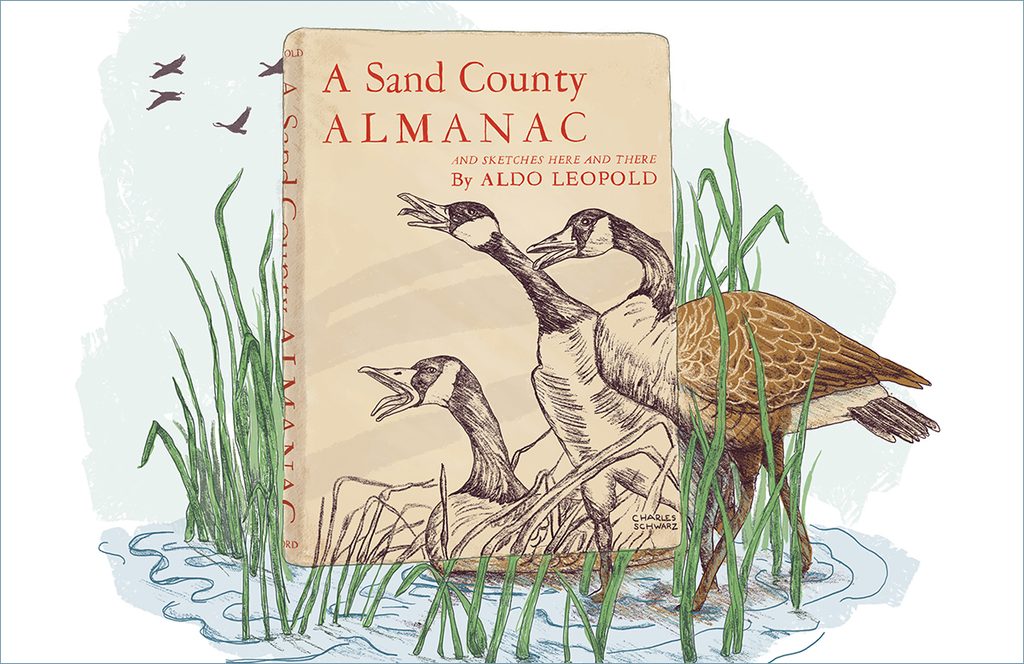
In A Sand County Almanac, published in 1949, Leopold developed the concept of a land ethic that expanded moral responsibility beyond relations between human beings.
Within this understanding, humanity is not simply the owner of the ecological community. It is a participant within it.
Ownership implies the authority to dispose of something, whereas membership involves responsibilities towards others who share the community. This distinction changes how natural systems are understood.
A forest is not merely a collection of trees. It is an evolving community of soil organisms, insects, fungi, birds, mammals, vegetation, water and ecological processes.
Similarly, a river is not merely the volume of water passing a measurement station. It is a living system connecting mountains, sediments, microorganisms, fish, vegetation, floodplains and human settlements.
A mountain is more than a structure of rock awaiting engineering intervention. It is a geological, hydrological and ecological system evolving across timescales far longer than human political or economic cycles.
When these systems are understood only through their immediate economic usefulness, their wider ecological significance is overlooked.
Leopold’s land ethic suggests that ecological integrity should become an important consideration in its own right, rather than merely a limitation upon commercial ambition.
Deep Ecology, Reciprocity and the Limits of Human Supremacy

Norwegian philosopher Arne Næss developed the philosophy of deep ecology, challenging the assumption that nature matters only insofar as it serves human needs.
Deep ecology asks whether nonhuman life has value independent of its usefulness to humanity.
Contemporary scholar Robin Wall Kimmerer, in Braiding Sweetgrass, draws upon Indigenous knowledge and ecological science to explore the principle of reciprocity. Receiving benefits from the natural world creates responsibilities of care, gratitude and renewal.
This perspective differs from conventional resource management, which generally focuses on determining how much humanity can sustainably extract.
Reciprocity examines a deeper ethical question: what responsibilities arise from humanity’s dependence upon the natural world?
Both approaches have relevance, but they address different dimensions of environmental responsibility. Resource management seeks to regulate consumption, while reciprocity examines the moral foundations of the relationship itself.
This distinction is especially relevant to the Himalayas, where forests are often assessed through carbon sequestration, slopes through engineering stability, rivers through discharge and land through development potential.
These measurements are valuable for scientific assessment and public decision making. However, none can independently capture the full ecological meaning of a living landscape.
A responsible approach must combine rigorous science with humility, ethical restraint and respect for ecological relationships that cannot be fully expressed in monetary terms.
Can Money Compensate for Ecological Destruction?
Environmental compensation is among the most difficult ethical questions in contemporary environmental governance.
When a forest is diverted for infrastructure, funds may be collected for compensatory afforestation. When mining disturbs a landscape, restoration obligations may be imposed. When pollution occurs, environmental compensation may be assessed. When communities are displaced, financial packages may be announced.
These mechanisms can serve legitimate purposes. They may finance restoration, compensate affected people and impose costs upon those responsible for environmental harm.
However, their existence creates the risk of assuming that financial payment can fully settle an ecological debt.
Consider the example of an old Himalayan oak forest. Its value cannot be determined simply by counting the trees standing within a particular area.
Over decades and centuries, such a forest develops a complex ecological structure:
- Root systems influence soil stability and water infiltration.
- Forest canopies moderate local environmental conditions.
- Organic litter supports soil organisms and nutrient processes.
- Vegetation layers provide habitats for insects, birds and mammals.
- Interactions among species contribute to the functioning of the wider ecosystem.
If the forest is removed and an equivalent number of saplings are planted elsewhere, the number of trees may eventually be replaced. However, the ecological relationships developed within the original forest may not be restored.
The International Union for Conservation of Nature recognises this difficulty. Its biodiversity offset guidance places avoidance and mitigation before offsets and acknowledges that some ecological impacts cannot appropriately be offset.
This establishes an important distinction between acknowledging environmental damage and reversing it.
Financial compensation does not automatically recreate a destroyed wetland, restore a locally unique species population or recover a spring whose flow regime has permanently changed.
Money can facilitate restoration activities and provide compensation to affected communities, but ecological integrity cannot always be exchanged for financial value.
Environmental governance must therefore consider a question more fundamental than the amount payable for environmental damage: Should certain forms of ecological destruction be permissible at any price?
Human society requires infrastructure, energy, housing, water systems and livelihoods. It would be unrealistic to assume that every landscape must remain entirely untouched.
However, it is equally unreasonable to assume that every ecological sacrifice becomes acceptable once a financial valuation has been attached to it.
Some impacts may be mitigated, some can be restored, and others may remain effectively irreversible within human timescales. Good governance must distinguish among these possibilities before permission is granted, rather than only after environmental damage has occurred.
The Illusion of Ecological Accounting
Modern environmental administration increasingly translates nature into measurable quantities. Trees become plantation targets, forests become hectares, biodiversity becomes indicators, carbon becomes credits and environmental harm becomes financial liability.
These instruments can improve accountability when they are carefully designed and independently verified. However, problems arise when numerical measurements are treated as complete representations of ecological value.
The concept of “no net loss” illustrates this challenge.
In principle, a development project might compensate for unavoidable ecological damage by producing verified biodiversity gains elsewhere. Yet ecological systems are historically situated and spatially interconnected, making genuine equivalence difficult to establish.
A newly created habitat cannot always perform the functions of an established one. Similarly, the loss of ecological connectivity cannot necessarily be corrected by creating conservation assets at a distant location.
Meaningful ecological assessment also requires time, scientific expertise and long term monitoring. Without these safeguards, numerical comparisons may create an appearance of equivalence that does not reflect ecological reality.
Modern ecological scholarship consequently challenges simplistic claims that one form of environmental loss can always be balanced by environmental improvements elsewhere.
Restoration remains an essential responsibility, but it should not be presented as an automatic justification for destruction. Its purpose is to address environmental harm, not to provide a universal licence to cause it.
From Human Rights to the Rights of Nature
Traditional environmental law has generally protected nature through human interests.
A river must remain clean because people require drinking water. A forest must be conserved because it prevents erosion, supports livelihoods or absorbs carbon. A mountain ecosystem must be protected because environmental instability threatens settlements.
These are legitimate reasons for environmental protection, but they are primarily centred upon human needs.
The emerging rights of nature movement asks whether natural systems could possess legally recognised interests in their own continued existence, ecological functioning and regeneration.
Ecuador’s 2008 Constitution was a landmark in recognising rights of nature, including restoration obligations distinct from compensation to affected individuals and communities.
New Zealand’s Whanganui River framework similarly demonstrates a model through which a natural system can acquire legal representation.
These experiments differ in their legal structure and implementation, and their practical effectiveness requires careful assessment. Nevertheless, they challenge the assumption that environmental protection must always be justified exclusively through human interests.
India’s Constitutional Framework
India’s constitutional approach to environmental protection has developed significantly, although it remains distinct from a general and settled recognition of independent legal personhood for every river or forest.
Important constitutional provisions include:
- Article 48A: Directs the State to protect and improve the environment.
- Article 51A(g): Places a duty upon citizens to protect the natural environment and show compassion for living creatures.
- Articles 14 and 21: Form part of the constitutional framework within which the Supreme Court recognised protection against the adverse effects of climate change in M.K. Ranjitsinh v. Union of India (2024).
These developments represent important progress in environmental constitutionalism.
However, protecting people from ecological harm and recognising nature’s own interests are not identical legal propositions.
The challenge is to design credible institutions through which ecological interests can be independently considered, including situations where immediate human economic benefits favour environmental transformation.
The Himalayas: A Landscape Without Representation
The Himalayan region provides a compelling setting for examining the limitations of conventional environmental decision making.
These mountains sustain major river systems, ecological corridors, forests, springs, glaciers, agricultural communities, religious landscapes and extraordinary biodiversity.
Despite this interconnectedness, administrative decision making often divides the landscape among separate authorities.
Road construction, forest administration, mining, tourism and water supply may fall under different institutions, each evaluating activities according to its own statutory responsibilities.
This creates a fundamental governance challenge: Who evaluates the cumulative consequences of development for the mountain ecosystem as a whole?
A road alignment may be assessed as an engineering project without fully accounting for the combined influence of slope cutting, drainage diversion, increasing traffic, vegetation disturbance, associated construction and visitor pressure.
Similarly, expanded access to a pilgrimage destination may require consideration of environmental carrying capacity, waste management, water availability and wildlife disturbance.
Activities affecting rivers may also have consequences for communities and ecosystems downstream, extending beyond the immediate area where construction or disturbance occurs.
These examples do not establish wrongdoing in any individual project. Such conclusions require verified evidence, applicable legal standards and appropriate investigation.
However, they demonstrate the importance of considering cumulative environmental effects rather than examining each intervention in isolation.
Nature is ecologically interconnected, while administrative responsibility is often divided among separate institutions.
A project may therefore satisfy several individual procedural requirements while still contributing to cumulative ecological degradation that no single institution has adequately assessed.
The problem extends beyond procedural compliance. It concerns the absence of effective representation for the mountain system as an integrated ecological whole.
The Unrepresented Generations
Environmental decision making must also consider another constituency that cannot participate directly: future generations.
The benefits of a development project may become apparent immediately, while its ecological costs may unfold over decades or centuries.
Deforestation, declining groundwater recharge, species extinction and landscape instability can impose consequences upon people who had no opportunity to participate in the original decisions.
Philosopher Hans Jonas argued for an ethic of responsibility suited to humanity’s unprecedented technological power and its potential consequences for future life.
His work is particularly relevant to environmental decisions whose effects extend beyond electoral cycles, administrative tenures and commercial investment periods.
A more comprehensive ethical framework must therefore expand responsibility in two related directions:
- Ecological responsibility: Recognition of the interests of natural systems upon which life depends.
- Intergenerational responsibility: Consideration of the long term consequences of present decisions for people who are not yet born.
These responsibilities are closely connected. Protecting the interests of future generations requires protecting the ecological conditions that will make future human life possible.
Nature’s Representatives Must Be Accountable
Recognising ecological interests is only the beginning. Effective representation also requires determining who should speak on behalf of natural systems and how those representatives should be held accountable.
Government departments possess statutory authority but may face competing development mandates. Scientists provide essential knowledge but do not independently determine social values. Local communities possess valuable lived experience, although competing interests may exist within them. Environmental organisations can contribute scrutiny but cannot claim automatic legitimacy.
No single institution has an exclusive moral right to represent nature.
A credible framework should combine several complementary forms of representation:
- Scientific representation: Independent assessment of ecological health, biodiversity, hydrology, geology and cumulative environmental impacts.
- Community representation: Meaningful participation of forest dependent, river dependent and mountain communities, including recognition of traditional and Indigenous ecological knowledge.
- Legal representation: Appropriate standing for guardians or institutions to defend ecological interests before courts and regulatory bodies.
- Intergenerational representation: Explicit consideration of long term and potentially irreversible environmental consequences.
- Public accountability: Transparent environmental data, accessible decisions, independent monitoring and enforceable restoration commitments.
Such representation must have practical meaning.
A guardian who cannot obtain relevant records, question environmental assessments, seek judicial review or require corrective action may possess a formal designation without meaningful authority.
Ecological representation must also respect legitimate community rights. Protecting forests and protecting the people whose livelihoods and cultural relationships depend upon them can often be mutually reinforcing responsibilities.
The objective should be to recognise ecological interests as legitimate considerations within environmental governance, rather than treating them merely as obstacles to development.
A Proposed Doctrine: Ecological Representation Before Ecological Compensation
A more responsible environmental governance framework could begin with a fundamental principle: Before society decides what compensation is payable for damaging nature, it must establish who independently represented nature in the decision to permit that damage.
This approach would change the order in which environmental decisions are considered.
Rather than beginning with the financial cost of ecological destruction, the evaluation process would first examine whether that destruction can be avoided.
A proposed Doctrine of Ecological Representation could require decision makers to answer five questions before approving projects involving significant environmental disturbance:
- What is the ecological identity of the affected landscape? Assessment should examine the landscape beyond its commercial value or administrative classification.
- What independent evidence establishes its significance? Scientific assessment should consider biodiversity, hydrology, geology and relevant social relationships.
- Who has represented its ecological interests? Decision making should establish how independent ecological representation and meaningful community participation have been ensured.
- Have genuine alternatives been examined? Evaluation should consider reduced project scale, different alignments and options that avoid construction altogether.
- What happens if environmental damage cannot be avoided? Authorities should distinguish between impacts that can be restored and those that cannot, while identifying responsibility for the consequences.
Such a doctrine would not eliminate development. It would seek to introduce greater intellectual honesty into decisions affecting natural systems.
It would distinguish public necessity from administrative convenience and genuine ecological restoration from financial settlement.
Most importantly, it would recognise that compensation cannot automatically extinguish an ecological obligation that remains unfulfilled.
From Dominion to Coexistence
The ideas explored by Memmi, Leopold, Næss, Stone, Jonas and contemporary ecological thinkers do not require human civilisation to abandon progress. They invite humanity to reconsider what progress should mean.
A civilisation may construct highways, dams, cities and sophisticated technologies while simultaneously weakening the ecological foundations upon which its future depends.
Technological achievement does not automatically establish moral wisdom, just as legal permission does not automatically establish ecological legitimacy.
The transition required is from an ethic of domination to an ethic of coexistence, and from the assumption of unlimited entitlement to the recognition of reciprocal responsibility.
Nature does not depend upon humanity to confer value upon it. Its existence precedes human institutions, political systems and economic calculations.
What it requires from human society is restraint, understanding and forms of representation sufficiently independent to challenge decisions that threaten ecological integrity.
The Himalayas do not need to be preserved as museums. They are inhabited, dynamic landscapes where communities require dignified livelihoods and societies require essential infrastructure.
However, their ecological limits cannot simply be negotiated away because natural systems do not possess political representation.
The right to develop cannot be interpreted as an unrestricted right to destroy, and the obligation to compensate cannot be mistaken for the achievement of restoration.
There is a profound contradiction in a civilisation that worships rivers as mothers, mountains as divine and trees as sacred, yet struggles to defend them as living ecological systems.
Honouring India’s spiritual inheritance should therefore involve more than declarations of reverence. It should also involve institutions capable of translating ecological respect into practical responsibility.
The Canadian and New Zealand experiments demonstrate possibilities for legal recognition. India’s cultural traditions provide longstanding foundations for ecological respect, while contemporary science offers methods for observation, assessment and evidence based decision making.
Together, these approaches can help strengthen environmental governance and encourage a more responsible relationship with the natural world.
Our century may ultimately be judged not only by how far humanity advances technologically, but also by whether it learns to exercise power without undermining the living systems that sustain it.
The central question is therefore not simply who has the authority to approve environmental transformation. It is who represents nature when those decisions are made, and whether ecological losses can truly be resolved through financial compensation alone.
The Central Proposition
The central argument rests on three important distinctions:
- Representation is not the same as consultation. Ecological interests require meaningful, independent consideration rather than merely an opportunity for comments or objections.
- Compensation is not the same as restoration. Financial payments and replacement activities cannot automatically recreate the ecological relationships that have been lost.
- Legal permission is not the same as ecological legitimacy. A decision may satisfy procedural requirements while leaving serious questions about its wider environmental consequences unresolved.
These distinctions point towards a principle for more responsible environmental governance: Nature must be represented before its future is decided, not merely compensated after its destruction.
The proposed Doctrine of Ecological Representation is an ethical and governance proposal, not a claim that such a doctrine has already been adopted in Indian law. It calls for a deeper consideration of ecological integrity, accountability and responsibility towards future generations.
Meaningful progress requires recognising that humanity is not separate from the natural world but remains part of the interconnected ecological systems upon which all life depends.
Related Articles
More stories and updates worth exploring from our journey.